Search
ToolsCalculators and checks built on our graded evidenceSee all
Ask Kymataanswers from our pages
GuidesArticles and guides, every claim citedSee all
Ask Kymataanswers from our pages
RankingsScored on one published rubric, prices checked by handSee all
Ask Kymataanswers from our pages

Stress and mood · Seasonal mood

Winter low mood: light first, then what the supplement trials show

Shorter days bring low energy, oversleeping, carb cravings and flat mood for many people; for some it becomes seasonal depression. A bright light box each morning has the best evidence. Saffron, EPA-rich omega-3 and vitamin D are smaller supporting players.

Quick answer

The quick answer

  • Bright light therapy (10,000 lux for about 30 minutes each morning) improved seasonal depression in trials (response 1.42 times as likely as placebo).
  • Saffron improved mild low mood in trials; a 2025 trial found 72% vs 54% had a meaningful improvement.
  • EPA-rich omega-3 modestly helped people with depressive symptoms, but fish oil did not lower depression risk in a large trial of people without it.
  • Seasonal depression is a real, treatable condition. If you have thoughts of self-harm, call or text 988.

We may earn a commission if you buy through these links. That never changes a rank. See how partner links work.

Story

A story you might recognize

Composite story built from common reader accounts; details changed. Not a testimonial.

Every November he slows down: sleeping nine hours and still tired, losing interest in friends, craving pasta. By February he feels like a different person.

This year he started a 10,000-lux light box for 30 minutes at breakfast in October, kept a daily walk outside, and checked his vitamin D, which was low. He also talked to his doctor, who explained what to do if things got worse. It was his best winter in years.

In depth

Light therapy, done right

  • A light box rated 10,000 lux at your usual distance, with UV filtered out.
  • About 30 minutes within an hour of waking, from early autumn, every day.
  • Light at your face from the side; no need to stare at it.
  • People with bipolar disorder, eye disease or who take light-sensitizing medicines should ask first.

The plan

The plan

  1. Start light in early autumn. Before symptoms usually begin.
  2. Get outside daily. Even overcast daylight is far brighter than indoor light.
  3. Check vitamin D. Correct a low level within the upper limit.
  4. Consider saffron. Judge it over 8–12 weeks.
  5. See a clinician. If symptoms last more than two weeks or affect daily life; talking therapy and medicines help.

The stack

The winter mood stack

Light first; saffron as the main supplement, with EPA-rich omega-3 and vitamin D as optional extras. Evidence grade: A strong · B moderate · C limited · D preliminary.

  1. 01

    Standardized saffron extract

    The supplement with the most trial data for mild low mood.

    What the research shows: In a 2025 trial of 202 adults with low mood, saffron lowered depression scores more than placebo (72% vs 54% had a meaningful improvement). A 2026 meta-analysis of 34 trials found self-rated depression and anxiety scores improved, but clinician-rated scales were less convincing. (PMID 40414301, PMID 41693488)

    • Use standardized extracts at studied amounts only; high doses of saffron are unsafe in pregnancy.
    • Talk to a clinician first if you take an antidepressant, blood thinners or blood-pressure medicines, or have bipolar disorder.

    In the studies

    • The 2025 trial in adults with low mood gave 28 mg of affron a day for 12 weeks.

    A record of what researchers gave, in whom; not a dose for you.

    Evidencemoderate (Grade B)

    Quick pick · Botanic Choice

    Brands that pay us are shown first in this list.

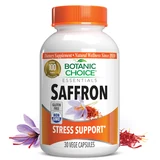
    Botanic Choice Saffron, 30 vege capsules

    1 vege capsule: 30 mg saffron extract (min. 0.3% safranal); label directions 1 capsule daily

    $14price checked Oct 12, 2026 on Botanic Choice’s site

    Shop at Botanic Choice (paid link, opens in new tab)

    We may earn a commission if you buy through these links. That never changes a rank. See how partner links work.

    Also from our partners

    Only brands that pay us are listed here.

  2. 02Optional

    EPA-rich omega-3

    Optional, for people with depressive symptoms; not a mood booster for everyone.

    What the research shows: A 2023 meta-analysis found EPA-rich products modestly reduced depression severity in adults with symptoms. In contrast, the large VITAL-DEP trial of 18,353 adults without depression found 1 g a day of fish oil slightly increased the chance of depression or clinically relevant symptoms (hazard ratio 1.13; PMID 34932079). Who benefits matters. (PMID 37028202, PMID 34932079)

    • Long-term omega-3 supplements raised the risk of atrial fibrillation in large heart trials, more so at higher doses.
    • May add to the effect of blood thinners.

    In the studies

    • In the 2023 meta-analysis, the products that helped were EPA-rich, providing roughly 1 g to under 2 g of EPA a day.

    A record of what researchers gave, in whom; not a dose for you.

    Evidencelimited (Grade C)

    Quick pick · OceanBlue

    Brands that pay us are shown first in this list.

    OceanBlue Professional Omega-3 2100 (180 softgels)

    2 softgels: 2,100 mg omega-3 (1,350 mg EPA, 600 mg DHA, 150 mg DPA), ethyl ester form; 90 servings

    price checked Oct 29, 2026 on OceanBlue’s site

    Check price on Amazon (paid link, opens in new tab)

    We may earn a commission if you buy through these links. That never changes a rank. See how partner links work.

    Also from our partners

    Only brands that pay us are listed here.

  3. 03Optional

    Vitamin D3 (if low)

    Correct a low level, especially in winter. It did not lower depression risk in people who were not depressed.

    What the research shows: A 2023 meta-analysis found vitamin D reduced depressive symptoms in people with depression, with large differences between trials. The VITAL trial (18,353 adults 50+) found 2,000 IU a day did not reduce the risk of depression in people without it (PMID 32749491). (PMID 36716601, PMID 32749491)

    • Adult upper limit: 4,000 IU (100 mcg) a day from all sources (NIH Office of Dietary Supplements).

    In the studies

    • Trials in people with depression gave daily or intermittent vitamin D in varying amounts; the large VITAL trial gave 2,000 IU a day to adults without depression.

    A record of what researchers gave, in whom; not a dose for you.

    Evidencelimited (Grade C)

    Quick pick · Momentous

    Brands that pay us are shown first in this list.

    Momentous Vitamin D3 2000 IU, 60 capsules

    1 capsule: 50 mcg (2,000 IU) vitamin D3 as plant-based cholecalciferol, in extra virgin olive oil; 60 servings

    $19.99price checked Oct 19, 2026 on Momentous’ site

    One-time
    $19.99
    Subscription
    $14.99

    Shop at Momentous (paid link, opens in new tab)

    We may earn a commission if you buy through these links. That never changes a rank. See how partner links work.

    Also from our partners

    Only brands that pay us are listed here.

    Subscribe & save 25%. Pick “Subscribe 25% Off” on the product page; delivery every 1, 2 or 3 months; cancel or reschedule anytime.

    • Subscription price shown on each product card.
    • Our Momentous links apply the brand’s ambassador discount at checkout, so there is no code to type. Momentous sets any discount it applies; check the cart total before you pay.
    • Offer terms from Momentous’ site, checked Oct 8, 2026. Offers can change; the brand's checkout is final.

Listed picks above total $33.99 at one-time prices on the brands' own sites; most hold about a month of servings at the label's serving size.

Left out

What we left out, and why

St John’s wort
It has trial data for depression but interacts dangerously with many medicines, including birth control, blood thinners and antidepressants. Not something to start on your own.
5-HTP
Little good trial data, and it can cause serotonin syndrome with antidepressants.

Safety

Safety and interactions

  • If you have thoughts of harming yourself or feel unable to keep yourself safe, call or text 988 (the Suicide and Crisis Lifeline in the US) or your local emergency number now.
  • Never stop or change an antidepressant or other prescribed medicine without your prescriber; stopping suddenly can cause withdrawal effects and relapse.
  • Low mood, anxiety or exhaustion that lasts more than two weeks, or gets in the way of work, relationships or sleep, deserves a clinician. Talking therapies and medicines have strong evidence.
  • Not medical advice. Check with your clinician or pharmacist before starting supplements if you take prescription medicines, are pregnant or breastfeeding, or have liver, kidney or thyroid disease.
  • Supplements are not evaluated by the FDA to diagnose, treat, cure or prevent any disease.

Questions

Frequently asked questions

Does a light box help seasonal depression?

Yes. A 2020 meta-analysis found bright light therapy improved depression scores, and response was 1.42 times as likely as with placebo light.

Does saffron help low mood?

In a 2025 trial in adults with low mood, 28 mg a day of saffron extract improved depression scores more than placebo (PMID 40414301). A 2026 meta-analysis found self-rated scores improved; clinician-rated scales were less convincing.

Does vitamin D help winter depression?

It helps correct a low level, and a 2023 meta-analysis found it reduced symptoms in people with depression. In people without depression, 2,000 IU a day did not lower the risk of depression (PMID 32749491).

Sources

Sources

Supplement stacks: every pageAll stacksBrowse all topics

The sleep stackAlso in: Supplements and vitamins

Educational only. Not medical advice.

We earn a commission on some links. That never changes a rank. How we make money: kymatahealth.com/affiliate-disclosure.