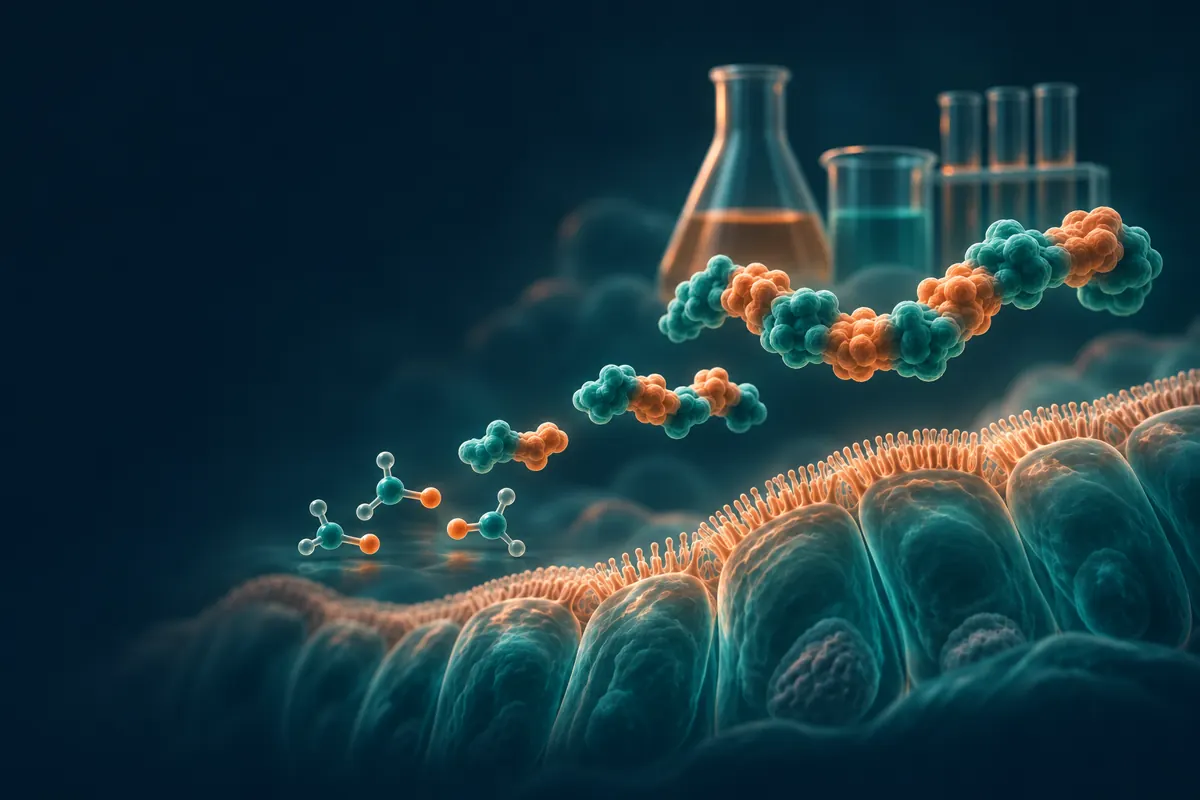
Every peptide and protein in your body is built from the same 20 standard amino acids, molecular building blocks that differ only in their side chains. These 20 amino acids can be combined in any sequence and any length, creating virtually unlimited molecular diversity. Each amino acid contains an amino group (-NH₂), a carboxyl group (-COOH), and a unique side chain that determines its chemical properties.
When two amino acids link together, a peptide bond forms between the carboxyl group of one and the amino group of the next, releasing a molecule of water (condensation reaction). This covalent bond is extremely stable under physiological conditions but can be cleaved by protease enzymes, which is why peptides are rapidly broken down in the GI tract and bloodstream if not protected.


