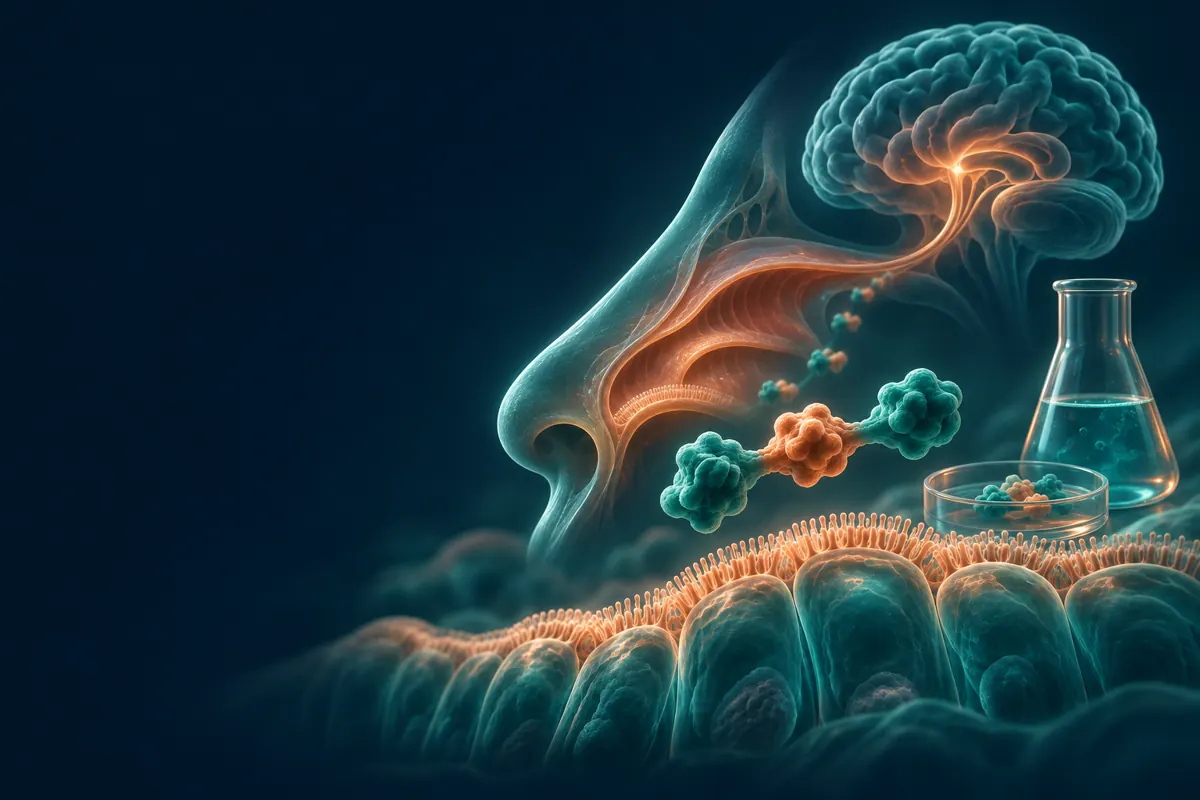
While subcutaneous injection distributes peptides systemically through the bloodstream, intranasal delivery exploits a unique anatomical shortcut. The olfactory mucosa, located high up in the nasal cavity, is intrinsically linked to the central nervous system.
Some of a nasal dose can reach the cerebrospinal fluid (CSF) without first passing through the bloodstream. In healthy volunteers, three nasally given neuropeptides (MSH/ACTH 4-10, vasopressin and insulin) rose in the CSF within about 30 minutes (Born et al., 2002, PMID: 11992114). Reviews describe routes along the olfactory and trigeminal nerves that partly avoid the blood-brain barrier, but the share of a dose that reaches the brain is usually small and has been measured mostly in animals (Lochhead & Thorne, 2012, PMID: 22119441). Whether this helps for a given peptide depends on that peptide's own studies.

