Search
Conceptual render of a chromosome with its telomere caps highlighted.

The 520-Person Vilon Study: What the Regevil Placebo Trial Found and What It Cannot Show

The largest human Vilon (Lys-Glu) study: 520 adults recovering from illness, Regevil capsules vs placebo. The T-cell and weakness results, and the limits behind them.

By Kymata Health EditorialPublished 9 min read4 sourcesNo paid links in this articleEducation, not medical advice

Quick answer

The “biggest human Vilon study” is Trofimova and colleagues, Vrach 2021: 520 adults aged 43 to 76 recovering from respiratory, bacterial or viral illness got Regevil (a Russian Lys-Glu supplement) or placebo for 20 days. In the Regevil group, CD3+ T cells rose from 52.4% to 61.6%, CD4+ helper cells from 27.4% to 33.2%, and general weakness fell from 97.8% to 48.1% of people (placebo: 97.9% to 90.9%). The immune results were only tested against each group’s own starting point, not against placebo, the groups started unevenly, blinding is not described, three symptom counts repeat a different study’s table, and the authors work at the institute that developed the peptide. It has not been replicated.
Researched and written by Kymata Health EditorialSources cited inlineHow we checkReport an error

In short

The largest human study of Vilon (the Lys-Glu dipeptide, also written KE) is a 2021 Russian report of 520 adults recovering from illness who took Regevil® capsules or placebo for 20 days. It is Trofimova SV, Trofimov AV and Ivko OM, “Ways to increase the body’s reserve capacities in individuals under the influence of unfavorable productive and climatoecological factors”, Vrach 2021;32(3):27–33 (doi:10.29296/25877305-2021-03-05, full text, Russian).

Its numbers went viral in November 2026 as “the biggest human Vilon study ever published”. That description is accurate: no larger Vilon trial is in PubMed, ClinicalTrials.gov or the Khavinson group’s English reviews. It is not new, though. The ethics approval is dated January 24, 2018 and the paper appeared in 2021.

What follows is every result the paper reports for Regevil, quoted from its own tables, and the six things a careful reader should know before relying on them.

Research summary, not medical advice. Vilon is not approved by the FDA for any use. No dosing guidance is given on this page.

The 520-person Vilon study
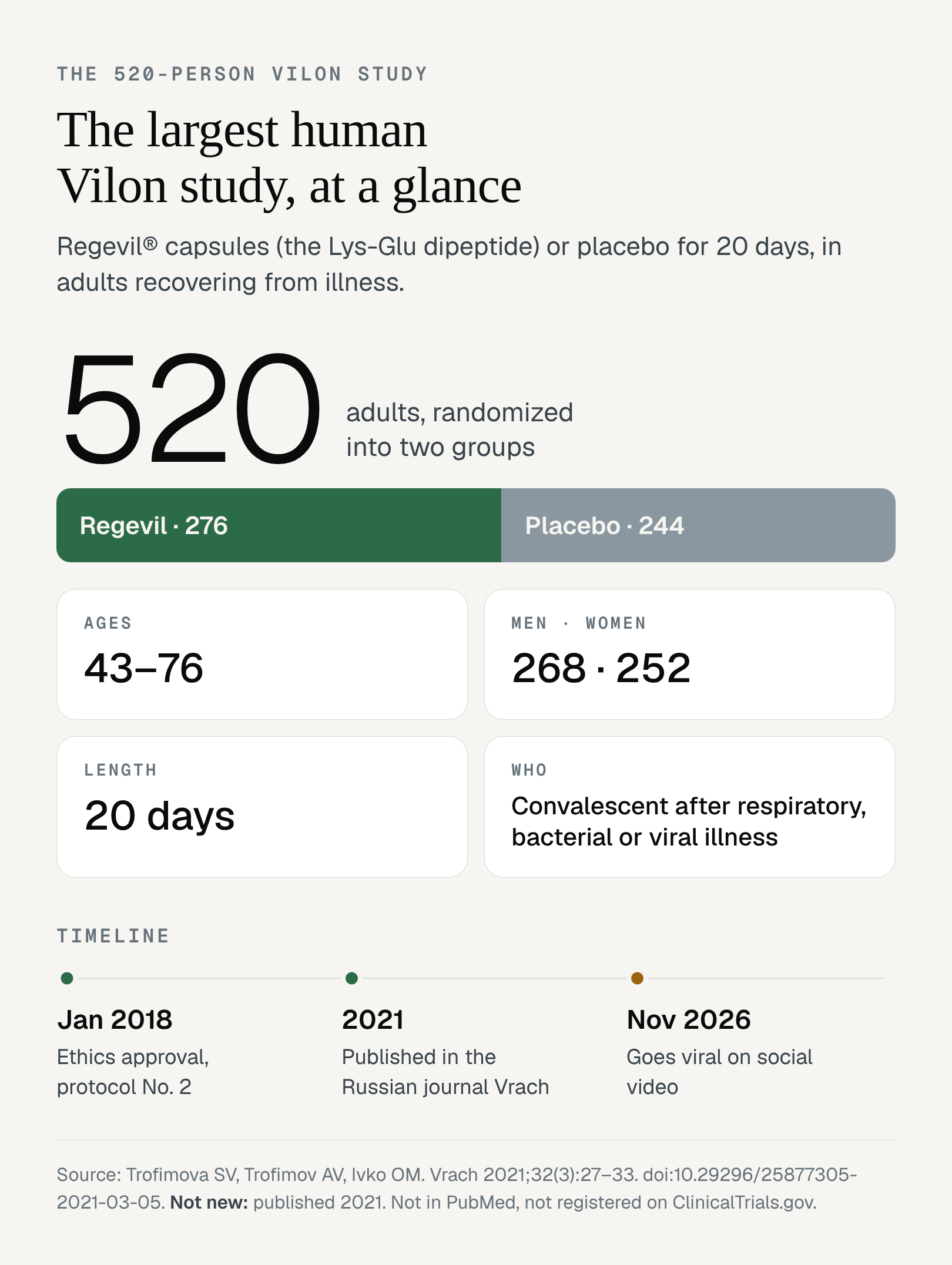
The largest human Vilon study, at a glance
Regevil® capsules (the Lys-Glu dipeptide) or placebo for 20 days, in adults recovering from illness.
520adults, randomized into two groups
Ages
43–76
Men · women
268 · 252
Length
20 days
Who
Convalescent after respiratory, bacterial or viral illness
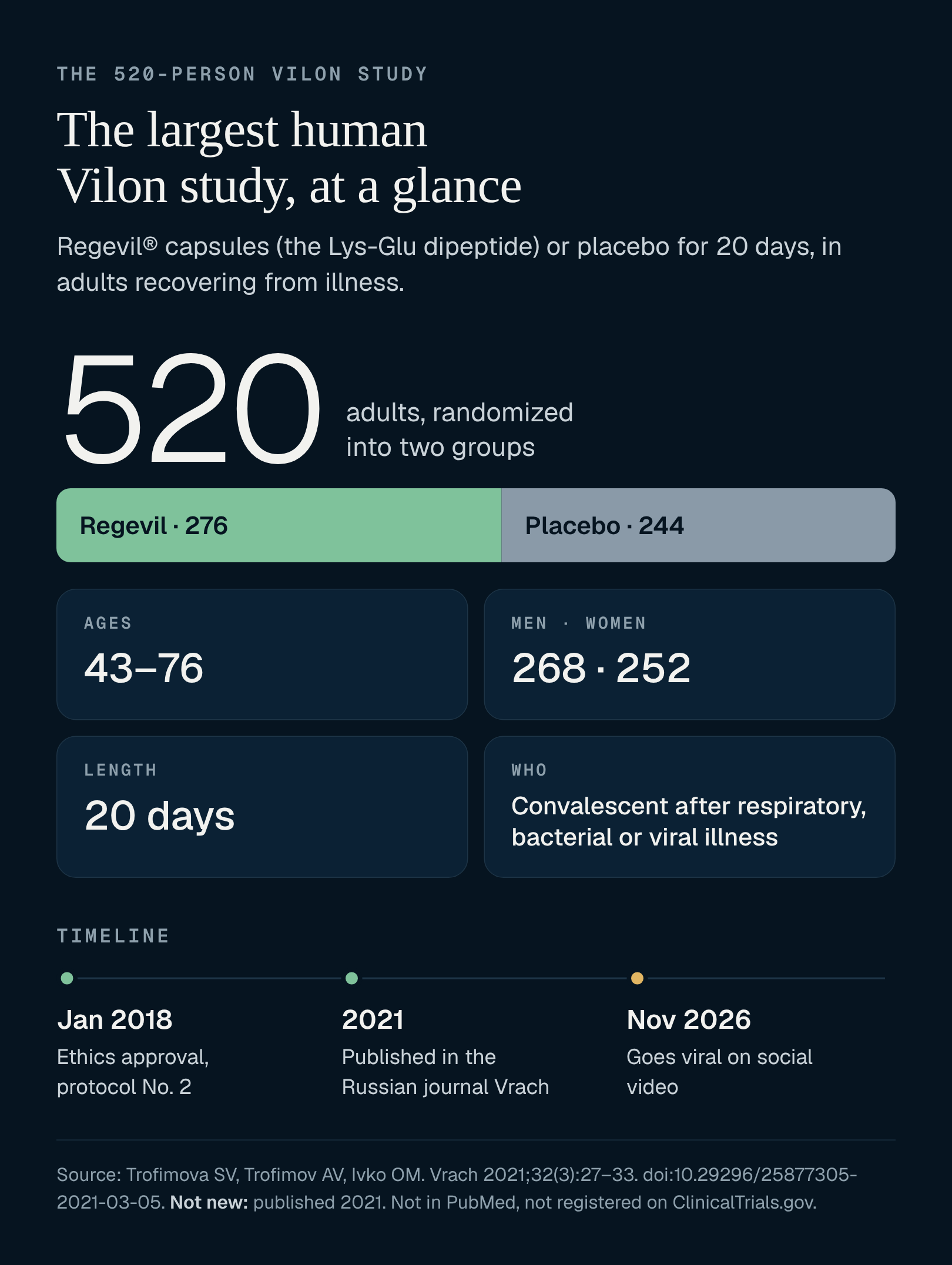
Timeline
Jan 2018Ethics approval, protocol No. 2
2021Published in the Russian journal Vrach
Nov 2026Goes viral on social video
Source: Trofimova SV, Trofimov AV, Ivko OM. Vrach 2021;32(3):27–33. doi:10.29296/25877305-2021-03-05. Not new: published 2021. Not in PubMed, not registered on ClinicalTrials.gov.
Trofimova et al., Vrach 2021. Not new, not in PubMed and not registered.
The 520-person Vilon study at a glance: 276 adults took Regevil (Lys-Glu) and 244 took placebo for 20 days; ages 43 to 76, 268 men and 252 women, all convalescent after respiratory, bacterial or viral illness. Ethics approval January 2018, published 2021 in Vrach, viral on social video in November 2026.The full-size image, for saving or sharingThe 520-person Vilon study at a glance: 276 adults took Regevil (Lys-Glu) and 244 took placebo for 20 days; ages 43 to 76, 268 men and 252 women, all convalescent after respiratory, bacterial or viral illness. Ethics approval January 2018, published 2021 in Vrach, viral on social video in November 2026.The full-size image, for saving or sharing

At a glance

Compounds

Who was studied, and what they got

  • People: 520 adults aged 43 to 76 (268 men, 252 women) in the convalescent period after acute respiratory, bacterial or viral illness, including influenza and pneumococcal infection. The paper frames them as workers in harsh production and climate conditions.
  • Groups: the authors say participants were “randomized into 2 groups”. 276 received Regevil® (vilon) capsules and 244 received placebo “on the same schedule”.
  • Product: Regevil® is a Russian dietary supplement (БАД) built on the Lys-Glu dipeptide. In the Vrach 2021 study (Trofimova et al.), the Regevil group took one capsule a day with food for 20 days, and its T-cell and symptom results are below; the paper does not state how much Lys-Glu a capsule contains.
  • Measured: complaints (weakness, fatigue, work capacity, concentration), routine blood and urine tests, lymphocyte subsets by immunofluorescence (CD3, CD4, CD8, CD20), immunoglobulins, and a lymphocyte migration-inhibition test.
  • Ethics: protocol No. 2 of January 24, 2018, approved by the ethics committee of the St. Petersburg Institute of Bioregulation and Gerontology.
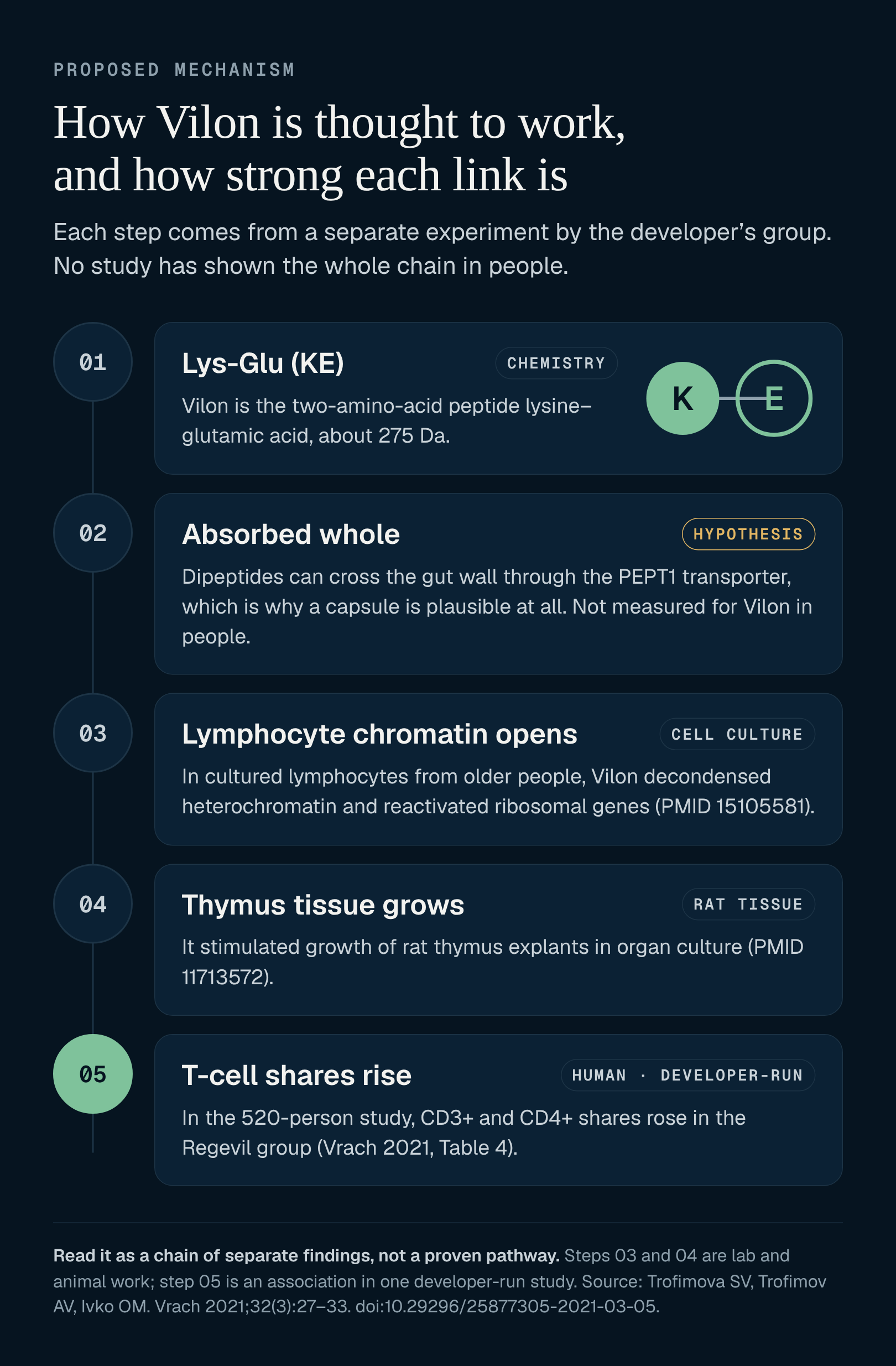
Proposed mechanism
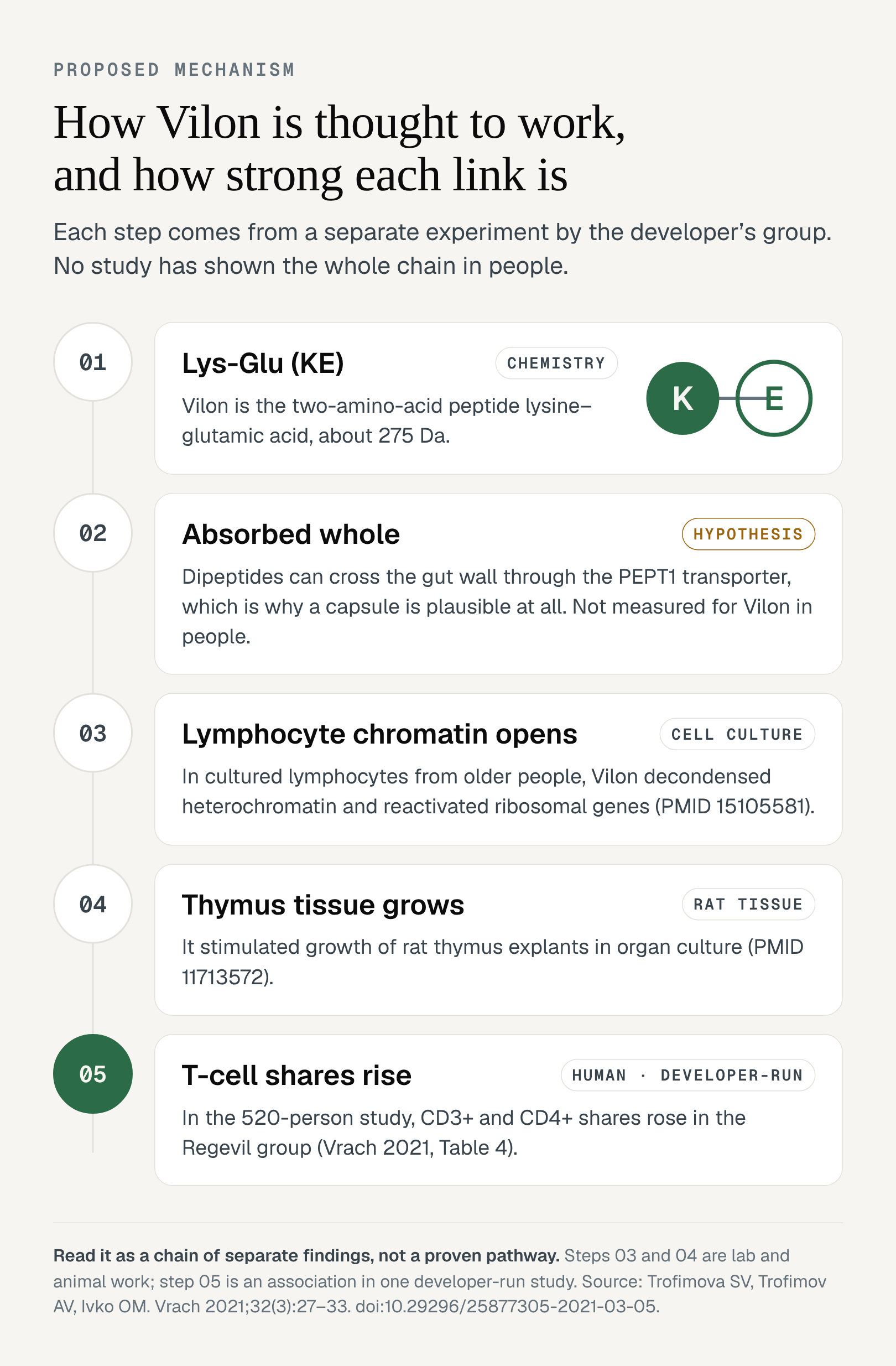
How Vilon is thought to work, and how strong each link is
Each step comes from a separate experiment by the developer’s group. No study has shown the whole chain in people.
Lys-Glu (KE)Chemistry
Vilon is the two-amino-acid peptide lysine–glutamic acid, about 275 Da.
Absorbed wholeHypothesis
Dipeptides can cross the gut wall through the PEPT1 transporter, which is why a capsule is plausible at all. Not measured for Vilon in people.
Lymphocyte chromatin opensCell culture
In cultured lymphocytes from older people, Vilon decondensed heterochromatin and reactivated ribosomal genes (PMID 15105581).
Thymus tissue growsRat tissue
It stimulated growth of rat thymus explants in organ culture (PMID 11713572).
T-cell shares riseHuman · developer-run
In the 520-person study, CD3+ and CD4+ shares rose in the Regevil group (Vrach 2021, Table 4).
Read it as a chain of separate findings, not a proven pathway. Steps 03 and 04 are lab and animal work; step 05 is an association in one developer-run study. Source: Trofimova SV, Trofimov AV, Ivko OM. Vrach 2021;32(3):27–33. doi:10.29296/25877305-2021-03-05.
Separate findings from the developer’s group, not a proven pathway in people.
Proposed mechanism of Vilon in five steps with evidence levels: 1, Lys-Glu dipeptide (chemistry); 2, absorbed whole through the PEPT1 transporter (hypothesis, not measured in people); 3, opens lymphocyte chromatin in cell culture (PMID 15105581); 4, stimulates rat thymus explant growth (PMID 11713572); 5, CD3+ and CD4+ shares rose in the 520-person developer-run study.The full-size image, for saving or sharingProposed mechanism of Vilon in five steps with evidence levels: 1, Lys-Glu dipeptide (chemistry); 2, absorbed whole through the PEPT1 transporter (hypothesis, not measured in people); 3, opens lymphocyte chromatin in cell culture (PMID 15105581); 4, stimulates rat thymus explant growth (PMID 11713572); 5, CD3+ and CD4+ shares rose in the 520-person developer-run study.The full-size image, for saving or sharing

The immune results (Table 4)

All values are means ± error as printed in Table 4 of the paper. A dagger (†) marks the paper’s p<0.05 against the same group’s value before treatment.

The immune results (Table 4)
Marker (normal range)Placebo beforePlacebo afterRegevil beforeRegevil after
CD3+ T cells, % (60–89)48.3 ± 1.850.3 ± 1.552.4 ± 1.761.6 ± 1.6†
CD3+ T cells, ×10⁹/L (0.88–2.40)1.25 ± 0.041.35 ± 0.041.49 ± 0.011.95 ± 0.04†
CD4+ helper cells, % (31–46)23.7 ± 1.625.7 ± 1.827.4 ± 1.933.2 ± 1.6†
CD4+ helper cells, ×10⁹/L (0.57–1.10)0.42 ± 0.010.37 ± 0.020.52 ± 0.030.59 ± 0.02†
CD8+ cells, % (21–41)29.1 ± 1.830.4 ± 1.532.1 ± 1.927.3 ± 1.5
CD4+/CD8+ ratio (0.9–1.8)0.80 ± 0.020.80 ± 0.050.90 ± 0.011.20 ± 0.02
CD20+ B cells, % (15–30)14.1 ± 0.314.2 ± 0.213.9 ± 0.415.0 ± 0.3
White cells, ×10⁹/L (4–9)4.3 ± 0.14.8 ± 0.14.6 ± 0.66.5 ± 0.2†
Migration-inhibition test, % (40–75)89.4 ± 3.686.6 ± 3.084.2 ± 3.976.1 ± 3.1†

Read plainly: in the Regevil group, total T cells and CD4+ helper cells moved up into or toward the normal range and the helper-to-cytotoxic ratio rose from 0.90 to 1.20; in the placebo group they barely moved. The paper adds that Regevil “normalized impaired immune parameters in 86% of cases” but does not define normalization or show how that figure was counted.

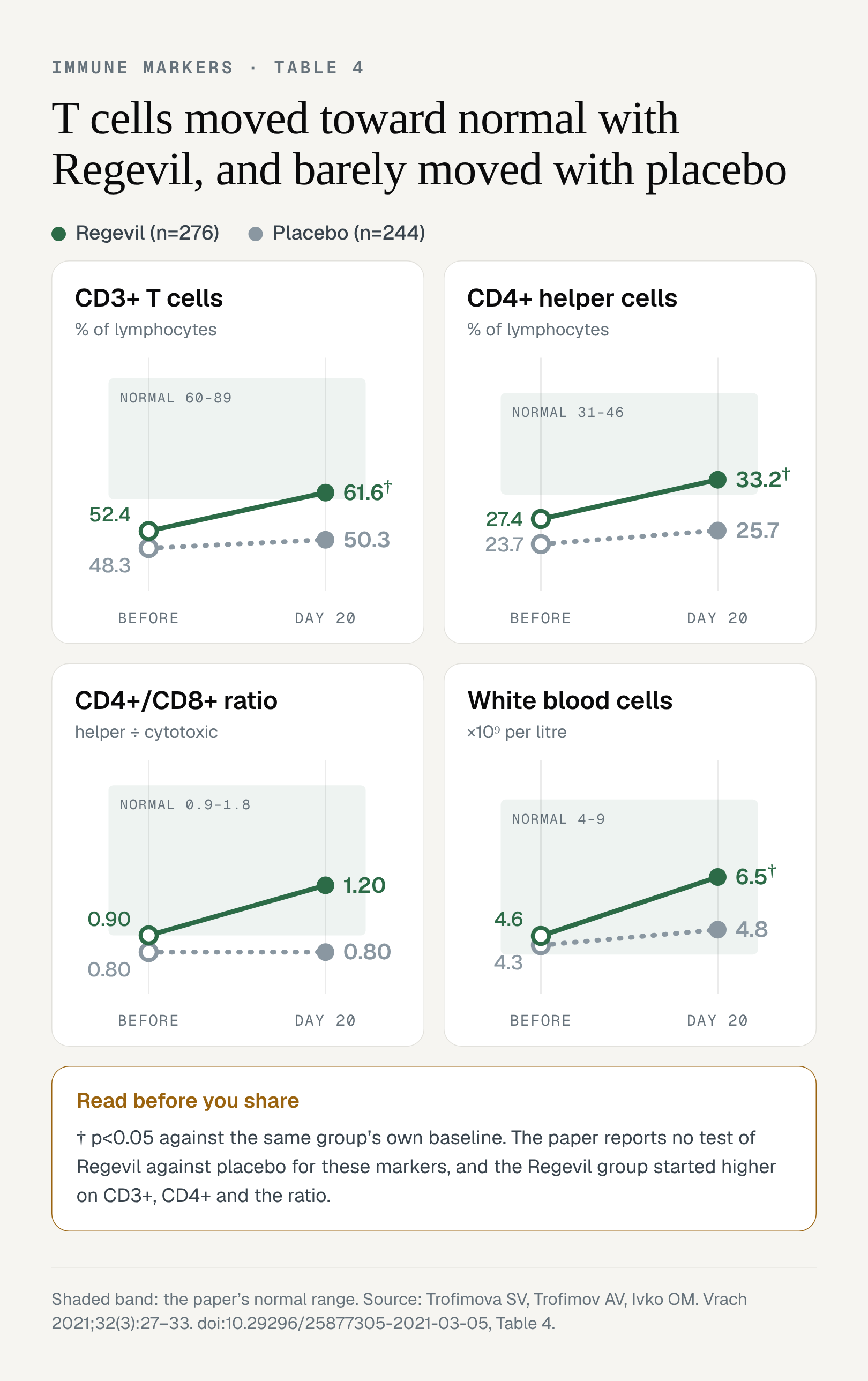
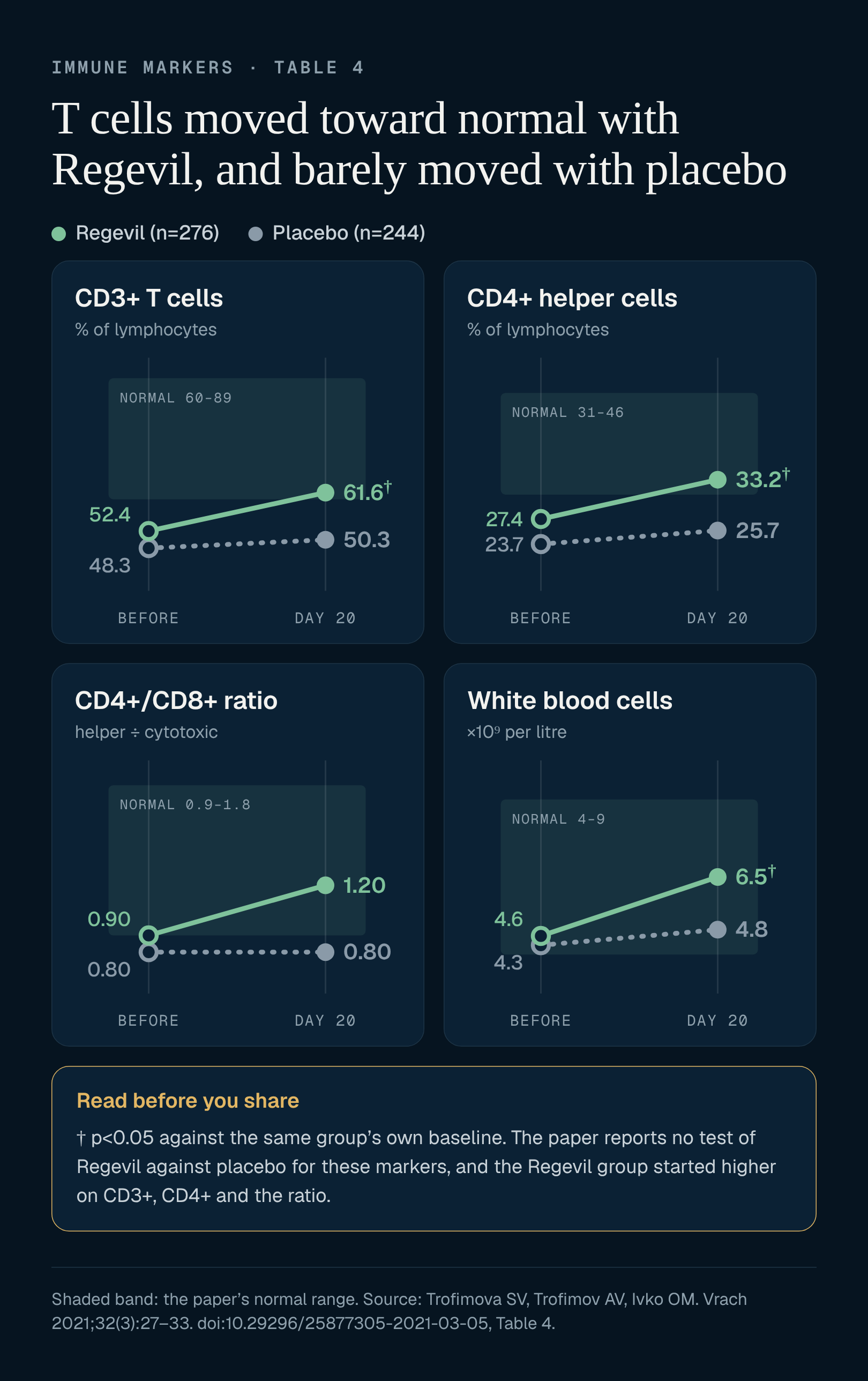
Immune markers · Table 4
T cells moved toward normal with Regevil, and barely moved with placebo
Regevil (n=276)Placebo (n=244)
CD3+ T cells% of lymphocytesNormal 60–8950.361.6†52.448.3BeforeDay 20
CD4+ helper cells% of lymphocytesNormal 31–4625.733.2†27.423.7BeforeDay 20
CD4+/CD8+ ratiohelper ÷ cytotoxicNormal 0.9–1.80.801.200.900.80BeforeDay 20
White blood cells×10⁹ per litreNormal 4–94.86.5†4.64.3BeforeDay 20
Read before you share
† p<0.05 against the same group’s own baseline. The paper reports no test of Regevil against placebo for these markers, and the Regevil group started higher on CD3+, CD4+ and the ratio.
Shaded band: the paper’s normal range. Source: Trofimova SV, Trofimov AV, Ivko OM. Vrach 2021;32(3):27–33. doi:10.29296/25877305-2021-03-05, Table 4.
Within-group tests only; the Regevil group started higher.
Slope charts from Table 4. CD3+ T cells: Regevil 52.4% to 61.6%, placebo 48.3% to 50.3%. CD4+ helper cells: Regevil 27.4% to 33.2%, placebo 23.7% to 25.7%. CD4+/CD8+ ratio: Regevil 0.90 to 1.20, placebo 0.80 to 0.80. White blood cells: Regevil 4.6 to 6.5, placebo 4.3 to 4.8 ×10⁹/L. Changes were tested only against each group’s own baseline.The full-size image, for saving or sharingSlope charts from Table 4. CD3+ T cells: Regevil 52.4% to 61.6%, placebo 48.3% to 50.3%. CD4+ helper cells: Regevil 27.4% to 33.2%, placebo 23.7% to 25.7%. CD4+/CD8+ ratio: Regevil 0.90 to 1.20, placebo 0.80 to 0.80. White blood cells: Regevil 4.6 to 6.5, placebo 4.3 to 4.8 ×10⁹/L. Changes were tested only against each group’s own baseline.The full-size image, for saving or sharing

The symptom results (Table 5)

Counts and percentages as printed in Table 5. The paper marks two comparisons: † is p<0.05 against the group’s own starting value, and ‡ is p<0.05 against the placebo group.

The symptom results (Table 5)
ComplaintPlacebo before (n=244)Placebo afterRegevil before (n=276)Regevil after
General weakness239 (97.9%)222 (90.9%)270 (97.8%)133 (48.1%)† ‡
Fatigue220 (90.1%)200 (81.9%)263 (95.2%)110 (39.8%)† ‡
Reduced work capacity216 (88.5%)193 (79.1%)247 (89.4%)107 (38.7%)† ‡
Poor concentration119 (48.7%)115 (47.1%)155 (56.1%)88 (31.8%)† ‡

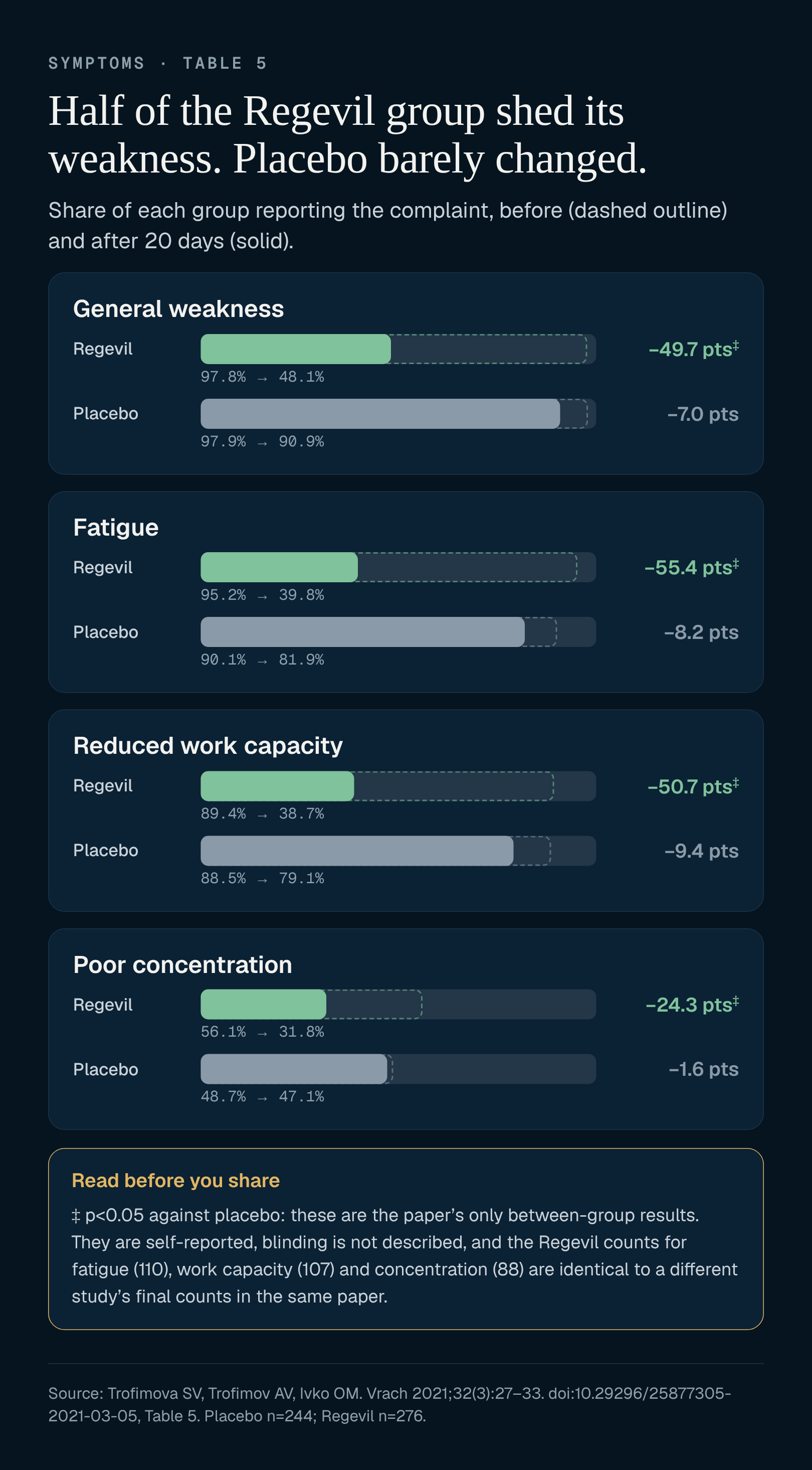
These are the only results in the paper compared directly between Regevil and placebo. They are self-reported complaints, counted as present or absent.

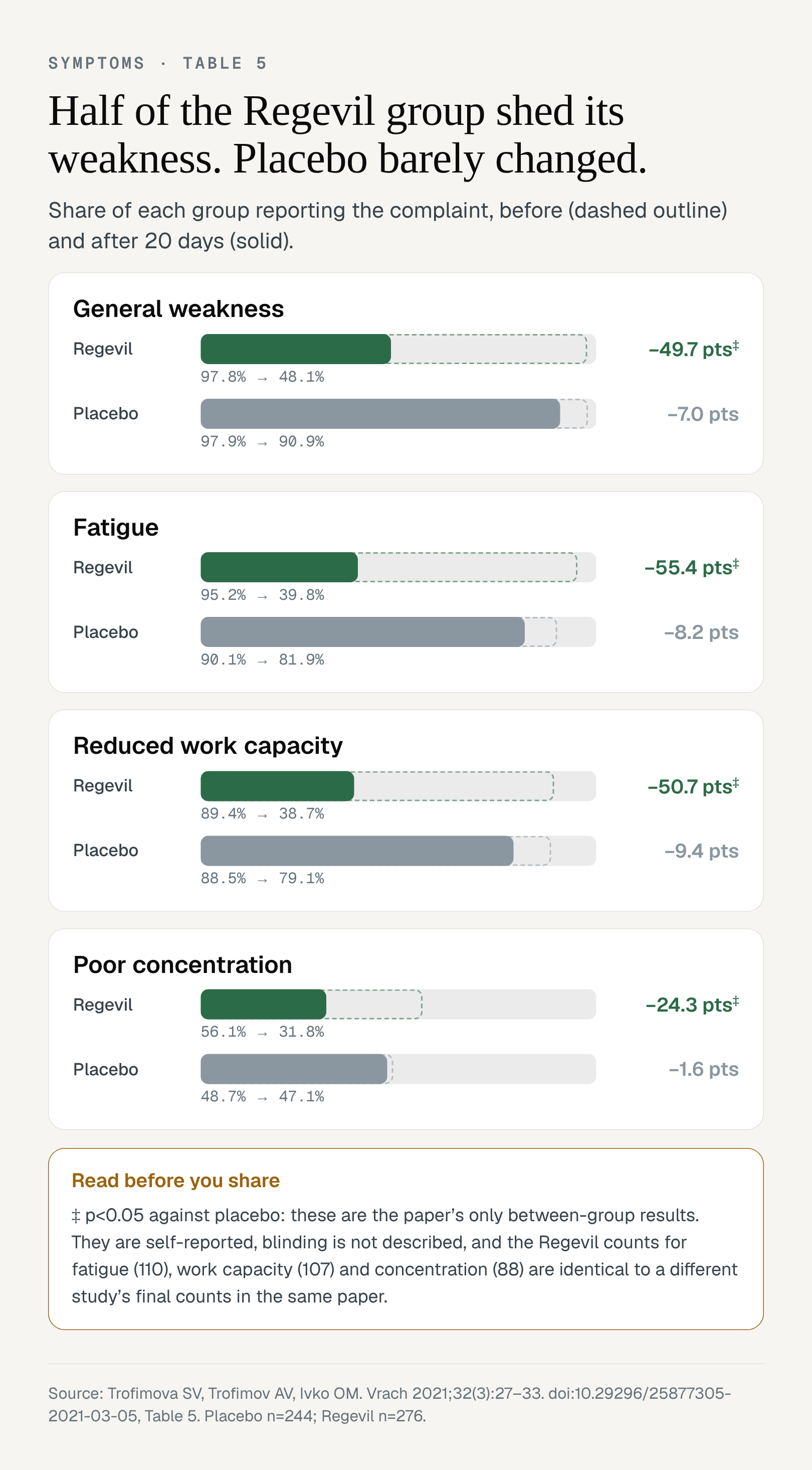
Symptoms · Table 5
Half of the Regevil group shed its weakness. Placebo barely changed.
Share of each group reporting the complaint, before (dashed outline) and after 20 days (solid).
General weakness
Regevil97.8% → 48.1%−49.7 pts‡
Placebo97.9% → 90.9%−7.0 pts
Fatigue
Regevil95.2% → 39.8%−55.4 pts‡
Placebo90.1% → 81.9%−8.2 pts
Reduced work capacity
Regevil89.4% → 38.7%−50.7 pts‡
Placebo88.5% → 79.1%−9.4 pts
Poor concentration
Regevil56.1% → 31.8%−24.3 pts‡
Placebo48.7% → 47.1%−1.6 pts
Read before you share
‡ p<0.05 against placebo: these are the paper’s only between-group results. They are self-reported, blinding is not described, and the Regevil counts for fatigue (110), work capacity (107) and concentration (88) are identical to a different study’s final counts in the same paper.
Source: Trofimova SV, Trofimov AV, Ivko OM. Vrach 2021;32(3):27–33. doi:10.29296/25877305-2021-03-05, Table 5. Placebo n=244; Regevil n=276.
Self-reported; three Regevil counts repeat another study’s table in the same paper.
Bar chart from Table 5, share of each group reporting the complaint before and after 20 days. General weakness: Regevil 97.8% to 48.1%, placebo 97.9% to 90.9%. Fatigue: 95.2% to 39.8% vs 90.1% to 81.9%. Reduced work capacity: 89.4% to 38.7% vs 88.5% to 79.1%. Poor concentration: 56.1% to 31.8% vs 48.7% to 47.1%. Regevil results were significant against placebo.The full-size image, for saving or sharingBar chart from Table 5, share of each group reporting the complaint before and after 20 days. General weakness: Regevil 97.8% to 48.1%, placebo 97.9% to 90.9%. Fatigue: 95.2% to 39.8% vs 90.1% to 81.9%. Reduced work capacity: 89.4% to 38.7% vs 88.5% to 79.1%. Poor concentration: 56.1% to 31.8% vs 48.7% to 47.1%. Regevil results were significant against placebo.The full-size image, for saving or sharing

Six things to know before relying on it

  1. The immune markers were never compared with placebo. Table 4’s significance marks test each group against its own baseline. A between-group test, the one that would show Regevil did better than placebo on T cells, is not reported.
  2. The groups did not start level. At baseline the Regevil group already had more CD3+ T cells (52.4% vs 48.3%), more CD4+ cells (27.4% vs 23.7%) and a higher CD4+/CD8+ ratio (0.90 vs 0.80) than the placebo group. Unequal group sizes (276 vs 244) and unequal starting points are unusual after randomization; the paper does not describe how participants were randomized.
  3. Blinding and registration are not described. The paper does not say whether participants or assessors knew who got placebo, does not name a trial registry, and reports no adverse-event table. Symptom counts are the outcomes most sensitive to unblinded assessment.
  4. Three symptom counts repeat another study’s table. The same paper reports a different product, Epimental® (epitalon), in 270 different people under occupational stress. Its Table 1 ends with 110 people with fatigue, 107 with reduced work capacity and 88 with poor concentration, the same three final counts as Regevil’s Table 5, in different populations with different denominators. The paper does not explain this. Until the authors correct it or publish the underlying data, those three rows should not be treated as independent evidence.
  5. It was run by the developer. Two of the three authors are at the St. Petersburg Institute of Bioregulation and Gerontology, the Khavinson institute that developed Vilon and whose ethics committee approved the study; Regevil is a commercial supplement. The paper declares no conflict of interest and no funding. No independent group has repeated the study.
  6. People recovering from an infection tend to recover anyway. Weakness after a respiratory illness usually fades over weeks. That is what a placebo group is for, and in this study the placebo group barely improved (90.9% still weak after 20 days), which is itself worth a second look.
Evidence check
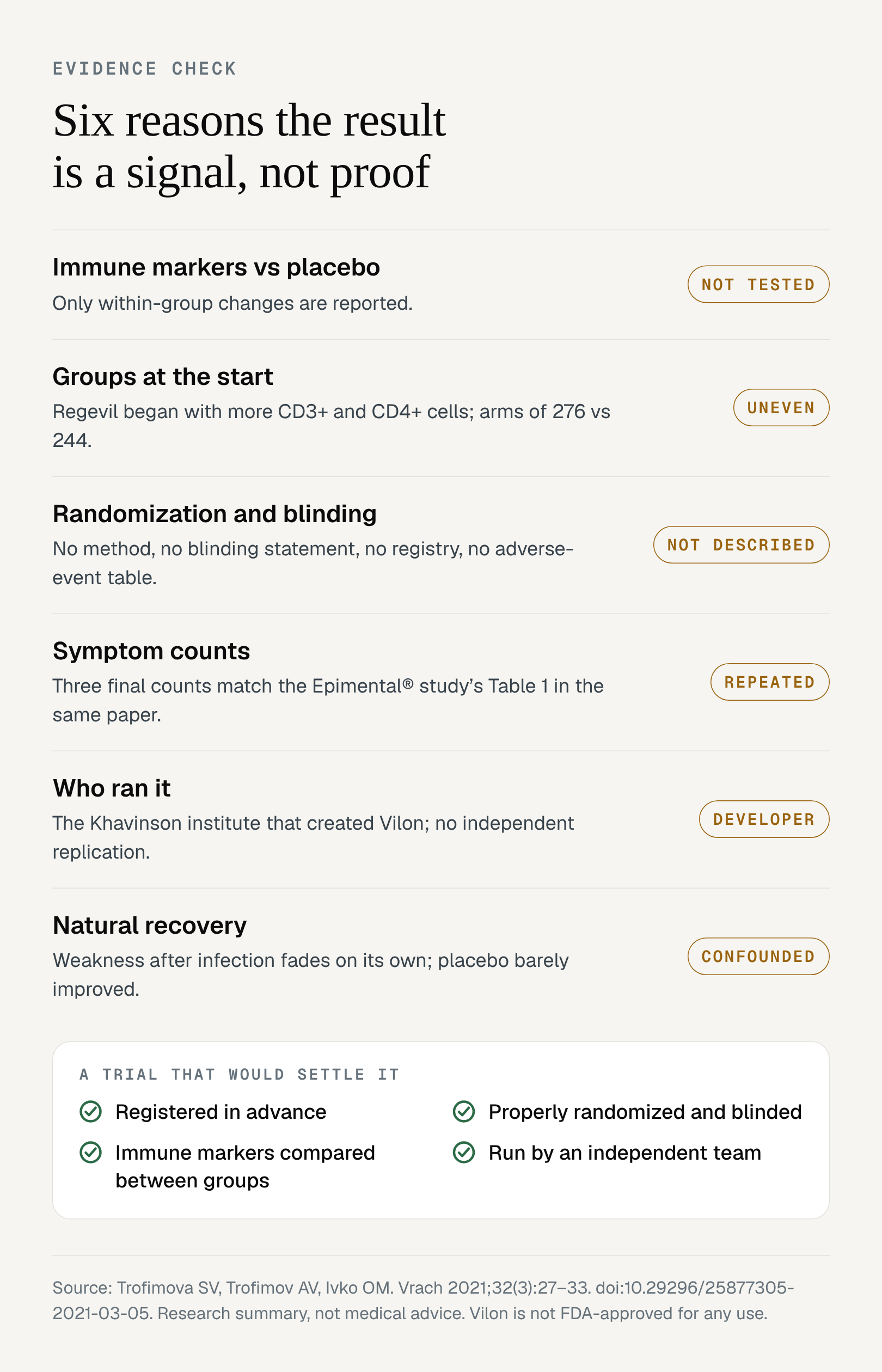
Six reasons the result is a signal, not proof
Immune markers vs placebo
Only within-group changes are reported.
Not tested
Groups at the start
Regevil began with more CD3+ and CD4+ cells; arms of 276 vs 244.
Uneven
Randomization and blinding
No method, no blinding statement, no registry, no adverse-event table.
Not described
Symptom counts
Three final counts match the Epimental® study’s Table 1 in the same paper.
Repeated
Who ran it
The Khavinson institute that created Vilon; no independent replication.
Developer
Natural recovery
Weakness after infection fades on its own; placebo barely improved.
Confounded
A trial that would settle it
Registered in advance
Properly randomized and blinded
Immune markers compared between groups
Run by an independent team
Source: Trofimova SV, Trofimov AV, Ivko OM. Vrach 2021;32(3):27–33. doi:10.29296/25877305-2021-03-05. Research summary, not medical advice. Vilon is not FDA-approved for any use.
What a trial that settles the question would need.
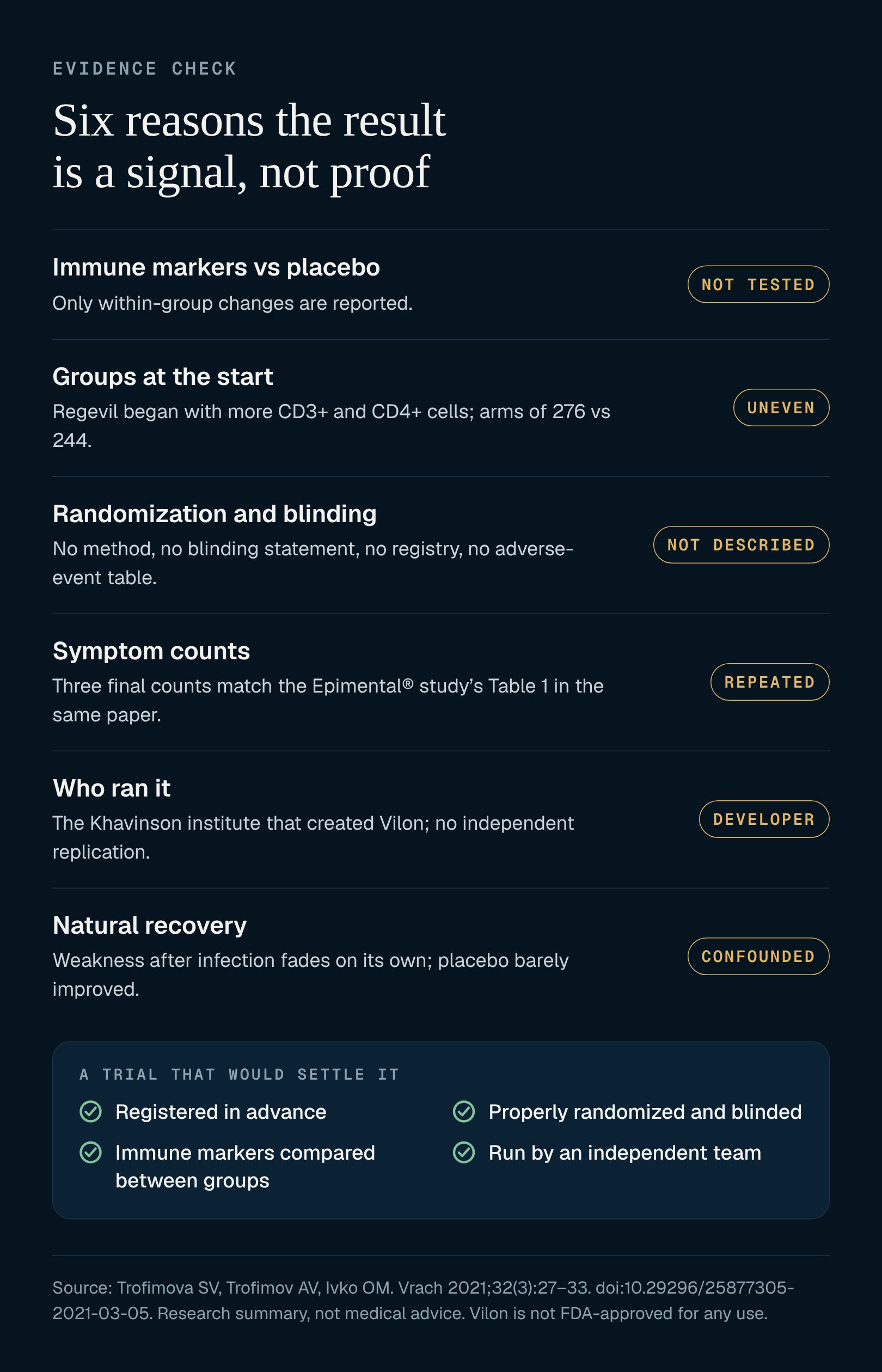
Evidence check of the 520-person Vilon study: immune markers not tested against placebo; groups uneven at the start; randomization and blinding not described; three symptom counts repeated from another table; run by the developer; natural recovery confounds symptoms. A settling trial would be registered, randomized and blinded, compare groups, and be run independently.The full-size image, for saving or sharingEvidence check of the 520-person Vilon study: immune markers not tested against placebo; groups uneven at the start; randomization and blinding not described; three symptom counts repeated from another table; run by the developer; natural recovery confounds symptoms. A settling trial would be registered, randomized and blinded, compare groups, and be run independently.The full-size image, for saving or sharing

What this study is often misreported as

Many pages describe this study as unpublished or as part of the Khavinson review series, and repeat one line from it: Vilon “normalized impaired immune parameters in 86% of cases”. The study is published, in the Russian journal Vrach (2021;32(3):27–33, doi:10.29296/25877305-2021-03-05). The 86% is the authors’ own summary, with no definition of “normalized” and no count behind it. What the paper actually measured is in Tables 4 and 5 above: within-group T-cell changes, and symptom counts that were the only results compared with placebo.

How this compares with other thymus peptides

Readers looking for alternatives to Vilon usually mean other peptides sold for the thymus and immune aging. Their evidence differs more than their marketing does:

  • Vilon vs Thymalin: a synthetic dipeptide versus a calf-thymus extract, each with one large developer-run Russian study.
  • Vilon vs Thymogen: Thymogen’s Glu-Trp dipeptide is the only one of the two tested by an independent Western team, and it did not beat placebo in a 202-person phase III trial (PMID 15598977).
  • Vilon vs thymosin alpha-1: thymosin alpha-1 is an approved drug abroad (Zadaxin) with large randomized trials, including a 1,089-person sepsis trial with no clear mortality benefit (PMID 39814420).
  • Vilon vs Epitalon: a thymus dipeptide versus a pineal tetrapeptide; Epitalon has no controlled human trial of its own.

No trial has compared any of these with Vilon directly.

How this changes the Vilon evidence

Before this study, the human Vilon record was small: cell-culture chromatin work (PMID 15105581), a 2007 report in diabetes (PMID 18306698), and clinical series summarized in the Khavinson group’s 2014 review, whose one double-blind Vilon study had 63 surgical patients (Khavinson, Kuznik, Ryzhak, Advances in Gerontology 2014).

The Regevil study is larger than all of those combined. It is a reason to take Vilon’s T-cell signal seriously enough to test it properly; it is not proof that Vilon strengthens immunity. A trial that would settle it would register in advance, randomize and blind properly, compare immune markers between groups, and be run by a team independent of the developer. See the Vilon peptide page for the full evidence, identity and product forms, and the Khavinson bioregulators guide for the family it comes from.

Questions

What is the 520-person Vilon study?

Trofimova, Trofimov and Ivko, Vrach 2021;32(3):27–33 (doi:10.29296/25877305-2021-03-05). 520 adults aged 43 to 76 recovering from respiratory, bacterial or viral illness took Regevil, a Russian Lys-Glu (Vilon) supplement, or placebo for 20 days: 276 in the Regevil group and 244 on placebo. It is the largest published human Vilon study.
What did the Vilon study find?

In the Regevil group, CD3+ T cells rose from 52.4% to 61.6%, CD4+ helper cells from 27.4% to 33.2% and the CD4+/CD8+ ratio from 0.90 to 1.20; in the placebo group CD3+ went from 48.3% to 50.3% and CD4+ from 23.7% to 25.7%. General weakness fell from 97.8% to 48.1% of people with Regevil and from 97.9% to 90.9% with placebo (Vrach 2021, Tables 4 and 5).

Is the Vilon study new?

No. It was approved by an ethics committee in January 2018 and published in 2021 in the Russian journal Vrach. It circulated widely in November 2026 through a social video, which is why it looks new.

Was the Vilon study double-blind and randomized?

The authors say participants were randomized into two groups, but the paper does not describe the randomization method, does not say whether anyone was blinded, and names no trial registry. The two groups were different sizes (276 and 244) and started with different T-cell levels.

Did Vilon beat placebo on T cells?

The paper does not test that. Its immune table only marks changes within each group compared with that group’s starting values. The between-group comparison with placebo is reported only for the symptom counts, where Regevil’s results were significantly better than placebo.

Who ran the Vilon study?

Two of the three authors work at the St. Petersburg Institute of Bioregulation and Gerontology, which developed Vilon, and its ethics committee approved the protocol. The paper declares no conflict of interest and no external funding. No independent group has repeated it.

Is Regevil the same as Vilon?

Regevil® is a Russian dietary supplement built on the same Lys-Glu dipeptide that is called Vilon. Research vials sold as “Vilon” are a different product form; the study tested Regevil capsules taken by mouth, and the paper does not state the amount of Lys-Glu per capsule.

Medical disclaimer: This article is for educational and informational purposes only. It does not constitute medical advice. Consult a qualified healthcare provider before using any peptide.

Share this article

References

  1. 1Ways to increase the body’s reserve capacities in individuals under the influence of unfavorable productive and climatoecological factors (in Russian)Trofimova SV, Trofimov AV, Ivko OM, Vrach 2021 · DOI: 10.29296/25877305-2021-03-05
  2. 2Peptide bioregulators: a new class of geroprotectors, report 2. The results of clinical trialsKhavinson VKh, Kuznik BI, Ryzhak GA, Advances in Gerontology 2014 · DOI: 10.1134/S2079057014040122
  3. 3Bioregulator Vilon-induced reactivation of chromatin in cultured lymphocytes from old peopleLezhava T et al., Biogerontology 2004 · PMID: 15105581
  4. 4Effect of vilon on the immunity status and coagulation hemostasis in patients of different age with diabetes mellitus (in Russian)Kuznik BI et al., Advances in Gerontology 2007 · PMID: 18306698

Educational only. Not medical advice.

We earn a commission on some links. That never changes a rank. How we make money: kymatahealth.com/affiliate-disclosure.