KSM-66 vs Sensoril vs Shoden: How the Big Ashwagandha Extracts Compare in Trials
No trial has pitted these branded extracts against each other for stress or sleep. They differ in plant part, standardization and dose, and each has its own small set of trials. Here is what each one was tested for, the blood-level studies that do compare extracts, and why root versus leaf matters.
By Kymata Health Editorial Published Last checked
We earn a commission if you buy through links on this page. It never changes our grades or rankings. How we make money →
Quick pick
From a partner brand · paid link
Momentous Ashwagandha, 60 capsules
from Momentous
Label: 1 capsule: 300 mg NooGandha ashwagandha extract (standardized to 3.5% withanolides).
Best for regular use: $18.74 on subscription vs $24.99 one-time (checked Oct 15, 2026).
Key takeaways
From 14 sources- We found no trial comparing KSM-66, Sensoril and Shoden for stress, sleep or any other clinical outcome; the only extract-versus-extract studies measured blood levels after a single dose910.
- KSM-66 is a root extract; Sensoril and Shoden use root and leaf17. Trials used 60 to 240 mg a day of Shoden456, 500 mg of Sensoril7, and 600 mg of KSM-661.
- Shoden at 120 mg a day improved self-reported sleep quality by 72% versus 29% with placebo in 150 adults4; KSM-66 at 600 mg a day improved sleep measures, most clearly in people with insomnia13.
- Sensoril at 500 mg a day led to bigger squat and bench press gains than placebo in 38 men who were strength training7.
- Plant part is a quality and safety question: only 2 of 25 products tested in one analysis were confirmed as root-derived11, and leaf has much less human safety data than root12.
What this article covers
1 evidence profileThe evidence, graded
Pulled from the trial tables in our evidence profiles. Grades follow our evidence-grading policy.
Graded findings
4 rows- BGrade BPerceived stressImproved Stress (SMD -1.75) and anxiety (SMD -1.55) fell versus placebo. Heterogeneity was very high (I² 83–94%) and certainty of evidence was low.Ashwagandha · Meta-analysis · n=1,002 · 2022 · PMID 36017529
- BGrade BOverall sleepImproved Small but significant improvement in overall sleep (SMD -0.59), larger in people with insomnia. Mental alertness on rising and anxiety also improved; quality of life did not. No serious side effects reported.Ashwagandha · Meta-analysis · n=400 · 2021 · PMID 34559859
- BGrade BCortisolImproved Cortisol fell by 1.16 µg/dL versus placebo (95% CI -1.64 to -0.69). Perceived stress did not change significantly (SMD -0.355; 95% CI -1.188 to 0.47). Risk of bias was generally moderate.Ashwagandha · Meta-analysis · n=488 · 2025 · PMID 40746175
- CGrade CFatigue and vigor in older menNo effect Fatigue, vigor and sexual well-being improved over time in both conditions with no significant difference from placebo. DHEA-S rose 18% and testosterone 14.7% more than with placebo.Ashwagandha · Crossover RCT · n=57 · 2019 · PMID 30854916
What actually differs between the three
Ashwagandha root and leaf have different chemical makeups, and while most products use root, some use root and leaf1. KSM-66 is a root extract; in the trial ODS describes, it was standardized to more than 5% withanolides per 300 mg capsule1. Shoden is a root-and-leaf extract standardized to withanolide glycosides, 21 mg per 60 mg capsule in its sleep trial1, or 35%6. Sensoril is a water-based extract of roots and leaves7.
The labels measure different compounds: one comparison study tested extracts standardized to 35% or 10% withanolide glycosides and others to 5% or 2.5% withanolides9. That is why a higher percentage on one label cannot be read straight across to another, and why ODS says varied preparations and doses make it hard to name a best extract or amount1.
KSM-66 (root): the largest share of reviewed trials, at 600 mg a day
A 2021 review that ODS summarizes found 7 trials of ashwagandha for stress and anxiety in 491 adults, all in India; 3 used KSM-66 and 2 used Sensoril or Shoden1. Doses ranged from 240 to 1,250 mg of extract a day, and in several studies 500 to 600 mg a day looked better than lower doses1. Across extracts, a 2022 meta-analysis of 12 trials with 1,002 people found a dose-response favoring 300 to 600 mg a day for stress, with low certainty of evidence2.
For sleep, an 8-week trial gave 80 adults, half with insomnia, two 300 mg KSM-66 capsules a day or placebo1. Sleep measures improved in both healthy and insomnia participants, and more so in those with insomnia3. A meta-analysis of 5 sleep trials in 372 adults, mostly using KSM-66 at 250 to 600 mg a day, found a small effect that was larger at 600 mg a day, after at least 8 weeks, and in people with insomnia1.
Shoden (root and leaf): low doses, several positive trials
In 150 adults with non-restorative sleep, 120 mg a day of Shoden for 6 weeks raised self-reported sleep quality by 72% versus 29% with placebo, and actigraphy showed better sleep efficiency, total sleep time and time to fall asleep4. In 60 stressed adults, 240 mg a day for 60 days lowered anxiety scores (HAM-A) and morning cortisol more than placebo, while a second symptom scale (DASS-21) only approached significance5.
A 2024 trial gave 60 or 120 mg a day for 60 days and reported anxiety scores falling 59% in both dose groups versus a 0.83% rise with placebo6. Its 60 participants met diagnostic criteria for generalized anxiety disorder and had high morning cortisol, so it tells us less about everyday stress6.
Sensoril (root and leaf): a training trial and a dose study
In the 12-week STAR trial, 38 recreationally active men doing a set resistance program took 500 mg a day of Sensoril or placebo7. Squat 1-rep max rose 19.1 kg versus 10.0 kg, and bench press 12.8 kg versus 8.0 kg; apart from one fat-distribution ratio, body composition did not differ between groups7.
A 2024 dose study gave a water-extracted root-and-leaf ashwagandha at 125, 250 or 500 mg a day for 8 weeks to adults with self-reported high stress; 98 of 131 enrolled were analysed, and the authors reported stress reductions at all three doses8. The abstract does not name the product or report the size of the differences from placebo8. Separately, rat toxicology studies of Sensoril found no toxicity at up to 4,000 mg/kg a day; the work was funded by Natreon and Kerry Group14.
The only head-to-head data: blood levels after one dose
In a crossover study, 16 healthy adults took single doses of 4 unnamed commercial extracts, each delivering 185 mg of total withanolides9. The extract standardized to 35% withanolide glycosides, the same standardization reported for Shoden6, produced far higher blood withanolide exposure than the 10%, 5% and 2.5% extracts9.
A second single-dose crossover in 20 adults found that 125 mg of a 1.5% extract (Zenroot) gave 2.1 times the withanolide exposure of a 600 mg 5% extract and 1.3 times that of a 500 mg 10% extract10. Three of its authors work for OmniActive Health Technologies10. Neither study measured stress, sleep or any other effect, so higher blood levels do not show which extract works better910.
Root vs leaf: why it matters for safety
A 2026 review found that root is dominated by withanolide A, D and glycowithanolides, while leaf is richer in withaferin A; human safety data for leaf are sparse, and European risk assessments have not consistently separated plant parts12. Denmark banned ashwagandha in 2023 after a 2020 risk assessment1. In a lab analysis of 25 supplements, only 2 were confirmed as root-derived and the rest contained varying amounts of disclosed or undisclosed aerial parts11.
Liver injury has also been reported with ashwagandha supplements. In 5 cases from Iceland and the US, jaundice appeared after 2 to 12 weeks and liver tests normalized within 1 to 5 months in the 4 people followed up13; ODS notes these people took 450 to 1,350 mg a day, plant part not specified1. ODS also flags possible effects on thyroid hormones and notes that some experts advise against use in pregnancy1. Our ashwagandha side effects guide covers these in detail.
Which extract fits which goal
For the overall evidence, see ashwagandha for stress and sleep and the ashwagandha page. Matching the extract to the trials:
- Sleep: Shoden at 120 mg a day4 or KSM-66 at 600 mg a day13; pooled sleep benefits were larger at 600 mg and after 8 weeks1.
- Stress: the most trial data is for 300 to 600 mg a day, much of it with KSM-6612; Shoden has positive trials at 240 mg5.
- Strength training: Sensoril at 500 mg a day in one 12-week trial7; for hormones, see ashwagandha and testosterone.
- Root-only preference: KSM-66 is a root extract1; check any label for plant part, since one analysis found most products contained aerial parts, disclosed or not11.
- Pregnant, or taking thyroid, diabetes, blood pressure, immunosuppressant or sedative medicines: ODS flags possible interactions, and some experts advise against use in pregnancy1.
Quick answers
Common questions
3 answersIs KSM-66 better than Sensoril or Shoden?
Why is Shoden dosed so much lower than KSM-66?
Keep reading
Full evidence profiles
Every graded study, studied doses, interactions and safetyRelated articles
4 articles- ArticleAshwagandha for Stress and Sleep: What the Trials Found, and Why the Results Vary So MuchDoes ashwagandha help with stress and sleep?
- ArticleAshwagandha for Testosterone: What the Trials Show (About 57 ng/dL, With Big Caveats)Does ashwagandha raise testosterone, and by how much?
- ArticleAshwagandha Interactions: Thyroid Medicine, Sedatives, SSRIs, Alcohol, Magnesium and L-TheanineWhat does ashwagandha interact with?
- ArticleAshwagandha Side Effects: The Liver, Thyroid and Pregnancy Warnings Behind Denmark’s BanWhat are the side effects of ashwagandha?
More on Supplements and vitamins
8 pages- TopicSupplements and vitamins: every page
- PreviousIs the Taurine in Energy Drinks Bad for You? The Safety Data Points at the CaffeineTaurine gets blamed for energy-drink jitters.
- NextL-Carnitine for Weight Loss: About 1.2 kg in Pooled Trials, and a Smaller Effect Over TimeL-carnitine is sold as a fat burner.
- In this topicL-Carnitine Side Effects: Stomach Upset and Fishy Odor at 3 g, Plus the TMAO QuestionCarnitine has no official upper limit, but higher doses have known side effects, two groups need extra care, and gut bacteria turn the unabsorbed part into a compound researchers…
- In this topicL-Glutamine for Leaky Gut and IBS: What the Trials Show (One Striking Trial, Little Else)Glutamine helps maintain the gut lining, which is why it headlines 'leaky gut' protocols.
- In this topicL-Theanine and Caffeine: What the "Calm Focus" Stack Actually Did in TrialsThe pairing comes from tea and is now a supplement staple.
- ToolEvidence-graded supplement stacks
- TopicsBrowse all topics
Browse the full Supplement & Nutrient Encyclopedia or all supplement articles.
Where to buy Ashwagandha
Products from brands we partner with that contain Ashwagandha. Check the amount per serving against the doses studied, and the label for other ingredients.
Ashwagandha products from partner brands
7 products Paid links · we earn a commission- Quick pickMomentousMomentous Ashwagandha, 60 capsulesWe use this brand at home. What we useSubscribe & save 25%
Offer details
Pick “Subscribe 25% Off” on the product page; delivery every 1, 2 or 3 months; cancel or reschedule anytime.
- Subscription price shown on each product card.
- Our Momentous links apply the brand’s ambassador discount at checkout, so there is no code to type. Momentous sets any discount it applies; check the cart total before you pay.
- Offer terms from Momentous’ site, checked Oct 8, 2026. Offers can change; the brand's checkout is final.
1 capsule: 300 mg NooGandha ashwagandha extract (standardized to 3.5% withanolides); 60 servings
$24.99one-time$18.74subscribeChecked Oct 15, 2026 - HerbsProNOW Foods KSM-66 Ashwagandha, 90 Veg Caps
1 veg capsule: 600 mg organic KSM-66 ashwagandha root extract
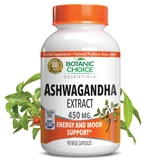
$18.41one-timeChecked Oct 14, 2026 - Botanic ChoiceBotanic Choice Ashwagandha Extract, 90 capsules
1 vege capsule: 450 mg ashwagandha root extract (1.5% withanolides, 6.75 mg); label directions 1 capsule 1 to 3 times daily with a meal
$24.00one-timeChecked Oct 12, 2026 - Physician’s ChoicePhysician’s Choice KSM-66 Ashwagandha (60 capsules)
2 capsules: 1,000 mg per serving as listed by the brand, from organic KSM-66 ashwagandha root extract (standardized to 5% withanolides) with organic black pepper extract; 30 servings
$29.97one-timeChecked Oct 20, 2026 - Dr. TobiasDr. Tobias Ashwagandha with Black Pepper (60 capsules)
Per serving: 1,300 mg organic ashwagandha root extract with 10 mg organic black pepper; 60 capsules, a 30-day supply
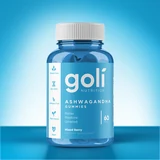
$21.99one-timeChecked Oct 14, 2026 - GoliGoli Ashwagandha Gummies, 60 gummies
1 gummy: 150 mg KSM-66 ashwagandha root extract and 12.5 mcg vitamin D (as ergocalciferol); label suggests 2 gummies twice daily
$15.98one-timeChecked Oct 15, 2026 - Renue by ScienceRenue by Science LIPO Ashwagandha, liposomal capsules (90)Subscribe & Save 10%
Offer details
Choose the Subscribe & Save option on the product page.
- 10% off subscription orders on the products we list (prices on each card).
- Offer terms from Renue by Science’s site, checked Oct 15, 2026. Offers can change; the brand's checkout is final.
1 capsule: 200 mg ashwagandha (Withania somnifera) root extract; 90 servings
$29.95one-time$26.96subscribeChecked Oct 15, 2026




References
14 sources. Numbers in the text link here.
Sources cited in this article
14 sources- 1Ashwagandha: Is it helpful for stress, anxiety, or sleep? Fact Sheet for Health Professionals (Updated May 2, 2025)NIH Office of Dietary Supplements, 2025
- 2Does Ashwagandha supplementation have a beneficial effect on the management of anxiety and stress? A systematic review and meta-analysis of randomized controlled trialsPhytother Res, 2022 · PMID 36017529
- 3Clinical evaluation of the pharmacological impact of ashwagandha root extract on sleep in healthy volunteers and insomnia patients: A double-blind, randomized, parallel-group, placebo-controlled studyJ Ethnopharmacol, 2021 · PMID 32818573
- 4A randomized, double blind, placebo controlled study to evaluate the effects of ashwagandha (Withania somnifera) extract on sleep quality in healthy adultsSleep Med, 2020 · PMID 32540634
- 5An investigation into the stress-relieving and pharmacological actions of an ashwagandha (Withania somnifera) extract: A randomized, double-blind, placebo-controlled studyMedicine (Baltimore), 2019 · PMID 31517876
- 6Shoden promotes Relief from stress and anxiety: A randomized, double-blind, placebo-controlled study on healthy subjects with high stress levelsHeliyon, 2024 · PMID 39286132
- 7Effects of an Aqueous Extract of Withania somnifera on Strength Training Adaptations and Recovery: The STAR TrialNutrients, 2018 · PMID 30463324
- 8Effects of Withania somnifera Extract in Chronically Stressed Adults: A Randomized Controlled TrialNutrients, 2024 · PMID 38732539
- 9Randomized, Double-Blind, Crossover Study Comparing the Bioavailability of 4 Ashwagandha (Withania somnifera (L.) Dunal) Extracts in Healthy Adults Under Fasting ConditionCurr Ther Res Clin Exp, 2025 · PMID 40792075
- 10Superior Bioavailability of a Novel 1.5% Ashwagandha Formulation (Zenroot): A Randomized, Double-Blind, Single-Dose, Comparative, Oral Bioavailability Study in Healthy AdultsAdv Ther, 2025 · PMID 40748423
- 11A Comparison of British and US Pharmacopoeia Standards for Quality of Ashwagandha Dietary Supplements in CommercePhytother Res, 2026 · PMID 41386716
- 12Plant Part-Specific Differences in Ashwagandha (Withania somnifera): A Comparative Evaluation of Root and Leaf Evidence for Safety and RegulationFood Sci Nutr, 2026 · PMID 42835472
- 13Ashwagandha-induced liver injury: A case series from Iceland and the US Drug-Induced Liver Injury NetworkLiver Int, 2020 · PMID 31991029
- 14Safety Evaluation of an Aqueous Root and Leaf Extract of Ashwagandha (Withania somnifera)Phytother Res, 2026 · PMID 41987003
Ashwagandha and other dietary supplements are not intended to diagnose, treat, cure or prevent any disease, and these statements have not been evaluated by the FDA. Talk to your clinician or pharmacist before starting a supplement, especially if you take prescription medicines. Product links on this page are paid partner links.