Evidence explainer · Heart & Circulation
How Movement Connects Heart, Lungs and Brain
Separate the immediate support for working muscles from research on exercise over time.
- Question
- How does movement involve more than the muscles?
- Sources
- 3 cited
- Clinician review
- None; sources cited inline
In short
Key takeaways
Chapter
How does movement involve more than the muscles?
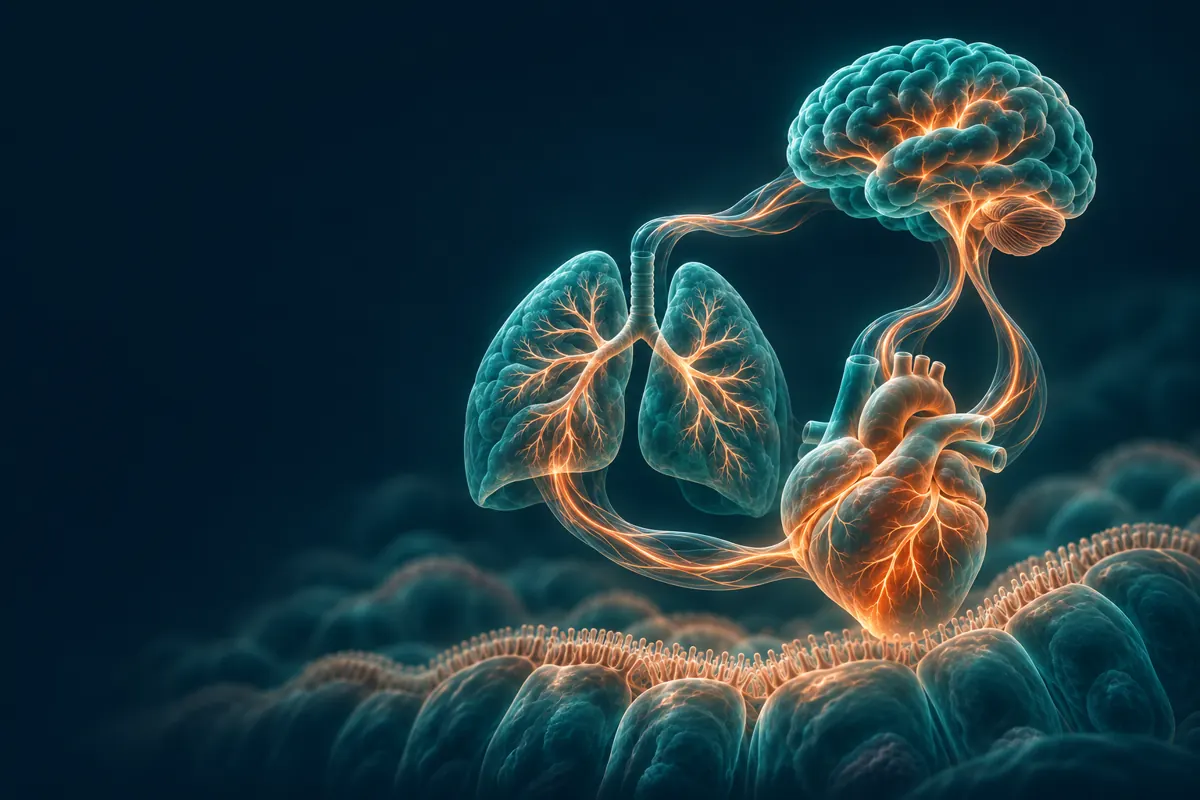
Working muscles use energy. Circulation and breathing help deliver oxygen and remove carbon dioxide. These are related jobs, rather than interchangeable ones.12
Follow the walking pathway to move between the heart, lungs and a selected brain-research example.
Chapter
What changes during a walk, and what is studied over time?
Chapter
What did the selected brain trial measure?
A randomized trial involving 120 older adults compared aerobic exercise with a stretching control over a year. It examined hippocampal volume and memory, reporting a change in a specific brain region. It did not establish dementia prevention or the effect of a single walk.3
Inspect the movement-and-brain study to keep its population, outcome and limitation in view.
Chapter
Where can this question lead next?
The heart pumps blood between the lungs and the body.3 Follow oxygen through the heart and lungs to connect the circulation with gas exchange. The interactive reference is educational; it does not measure an individual’s health. Read heart research with context to distinguish a physiological explanation from an intervention study.
Keep reading
More in Heart & Circulation
Researched and written by Kymata Health Editorial; sources cited inline. Drawn from the studies and documents cited below. Educational only, not medical advice.
Sources
References
Every study and document cited in this guide, numbered as in the text.
- 1Physical Activity and Your Heart. NHLBI, 2026.
- 2How the Lungs Work. NHLBI, 2026.
- 3Exercise training increases size of hippocampus and improves memory. PNAS / PubMed, 2011. PMID 21282661
Dietary supplements are not intended to diagnose, treat, cure or prevent any disease, and these statements have not been evaluated by the FDA. Prescription options need a licensed clinician. Talk to your clinician or pharmacist before starting anything new, especially if you take prescription medicines, are pregnant or breastfeeding.