Evidence explainer · Heart & Circulation
How the Heart and Lungs Work Together
Follow blood through the lungs and heart, understand where gas exchange happens, and see why a pump and an oxygen supply are different jobs.
- Question
- Where does blood gain oxygen, and how does the heart move it around the body?
- Sources
- 3 cited
- Quick answers
- 3 questions
- Clinician review
- None; sources cited inline
In short
Key takeaways
Chapter
Two connected circuits, one continuous flow
Blood returning from the body enters the right side of the heart. The right ventricle pumps it toward the lungs. After gas exchange, blood returns to the left side; the left ventricle then generates the pressure needed to send it through the aorta toward the body.1
The two sides work together. A teaching animation may slow down and separate the stages so they are easier to follow, but that does not mean the right side completes its work before the left side begins. Start Follow oxygen to move through the explanation at your own pace.
Chapter
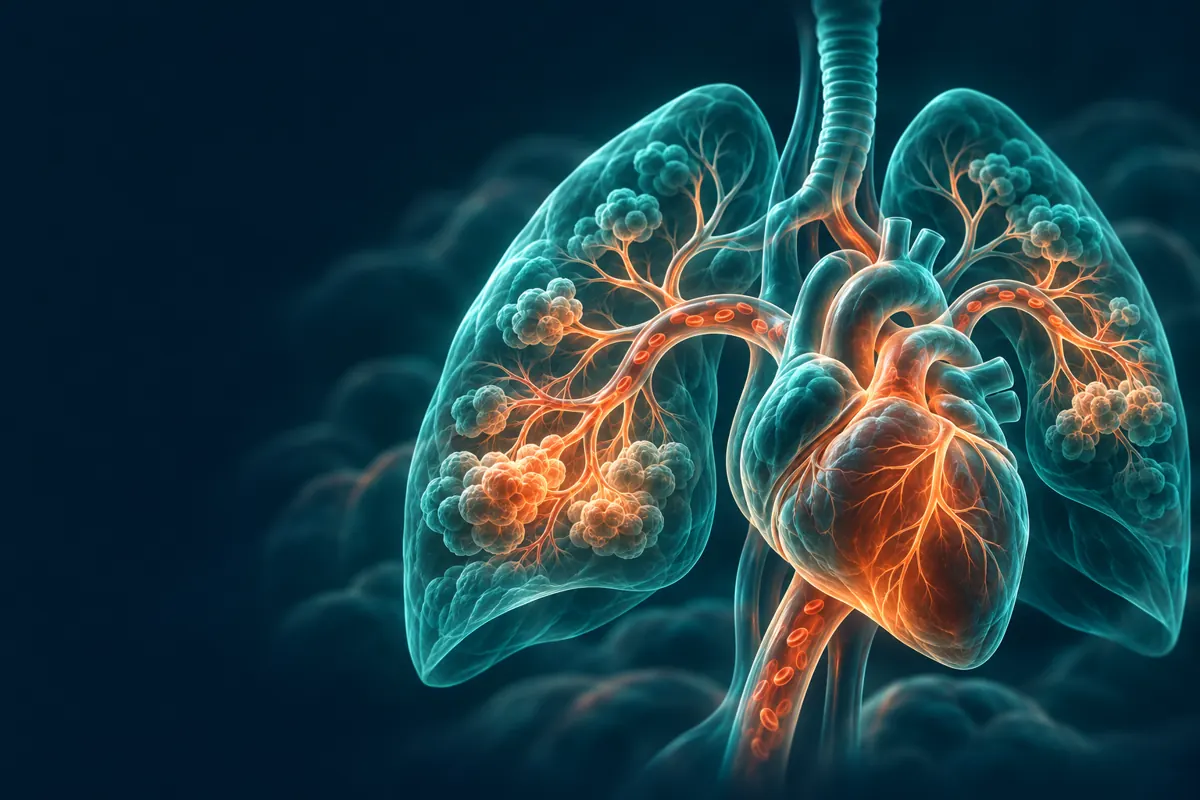
The lungs exchange gases; the heart provides movement
Breathing brings air into the respiratory system. In the lungs, oxygen moves from inhaled air into blood while carbon dioxide moves from blood toward the air that will be exhaled. This exchange connects ventilation with circulation.2
The heart does not add oxygen to blood inside its chambers. It keeps blood moving between the lungs and the rest of the body. In educational diagrams, blue often represents relatively oxygen-poor blood; the blood itself remains red. The explorer’s colored paths explain direction and relative oxygenation, not a measured oxygen level.
Chapter
Valves guide direction, and the heart needs a supply too
The four valves help maintain forward movement between chambers and into the major arteries. Valve position changes during the cardiac cycle. The explorer’s heart cutaway uses static source anatomy and animated illustrative flow; it does not show moving leaflets or measure valve function.1
The heart muscle also needs its own oxygen and nutrients. Coronary arteries branch from the aorta to supply it. That is a different role from the blood passing through the chambers on its way elsewhere. Open the heart lesson to distinguish the chambers from the wider circulation.1
Chapter
From function to a useful research question
Once the route is clear, ask what a study actually measured. A blood-fat measurement, a blood-pressure reading and a cardiovascular event describe different things. Read blood pressure, cholesterol and triglycerides before treating them as interchangeable signs of a stronger heart.
A product’s proposed mechanism does not establish its benefit in people. NHLBI distinguishes prescribed omega-3 medicines used for high triglycerides from dietary supplements. Our guide to reading heart research shows how to follow a claim back to the population, formulation and outcome.3
Questions
Quick answers
Does blood gain oxygen inside the heart?
Does artery always mean oxygen-rich blood?
No. Arteries carry blood away from the heart. The pulmonary arteries carry relatively oxygen-poor blood from the right ventricle toward the lungs.1
Is the heart cutaway a measurement of my own heart?
No. It is licensed reference anatomy with illustrative flow. It does not measure chamber size, pumping performance, valve motion or an individual’s circulation.
Keep reading
More in Heart & Circulation
- Heart & Circulation hubEvery guide, regulatory notes and sources
- Blood Pressure, Cholesterol and Triglycerides: What Each Measures
- How to Read Heart Research When the Headlines Disagree
- How Kidneys Help Regulate Blood Pressure
- Why Stress Can Change the Heartbeat
- How Movement Connects Heart, Lungs and Brain
Researched and written by Kymata Health Editorial; sources cited inline. Drawn from the studies and documents cited below. Educational only, not medical advice.
Sources
References
Every study and document cited in this guide, numbered as in the text.
- 1How Blood Flows through the Heart (accessed 2026). NHLBI, 2026.
- 2How the Lungs Work (accessed 2026). NHLBI, 2026.
- 3High Blood Triglycerides (accessed 2026). NHLBI, 2026.
Dietary supplements are not intended to diagnose, treat, cure or prevent any disease, and these statements have not been evaluated by the FDA. Prescription options need a licensed clinician. Talk to your clinician or pharmacist before starting anything new, especially if you take prescription medicines, are pregnant or breastfeeding.