Evidence explainer · Heart & Circulation
How Kidneys Help Regulate Blood Pressure
Connect the heart’s pumping role with the kidneys’ control of water, salts and pressure-related hormones.
- Question
- How do the kidneys help regulate blood pressure?
- Sources
- 3 cited
- Clinician review
- None; sources cited inline
In short
Key takeaways
Chapter
How do the kidneys help regulate blood pressure?
The kidneys adjust water and salt balance through the production of urine. They also make hormones involved in pressure regulation. These functions connect them to circulation even though they are not pumps.1
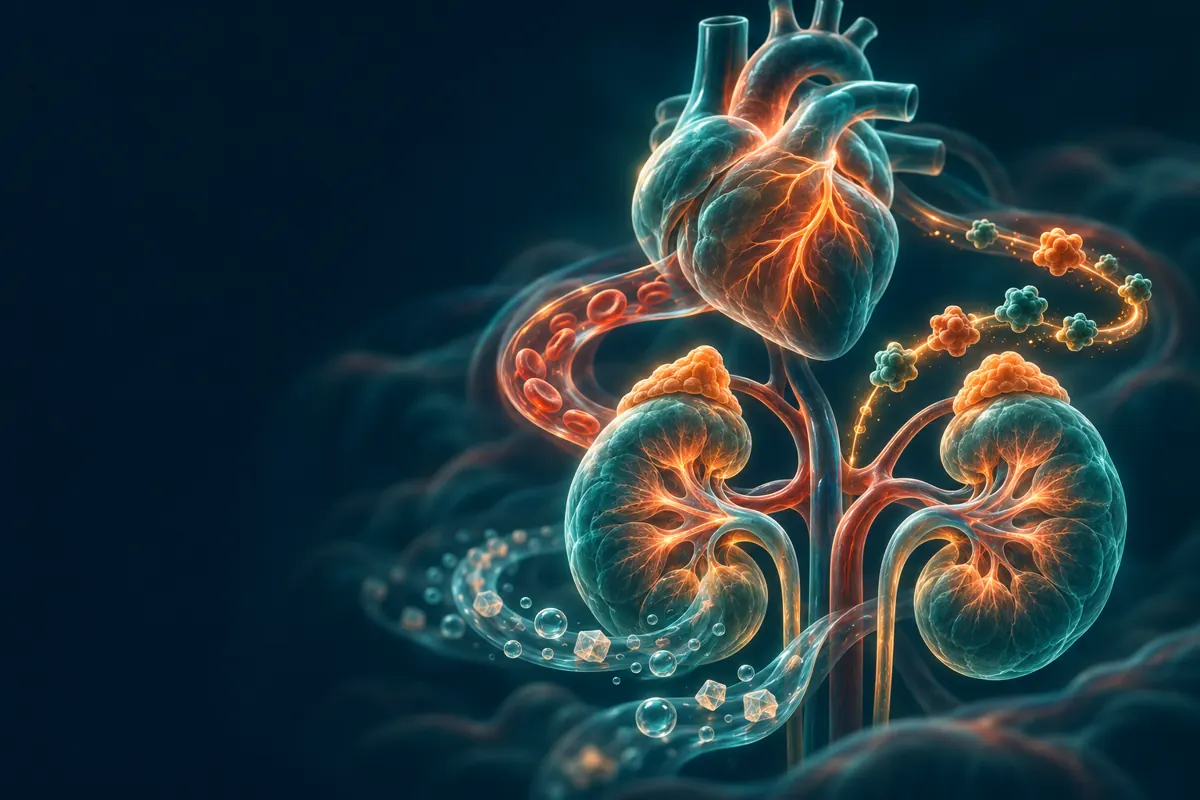
Explore the heart–kidney connection to compare the two roles. The connecting line is a teaching schematic rather than a reconstructed blood vessel.
Chapter
Why does the relationship work in both directions?
High blood pressure can damage vessels in the kidneys. When kidney function is impaired, excess fluid can contribute to pressure problems. This is a reason to understand the relationship, not a way to identify a condition by selecting an organ.2
Chapter
What can a body illustration explain?
It can show organ location and introduce how the functions connect. It cannot provide blood-pressure readings, filtration measurements or a reason for an individual symptom. The reference kidney shells do not show microscopic filtering units.13
A kidney-detox label or a generic supplement claim does not establish a measured benefit. Relevant questions concern the person studied, the intervention and the outcome.
Chapter
Where can this question lead next?
The heart pumps blood between the lungs and the body.3 Follow oxygen through the heart and lungs to connect the circulation with gas exchange. The interactive reference is educational; it does not measure an individual’s health. Read heart research with context to distinguish a physiological explanation from an intervention study.
Keep reading
More in Heart & Circulation
Researched and written by Kymata Health Editorial; sources cited inline. Drawn from the studies and documents cited below. Educational only, not medical advice.
Sources
References
Every study and document cited in this guide, numbered as in the text.
- 1Your Kidneys & How They Work. NIDDK, 2018.
- 2High Blood Pressure & Kidney Disease. NIDDK, 2026.
- 3How Blood Flows through the Heart. NHLBI, 2026.
Dietary supplements are not intended to diagnose, treat, cure or prevent any disease, and these statements have not been evaluated by the FDA. Prescription options need a licensed clinician. Talk to your clinician or pharmacist before starting anything new, especially if you take prescription medicines, are pregnant or breastfeeding.