Supplements on a GLP-1 (Ozempic, Wegovy, Zepbound, Mounjaro): What Helps, What’s Hype
On a GLP-1, protein, fiber and fluids have the best support. Test B12, vitamin D and iron before replacing them. “Natural GLP-1” pills have no weight data.
By Kymata Health EditorialPublished 12 min read26 sourcesNo paid links in this articleEducation, not medical advice
Quick answer
On a GLP-1 medicine (semaglutide as Ozempic or Wegovy, tirzepatide as Mounjaro or Zepbound, or an oral GLP-1 pill), the best-supported additions are not pills that boost the drug but basics that cover what it changes: enough protein plus strength training to protect muscle, fiber and fluids for the constipation and dehydration the labels describe, and a test-first approach to vitamin B12, vitamin D and iron, because eating 16 to 39% less can leave gaps. Magnesium, creatine and ginger have indirect support for specific problems. Products sold as a “natural GLP-1” (berberine, Akkermansia, cinnamon, fiber “boosters” and skin patches) have no trial showing weight loss anywhere near the medicines, and patches cannot legally be sold as supplements at all.
No supplement adds to what a GLP-1 medicine does. The ones worth considering cover what the drug changes: you eat much less, digestion slows, and muscle goes with the fat. A 2025 joint advisory from four obesity and nutrition societies lists the at-risk nutrients as protein, fiber, fluids, vitamin D, calcium and vitamin B12, and says supplements “can be proactively considered for at-risk nutrients… tailored to each person’s needs” (Mozaffarian et al., Obesity Pillars 2025, PMID 40673264).
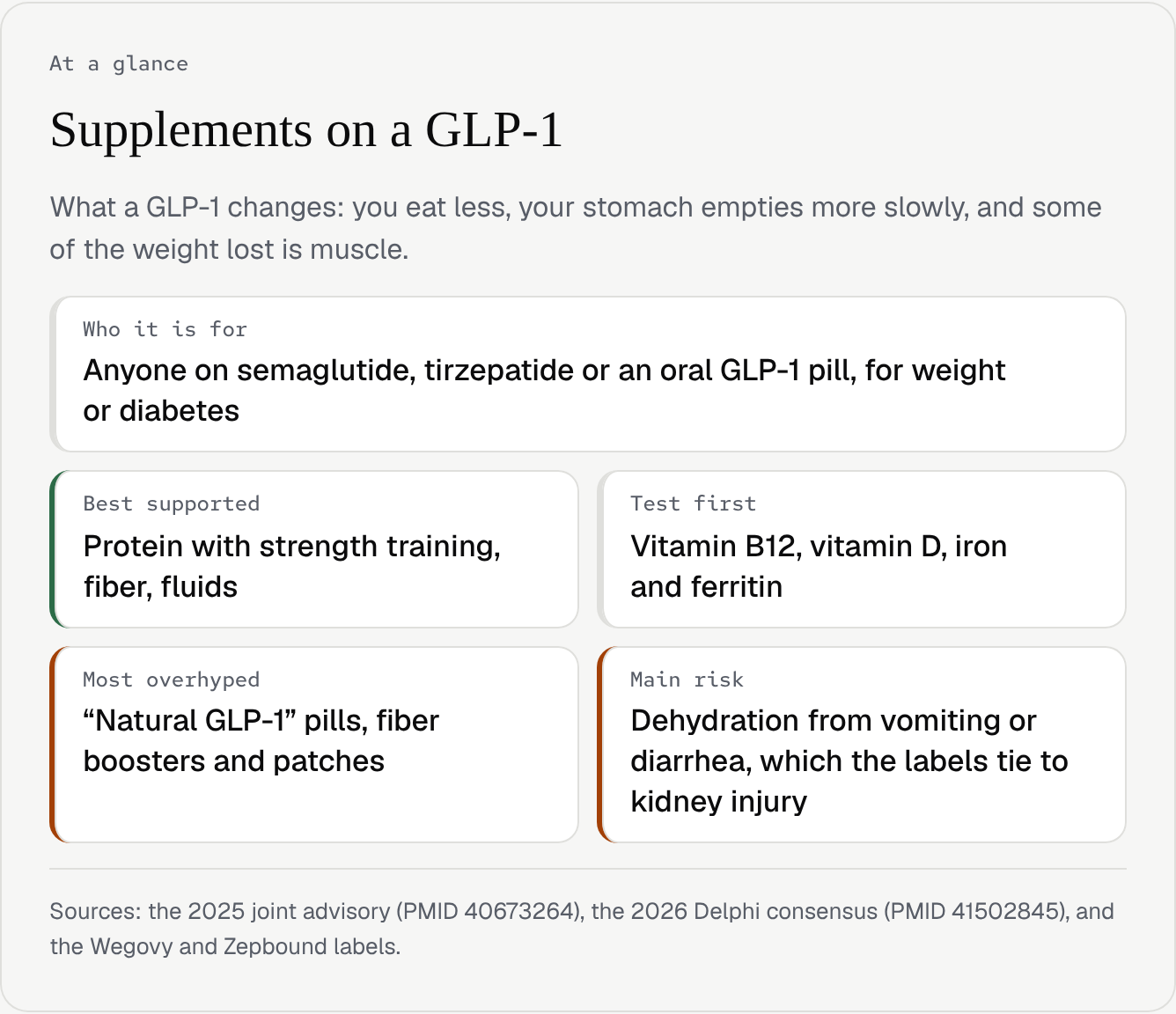
Best supported: protein to a target with strength training, fiber (food first, then psyllium), and fluids, with electrolytes when you are losing fluid.
Test first, then replace: vitamin B12 (especially on metformin), vitamin D, iron and ferritin.
Reasonable for a specific problem: magnesium for constipation, creatine alongside resistance training, ginger for nausea.
Most overhyped: anything sold as a “natural GLP-1”, including berberine, Akkermansia, cinnamon, fiber “boosters” and skin patches.
Tell your prescriber and pharmacist about every supplement you take. GLP-1 medicines slow stomach emptying, which can change how other things you swallow are absorbed.
At a glance
Supplements on a GLP-1
What a GLP-1 changes: you eat less, your stomach empties more slowly, and some of the weight lost is muscle.
Who it is for
Anyone on semaglutide, tirzepatide or an oral GLP-1 pill, for weight or diabetes
Best supported
Protein with strength training, fiber, fluids
Test first
Vitamin B12, vitamin D, iron and ferritin
Most overhyped
“Natural GLP-1” pills, fiber boosters and patches
Main risk
Dehydration from vomiting or diarrhea, which the labels tie to kidney injury
Sources: the 2025 joint advisory (PMID 40673264), the 2026 Delphi consensus (PMID 41502845), and the Wegovy and Zepbound labels.
Two things change. First, intake falls: the joint advisory reports calorie reductions of 16 to 39% in people on GLP-1 medicines, and notes that obesity itself already raises the risk of low vitamin D, B12, iron, calcium and other nutrients (PMID 40673264). A 2026 international Delphi consensus lists vitamin D, vitamin A, thiamine, folate, B12, iron, calcium and magnesium as the common gaps (Sievenpiper et al., PMID 41502845).
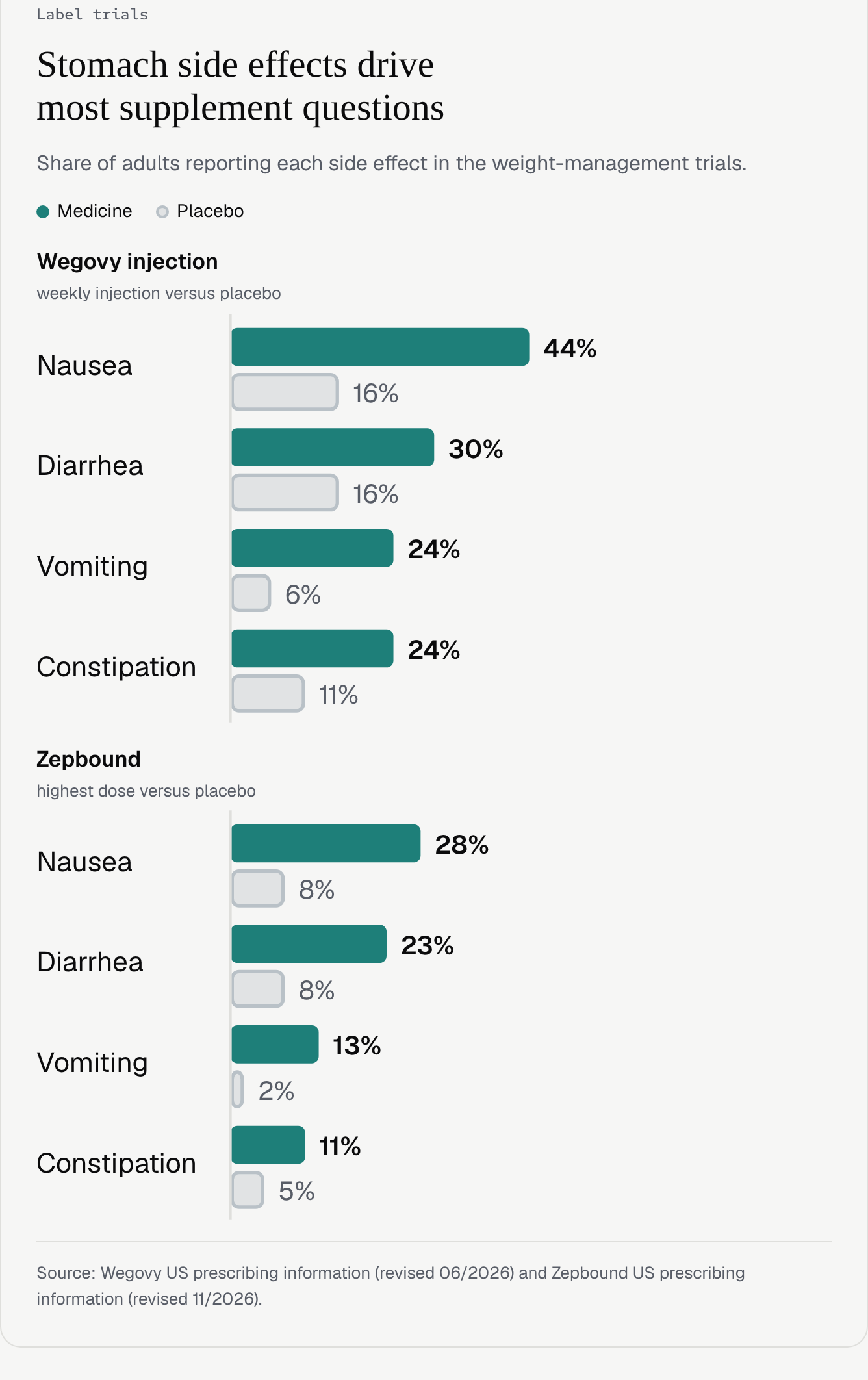
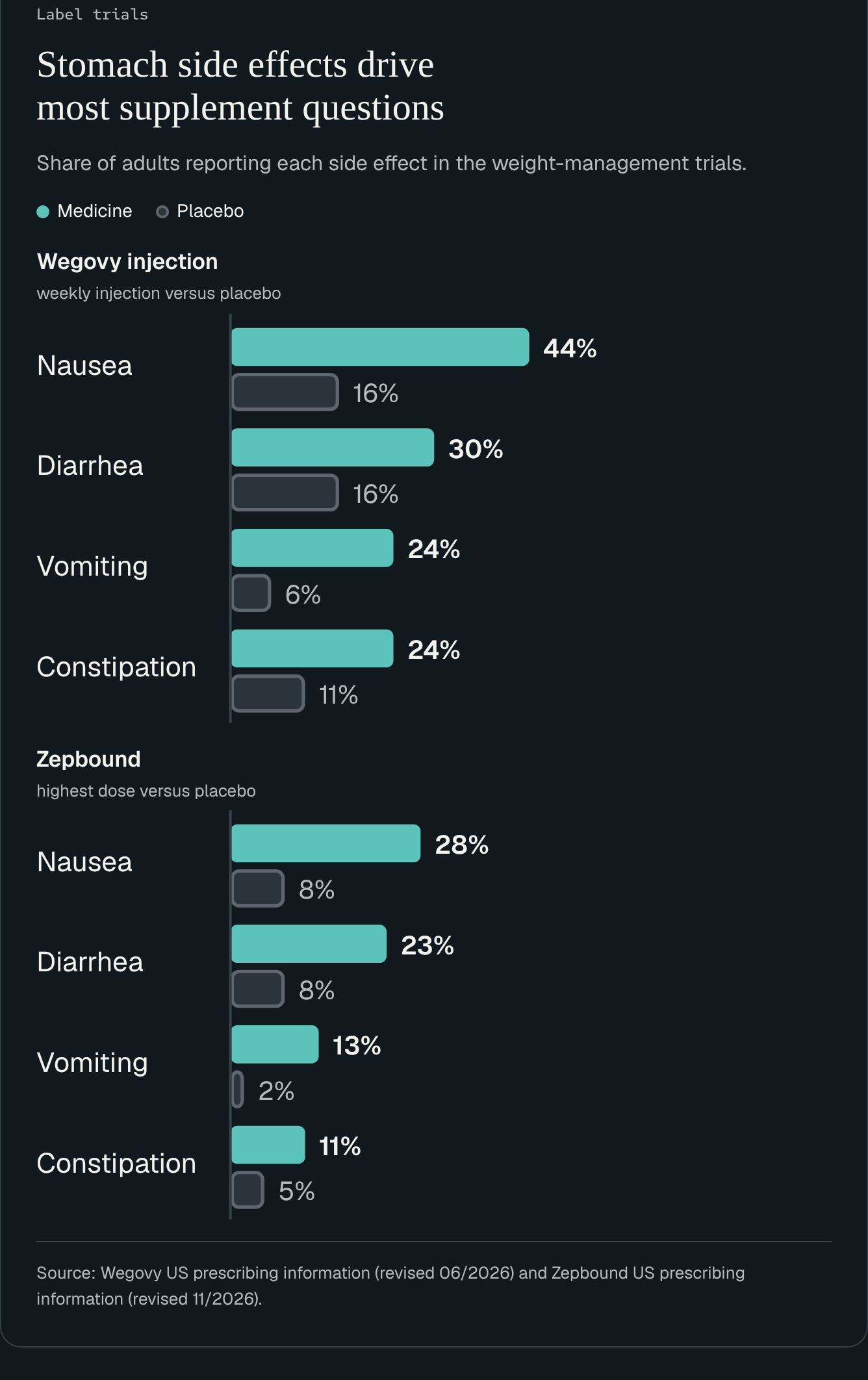
Second, the gut slows down. Every label in this class says the drug delays gastric emptying. Stomach side effects are the most common reason people struggle in the first months: in Wegovy’s weight-management trials, 44% of people had nausea (16% on placebo), 30% diarrhea (16%), 24% vomiting (6%) and 24% constipation (11%) (Wegovy prescribing information). On Zepbound’s highest dose, the rates were nausea 28% (8% on placebo), diarrhea 23% (8%), vomiting 13% (2%) and constipation 11% (5%) (Zepbound prescribing information).
Those losses are not only uncomfortable. Both labels warn of acute kidney injury, sometimes needing dialysis, mostly in people who became dehydrated from nausea, vomiting or diarrhea (Wegovy, Zepbound). That is why fluids sit at the top of this guide, above any pill.
Label trials
Stomach side effects drive most supplement questions
Share of adults reporting each side effect in the weight-management trials.
MedicinePlacebo
Wegovy injectionweekly injection versus placebo
Zepboundhighest dose versus placebo
Source: Wegovy US prescribing information (revised 06/2026) and Zepbound US prescribing information (revised 11/2026).
Best-supported supplements with Ozempic, Wegovy, Zepbound and Mounjaro, graded
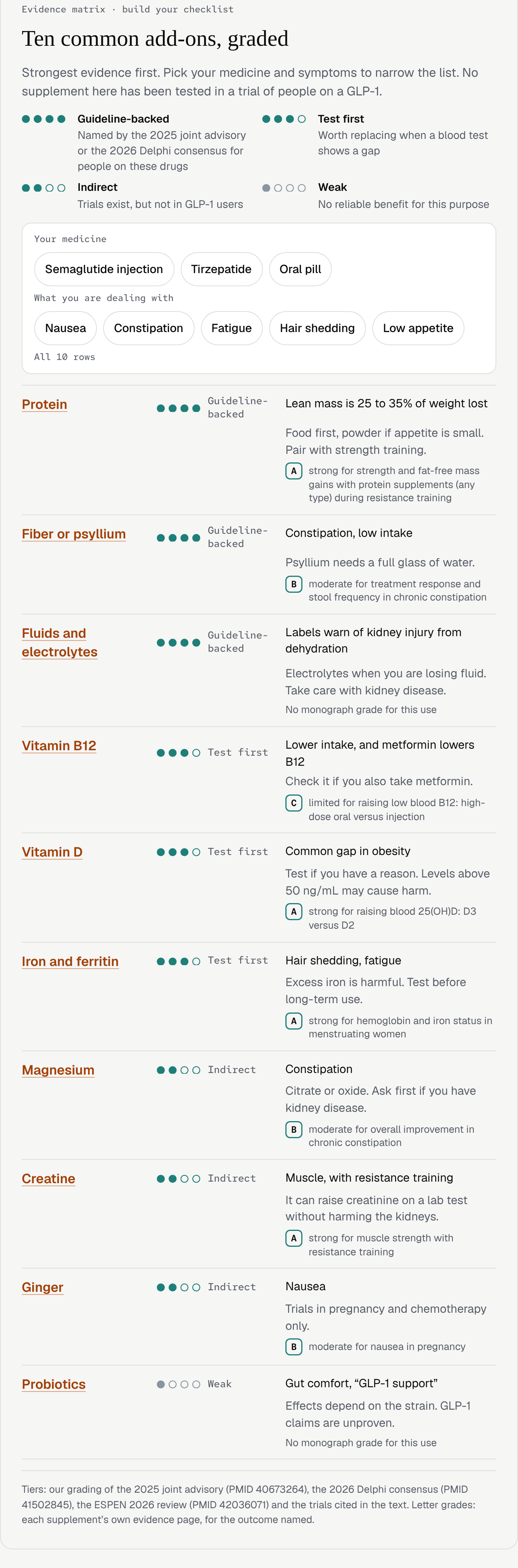
We graded each common add-on by the strength of the evidence for a real need on a GLP-1, not by how often it is sold. Four tiers: guideline-backed (named in the joint advisory or the Delphi consensus for people on these drugs), test first (worth replacing only if a blood test shows a gap), indirect (trials exist, but not in GLP-1 users) and weak (no reliable human benefit for this purpose).
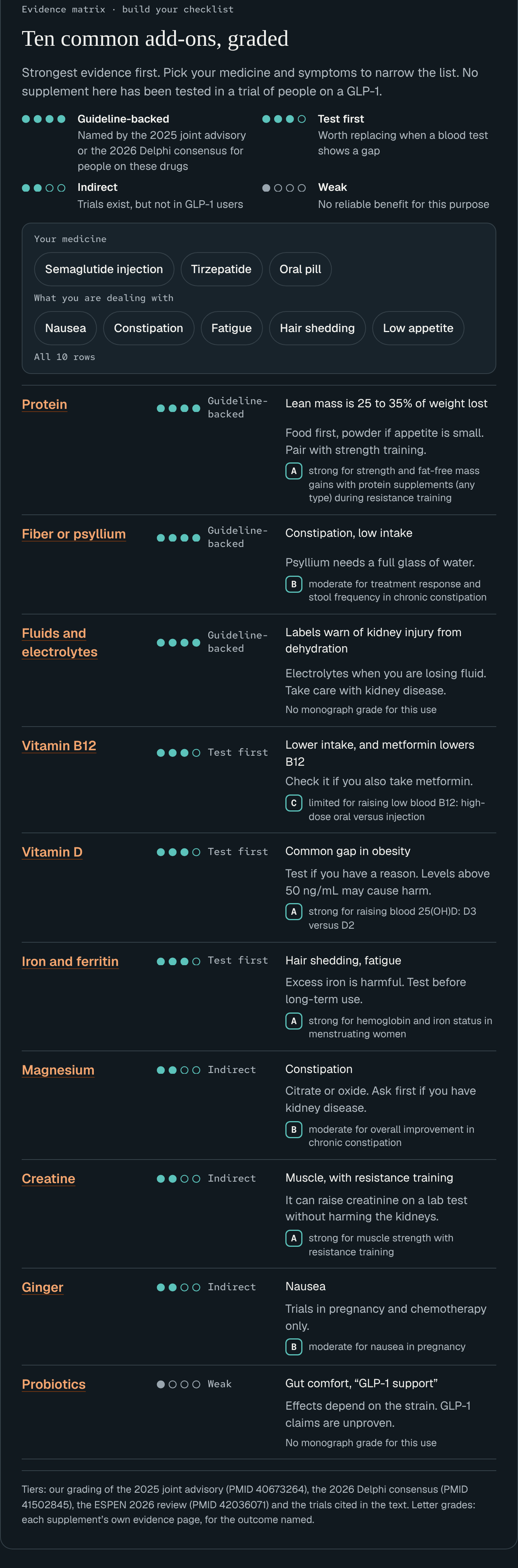
The figure below is the whole guide on one screen. The sections after it give the sources for each row.
One caveat applies to every row: no supplement in this table has been tested in a randomized trial of people taking semaglutide or tirzepatide. A 2025 narrative review that recommends a long list of supplements for GLP-1 users was written entirely by employees of a supplement retailer (Johnson et al., Obesity Pillars 2025, PMID 41368199), so read sales-adjacent “GLP-1 support” claims with that in mind.
Evidence matrix · build your checklist
Ten common add-ons, graded
Strongest evidence first. Pick your medicine and symptoms to narrow the list. No supplement here has been tested in a trial of people on a GLP-1.
Guideline-backedNamed by the 2025 joint advisory or the 2026 Delphi consensus for people on these drugs
Test firstWorth replacing when a blood test shows a gap
IndirectTrials exist, but not in GLP-1 users
WeakNo reliable benefit for this purpose
SupplementEvidence for GLP-1 usersWhy people take itNote and monograph grade
ProteinGuideline-backedLean mass is 25 to 35% of weight lostFood first, powder if appetite is small. Pair with strength training.Astrong for strength and fat-free mass gains with protein supplements (any type) during resistance training (monograph grade A)
Fiber or psylliumGuideline-backedConstipation, low intakePsyllium needs a full glass of water.Bmoderate for treatment response and stool frequency in chronic constipation (monograph grade B)
Fluids and electrolytesGuideline-backedLabels warn of kidney injury from dehydrationElectrolytes when you are losing fluid. Take care with kidney disease.No monograph grade for this use
Vitamin B12Test firstLower intake, and metformin lowers B12Check it if you also take metformin.Climited for raising low blood B12: high-dose oral versus injection (monograph grade C)
Vitamin DTest firstCommon gap in obesityTest if you have a reason. Levels above 50 ng/mL may cause harm.Astrong for raising blood 25(OH)D: D3 versus D2 (monograph grade A)
Iron and ferritinTest firstHair shedding, fatigueExcess iron is harmful. Test before long-term use.Astrong for hemoglobin and iron status in menstruating women (monograph grade A)
MagnesiumIndirectConstipationCitrate or oxide. Ask first if you have kidney disease.Bmoderate for overall improvement in chronic constipation (monograph grade B)
CreatineIndirectMuscle, with resistance trainingIt can raise creatinine on a lab test without harming the kidneys.Astrong for muscle strength with resistance training (monograph grade A)
GingerIndirectNauseaTrials in pregnancy and chemotherapy only.Bmoderate for nausea in pregnancy (monograph grade B)
ProbioticsWeakGut comfort, “GLP-1 support”Effects depend on the strain. GLP-1 claims are unproven.No monograph grade for this use
Tiers: our grading of the 2025 joint advisory (PMID 40673264), the 2026 Delphi consensus (PMID 41502845), the ESPEN 2026 review (PMID 42036071) and the trials cited in the text. Letter grades: each supplement’s own evidence page, for the outcome named.
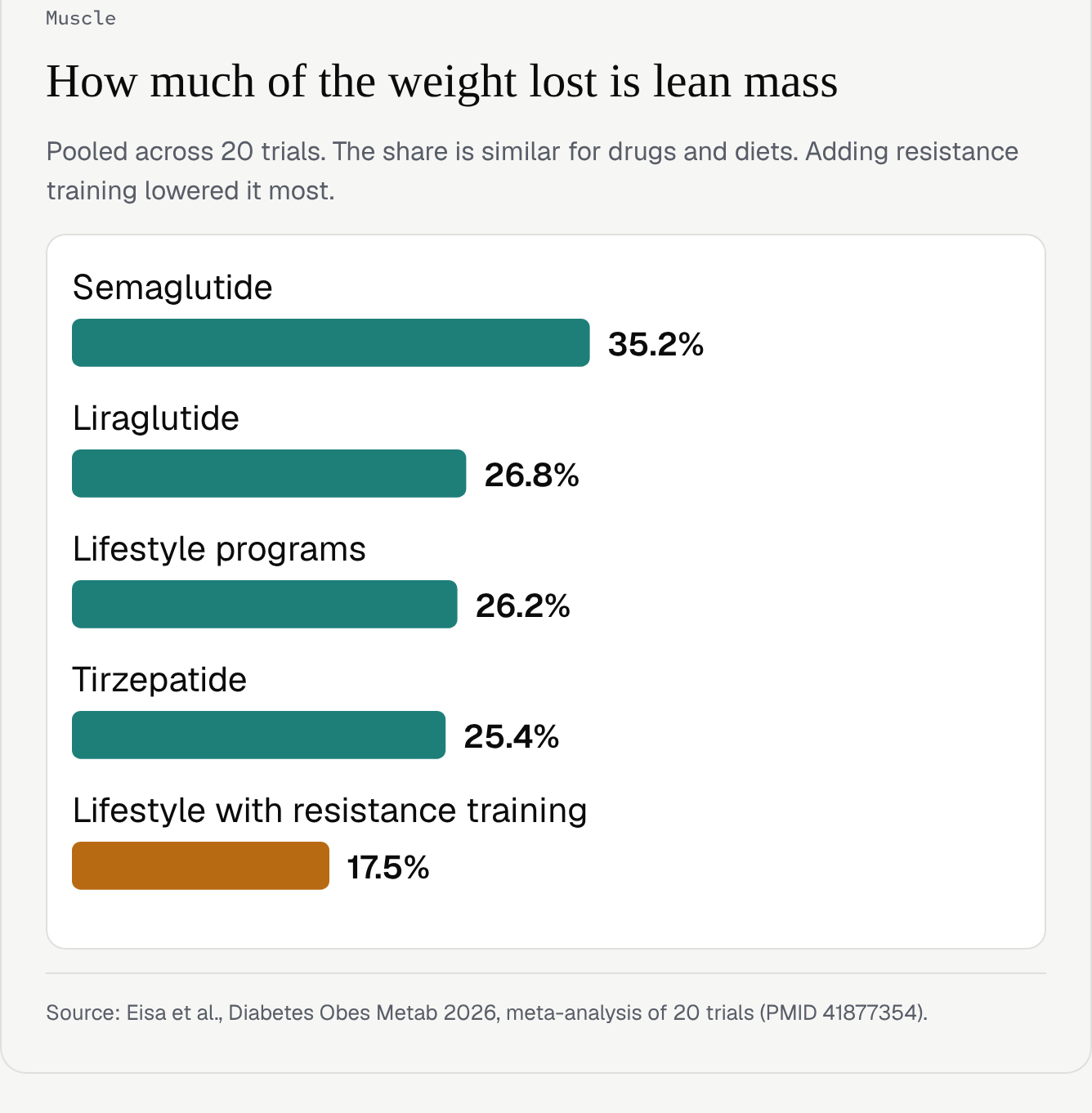
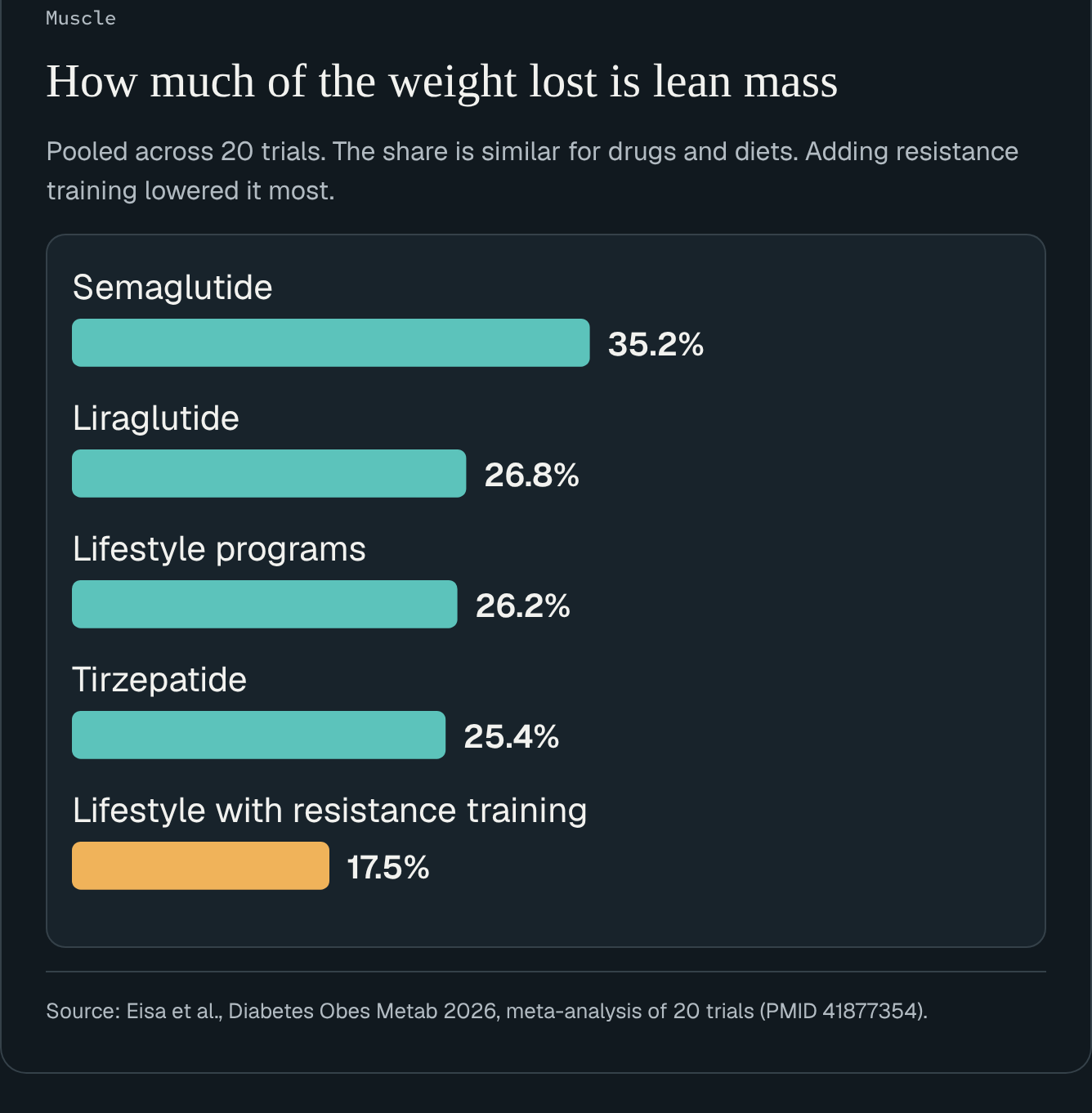
Weight lost on a GLP-1 is not all fat. In a 2026 meta-analysis of 20 trials, lean mass made up 35.2% of the weight lost on semaglutide, 25.4% on tirzepatide and 26.2% with lifestyle programs, and 17.5% when lifestyle programs included resistance training (PMID 41877354). In the SURMOUNT-1 body-scan substudy of 160 adults, about 75% of the weight lost on tirzepatide was fat and 25% lean, the same split as on placebo (PMID 39996356). The loss is proportionate, not unique to the drugs, but on a large weight loss it adds up.
Protein targets: the 2025 joint advisory cites 1.2 to 1.6 g per kg of body weight a day as a proposed target during active weight loss (PMID 40673264), and the 2026 Delphi consensus recommends 1.2 to 1.5 g per kg of actual body weight a day during the weight-loss phase (PMID 41502845). Both say protein alone is not enough: strength training is what holds on to muscle.
Creatine has the next-best case for muscle, with a caveat. In a 2026 meta-analysis of 7 trials in postmenopausal women, creatine added lean mass and leg-press strength only when combined with resistance training (PMID 42141930). No trial has tested it in people on semaglutide or tirzepatide. It can raise serum creatinine on a kidney test without any change in kidney function, so tell whoever orders your labs. More in creatine for women and GLP-1 users.
Muscle
How much of the weight lost is lean mass
Pooled across 20 trials. The share is similar for drugs and diets. Adding resistance training lowered it most.
Source: Eisa et al., Diabetes Obes Metab 2026, meta-analysis of 20 trials (PMID 41877354).
Fiber supplements, fluids and electrolytes on Wegovy, Zepbound and the rest
Constipation is common on every GLP-1 and gets worse as people eat less. The Delphi consensus recommends a high fiber intake from food and says “fiber supplementation (e.g., psyllium) should be considered when sufficient fibre intake cannot be obtained from the diet” (PMID 41502845). The joint advisory adds fiber supplements and polyethylene glycol 3350 (an over-the-counter laxative) as options when food is not enough (PMID 40673264).
Psyllium has one safety rule worth knowing: FDA-required labeling says it must be taken with a full glass of water, because taken dry it can swell and block the throat (21 CFR 201.319). On a drug that already slows the gut, that fluid matters more, not less. More in psyllium side effects and how to take it.
Fluids come before any pill. The Delphi consensus says more than 2 liters of fluid a day is needed, more so during exercise, vomiting, diarrhea and fasting, with careful monitoring for people with heart failure or kidney disease (PMID 41502845).
Electrolytes make sense when you are actually losing fluid (vomiting, diarrhea, heavy sweating). We found no trial of electrolyte products in GLP-1 users. A true oral rehydration solution pairs sodium with glucose. Many sports drinks carry too little sodium and a lot of sugar. Extra potassium can be dangerous with kidney disease or with drugs such as ACE inhibitors. See electrolytes on a GLP-1.
Magnesium for constipation: the joint advisory names daily magnesium, “titrated to a dose to keep bowel movements regular”, with magnesium citrate as effective and well tolerated (PMID 40673264). In a 90-person placebo-controlled trial, magnesium oxide improved chronic constipation in 68.3% of people versus 11.7% on placebo (PMID 32969946). Magnesium can build up in people with reduced kidney function, so ask first if that applies to you. See magnesium for constipation.
Test before you treat: B12, vitamin D, iron and the rest
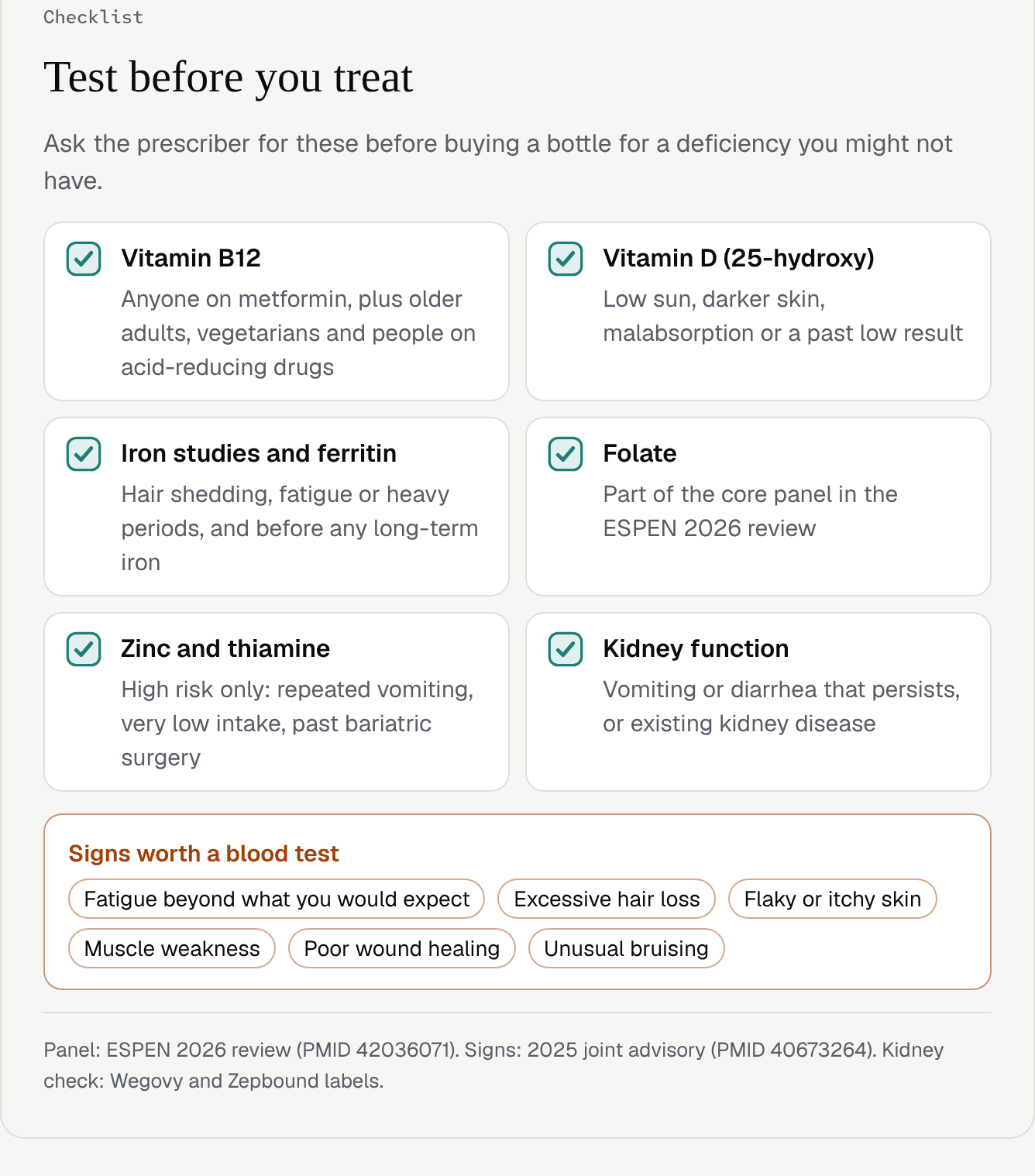
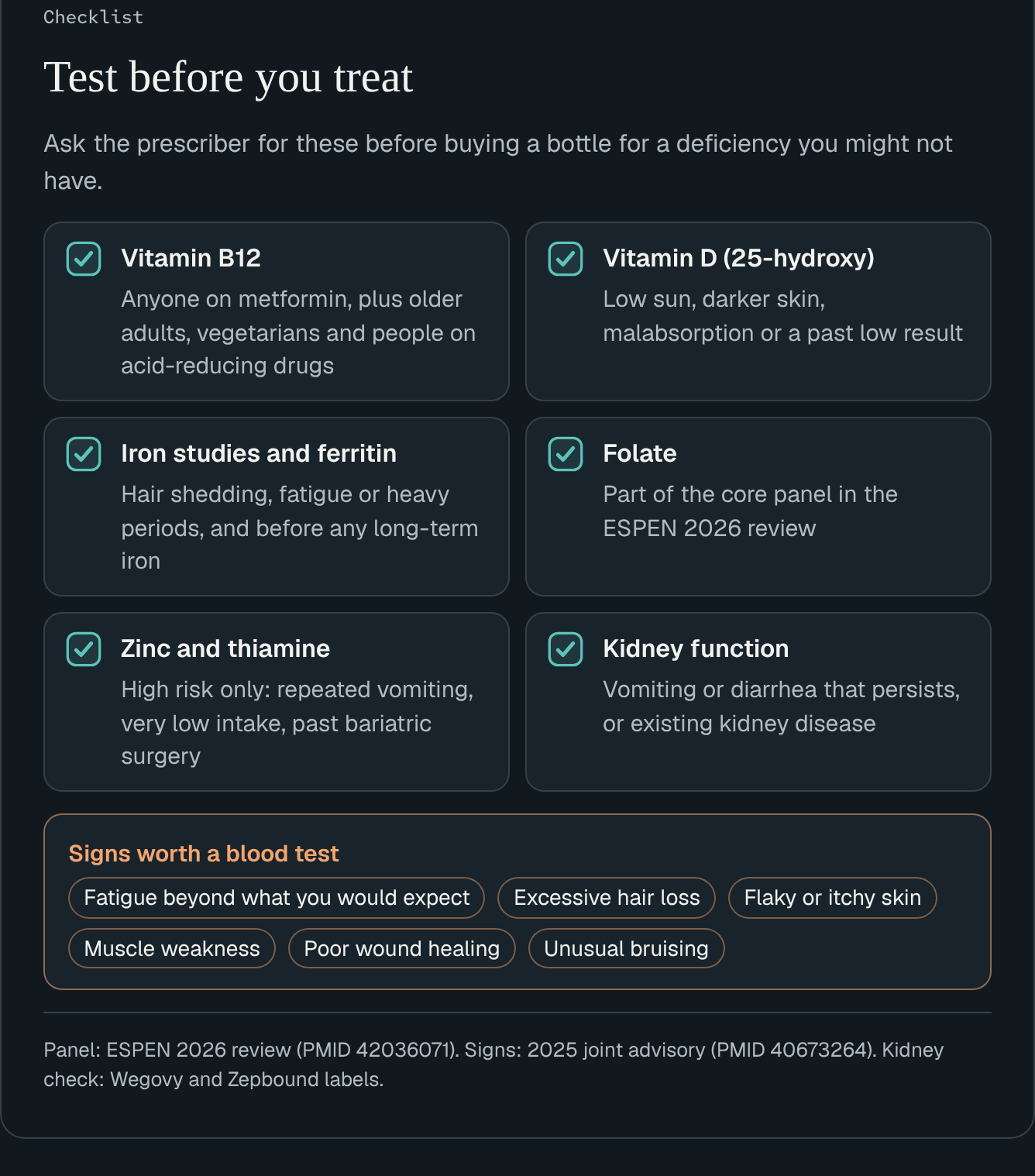
Micronutrients are where guessing goes wrong in both directions. The ESPEN 2026 review proposes a structured laboratory panel for people on GLP-1 medicines: vitamin D, B12, iron studies and folate, plus zinc and thiamine in high-risk patients (Arslan, Clin Nutr ESPEN 2026, PMID 42036071). The joint advisory adds that testing before therapy may be indicated after a very low-calorie diet, bariatric surgery, celiac disease or a previous deficiency (PMID 40673264).
Vitamin B12. Many people on a GLP-1 for diabetes also take metformin, which lowered serum B12 by about 57 pmol/L in a meta-analysis of four trials (PMID 27130885). That combination is the clearest reason to check B12. The NIH also lists older adults, vegetarians and people on acid-reducing drugs as more likely to run low (NIH Office of Dietary Supplements). See B12 after 50 and on metformin.
Vitamin D. The NIH calls a blood level of 20 ng/mL or more adequate for most people and links levels above 50 ng/mL to possible harm (NIH Office of Dietary Supplements). The Endocrine Society’s 2024 guideline suggests against routine testing in healthy people (PMID 38828931), so this one is for people with a reason: low sun, darker skin, malabsorption, or a past low result.
Iron and ferritin. The NIH advises checking iron status with a clinician before long-term supplementation, especially for men and postmenopausal women, because excess iron is harmful and iron reduces the absorption of some medicines (NIH Office of Dietary Supplements). Ferritin is the stored-iron number that matters for hair shedding (see the symptom grid below).
Signs of a real deficiency, as listed by the joint advisory, include fatigue beyond what you would expect, excessive hair loss, flaky or itchy skin, muscle weakness, poor wound healing and unusual bruising (PMID 40673264). Any of those is a reason to ask for the panel rather than to add another bottle. Our tests before treatment page lists what a telehealth GLP-1 program usually orders.
Checklist
Test before you treat
Ask the prescriber for these before buying a bottle for a deficiency you might not have.
Vitamin B12
Anyone on metformin, plus older adults, vegetarians and people on acid-reducing drugs
Vitamin D (25-hydroxy)
Low sun, darker skin, malabsorption or a past low result
Iron studies and ferritin
Hair shedding, fatigue or heavy periods, and before any long-term iron
Folate
Part of the core panel in the ESPEN 2026 review
Zinc and thiamine
High risk only: repeated vomiting, very low intake, past bariatric surgery
Kidney function
Vomiting or diarrhea that persists, or existing kidney disease
Signs worth a blood test
Fatigue beyond what you would expectExcessive hair lossFlaky or itchy skinMuscle weaknessPoor wound healingUnusual bruising
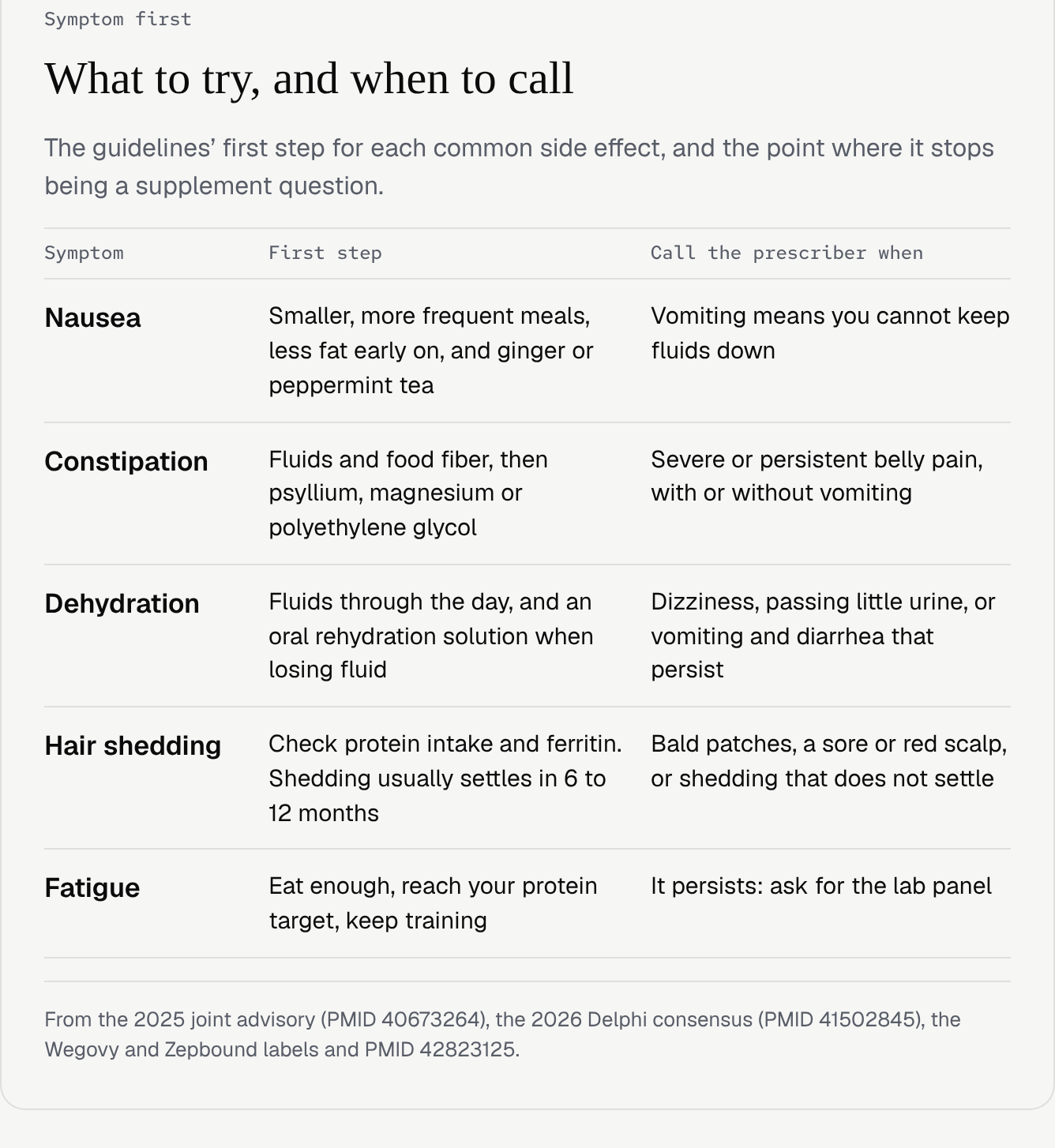
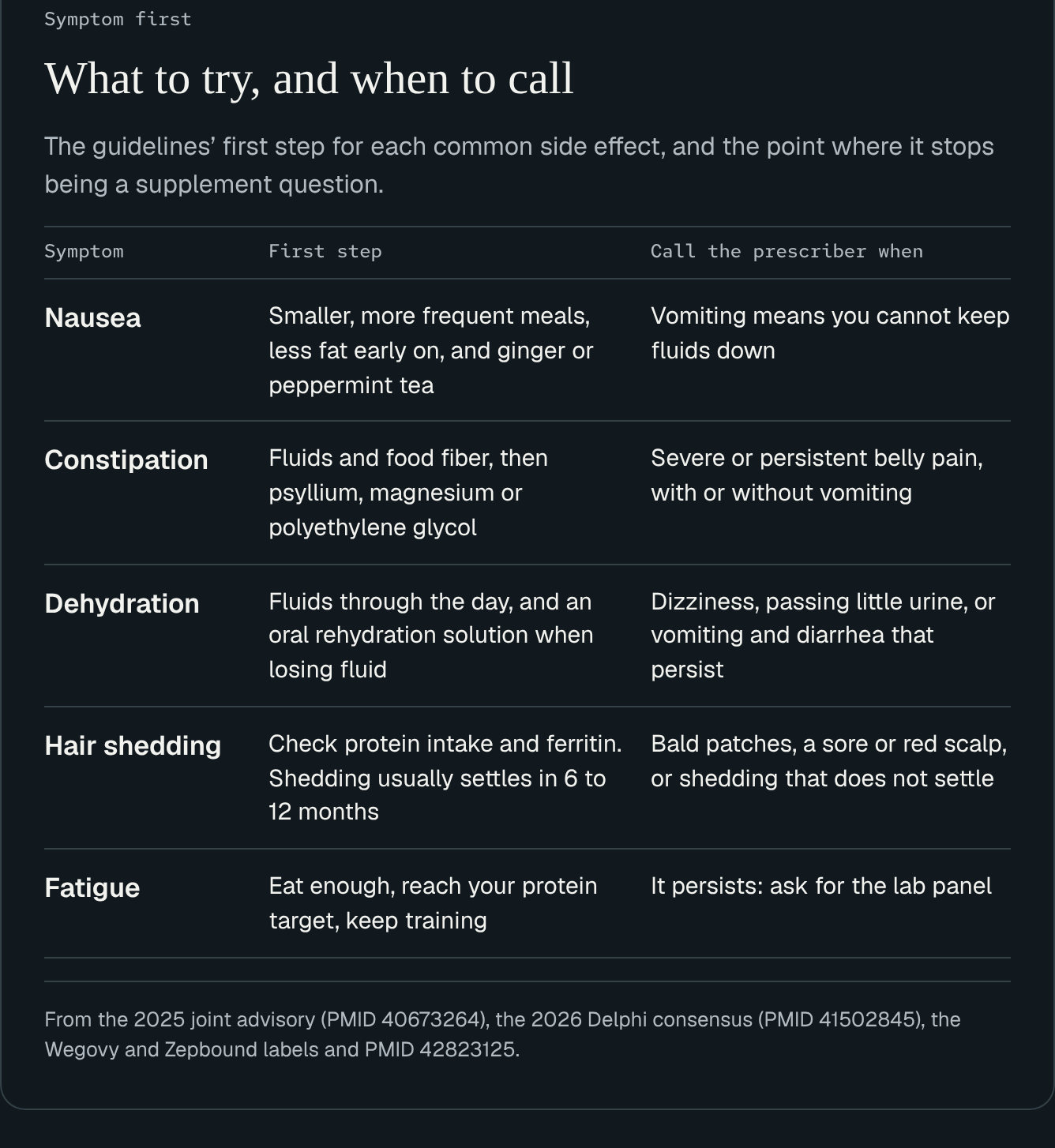
Most supplement shopping on a GLP-1 starts with a symptom. Here is the first step the guidelines give for each, and the point at which it stops being a supplement question. The labels’ warning signs (severe or persistent stomach pain, vomiting that keeps you from holding down fluids, signs of dehydration, pain in the upper right belly) always come first.
Nausea: smaller, more frequent meals and avoiding fatty foods early on. The joint advisory also mentions ginger or peppermint tea and acupressure bands (PMID 40673264). Ginger trials are in pregnancy and chemotherapy, not GLP-1 users: in 12 pregnancy trials it improved nausea scores, but the evidence was rated low quality (PMID 24642205). See ginger for nausea.
Constipation: fluids and food fiber, then psyllium, magnesium or polyethylene glycol (PMID 40673264, PMID 41502845).
Dehydration or dizziness: fluids, and an oral rehydration solution when you are losing fluid. The Wegovy and Zepbound labels warn of kidney injury from dehydration.
Hair shedding: usually telogen effluvium after rapid weight loss, which typically reverses within 6 to 12 months (PMID 42823125). Zepbound’s label ties hair loss to weight reduction (Zepbound prescribing information). Check ferritin and protein intake before buying a “hair” supplement. Read GLP-1 hair loss and regrowth.
Fatigue or weakness: usually too little food or protein. If it persists, ask for the lab panel above.
Symptom first
What to try, and when to call
The guidelines’ first step for each common side effect, and the point where it stops being a supplement question.
SymptomFirst stepCall the prescriber when
NauseaFirst stepSmaller, more frequent meals, less fat early on, and ginger or peppermint teaCall whenVomiting means you cannot keep fluids down
ConstipationFirst stepFluids and food fiber, then psyllium, magnesium or polyethylene glycolCall whenSevere or persistent belly pain, with or without vomiting
DehydrationFirst stepFluids through the day, and an oral rehydration solution when losing fluidCall whenDizziness, passing little urine, or vomiting and diarrhea that persist
Hair sheddingFirst stepCheck protein intake and ferritin. Shedding usually settles in 6 to 12 monthsCall whenBald patches, a sore or red scalp, or shedding that does not settle
FatigueFirst stepEat enough, reach your protein target, keep trainingCall whenIt persists: ask for the lab panel
From the 2025 joint advisory (PMID 40673264), the 2026 Delphi consensus (PMID 41502845), the Wegovy and Zepbound labels and PMID 42823125.
The fastest-growing supplement category is products that claim to act like the drugs. None has been compared with a GLP-1 medicine in a trial, and the weight changes measured are small.
“Natural GLP-1” claims versus the evidence
Claim
What the trials show
Verdict
Berberine is “nature’s Ozempic”
What the trials showPooled trials: about 0.88 kg (2 lb) more weight loss than control, and no trial against a GLP-1 drug (PMID 41310257). It inhibits liver enzymes that clear many prescription drugs
VerdictMarketing comparison, not a finding
Akkermansia probiotics raise your GLP-1
What the trials showThe GLP-1 link comes from a 2021 mouse study. In people, the first trial’s weight change was not statistically significant (PMID 31263284)
VerdictEarly, mostly company-funded
Cinnamon controls blood sugar like a GLP-1
What the trials showA Cochrane review of 10 trials found no significant change in HbA1c (PMID 22972104). Cassia cinnamon carries coumarin, a liver risk
VerdictWeak
Fiber “GLP-1 boosters”
What the trials showFiber and resistant starch raise circulating GLP-1 in small human studies (PMID 40673264), but at a tiny fraction of drug levels. Useful as fiber, not as a drug substitute
VerdictBuy it as fiber
Skin patches sold as “GLP-1”
What the trials showA 2026 review of 24 patch products and 1 gel found no certificates of analysis and deceptive advertising. By law a supplement must be taken by mouth, so a patch cannot be sold as one (PMID 41480958). More in our patch explainer
VerdictNo evidence, and not legal as a supplement
Biotin for GLP-1 hair loss
What the trials showNo trial in GLP-1 users. The FDA warns that biotin can falsely lower troponin, a heart-attack blood test (FDA). See biotin for hair growth
Supplements and pills not to take at the same time: what the labels say
Every GLP-1 slows the stomach, and every label says it can change how other things you swallow are absorbed. Zepbound’s label says tirzepatide “delays gastric emptying and thereby has the potential to impact the absorption of concomitantly administered oral medications” (Zepbound prescribing information). The Wegovy and Foundayo labels say the same (Wegovy, Foundayo). Supplements are swallowed too, which is why the semaglutide tablets’ Medication Guide asks patients to tell their provider about “vitamins, and herbal supplements” (Rybelsus and Ozempic tablets prescribing information).
Oral semaglutide tablets (Wegovy, Rybelsus and Ozempic tablets). These are the pills with a timing rule. The labels say to take the tablet on an empty stomach in the morning with up to 4 ounces of plain water, and to wait at least 30 minutes before eating, drinking or taking other oral medications (Wegovy, Rybelsus and Ozempic tablets). Read as written, a morning supplement comes after those 30 minutes, not with the pill. That includes psyllium, which MedlinePlus also advises spacing from some medicines. The tablet label also reports that thyroxine exposure rose 33% when levothyroxine was taken with semaglutide tablets in a pharmacology study, so anyone on thyroid medicine has a reason to ask about timing and a recheck.
Foundayo (orforglipron). It can be taken with or without food, and its label has no 30-minute rule (Foundayo prescribing information). It does carry the same oral-contraceptive advice as tirzepatide (below), for 30 days after starting and after each dose increase.
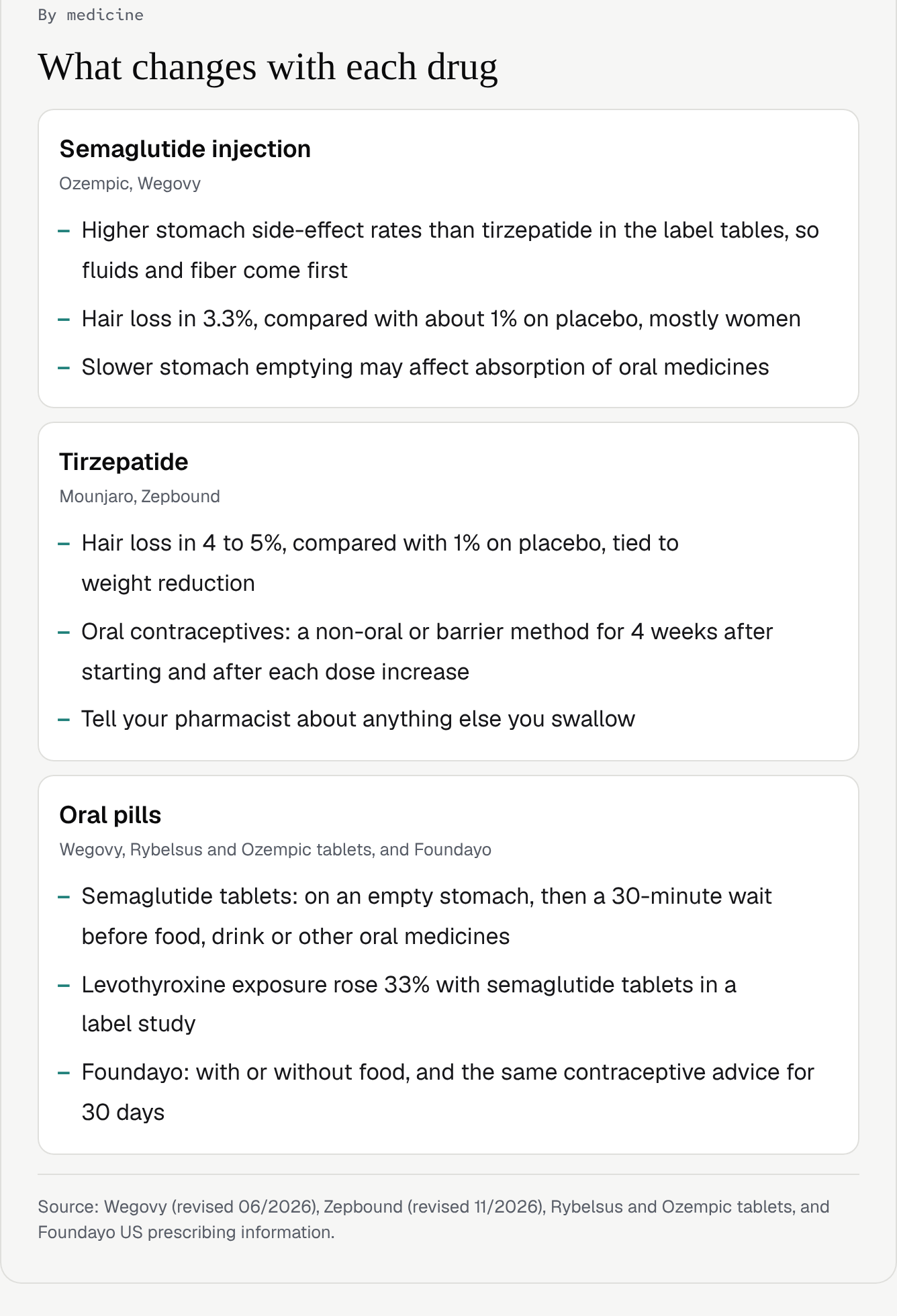
Tirzepatide (Mounjaro, Zepbound). Zepbound’s label reports hair loss in 4 to 5% of adults across doses, compared with 1% on placebo, tied to weight reduction, and more often in women (Zepbound prescribing information). The label tells people on oral hormonal contraceptives to switch to a non-oral method, or add a barrier method, for 4 weeks after starting and after each dose increase, because slowed stomach emptying can lower absorption. The same logic is why it is worth telling your pharmacist about anything else you swallow.
Semaglutide (Ozempic, Wegovy injection, Rybelsus, Wegovy tablets). Wegovy’s label reports hair loss in 3.3% of adults on its standard weight-management dose, compared with about 1% on placebo, mostly in women (Wegovy prescribing information). Its trial tables also show higher stomach side-effect rates than Zepbound’s, which makes fluids and fiber the first priority. The label notes the drug may affect the absorption of oral medicines, though in pharmacology studies injected semaglutide did not change the absorption of the medicines tested.
Compounded semaglutide and tirzepatide are not FDA-approved, and their makers publish no label of their own. The brand labels above are the reference for what the active ingredient does. For side effects in full, see GLP-1 side effects from the FDA labels.
By medicine
What changes with each drug
Semaglutide injectionOzempic, Wegovy
Higher stomach side-effect rates than tirzepatide in the label tables, so fluids and fiber come first
Hair loss in 3.3%, compared with about 1% on placebo, mostly women
Slower stomach emptying may affect absorption of oral medicines
TirzepatideMounjaro, Zepbound
Hair loss in 4 to 5%, compared with 1% on placebo, tied to weight reduction
Oral contraceptives: a non-oral or barrier method for 4 weeks after starting and after each dose increase
Tell your pharmacist about anything else you swallow
Oral pillsWegovy, Rybelsus and Ozempic tablets, and Foundayo
Semaglutide tablets: on an empty stomach, then a 30-minute wait before food, drink or other oral medicines
Levothyroxine exposure rose 33% with semaglutide tablets in a label study
Foundayo: with or without food, and the same contraceptive advice for 30 days
Source: Wegovy (revised 06/2026), Zepbound (revised 11/2026), Rybelsus and Ozempic tablets, and Foundayo US prescribing information.
We link the results rather than pick products here: what you need depends on what you eat and what your blood work shows, not on which bottle tested best.
The questions people ask on Reddit, answered from the evidence
“My hair is falling out on Ozempic or Zepbound.” Usually telogen effluvium after rapid weight loss, which typically settles within 6 to 12 months (PMID 42823125). Ferritin and protein intake are the two things worth checking. See GLP-1 hair loss and regrowth.
“I’m exhausted on Wegovy or Mounjaro.” Eating 16 to 39% less is the usual reason (PMID 40673264), and dehydration is the next. Persistent fatigue is one of the deficiency signs the joint advisory lists, and a reason for the lab panel above.
“Do I need protein shakes?” Only if food is not reaching the protein targets the guidelines cite (PMID 40673264, PMID 41502845). A shake is food, not a supplement with special effects. See protein targets on a GLP-1 and our protein powder comparison.
“Should I drink electrolytes?” When you are losing fluid through vomiting, diarrhea or sweat, an oral rehydration solution replaces what is lost. No trial has tested electrolyte products in GLP-1 users. See electrolytes on a GLP-1.
Questions
Which supplements should not be taken at the same time as Ozempic, Wegovy, Zepbound or Mounjaro?
No supplement is banned by these labels, but every one says the drug slows stomach emptying and may change how other oral products are absorbed. With semaglutide tablets (the Wegovy pill, Rybelsus, Ozempic tablets) the label sets a 30-minute wait after the tablet before food, drink or other oral medicines. The Zepbound label advises people on oral birth control to switch to a non-oral method or add a barrier method for 4 weeks after starting and after each dose increase. Berberine and high-dose iron also interact with common medicines. A pharmacist can check a specific list.
What are the best-supported supplements for Zepbound or Wegovy?
Guidelines put protein (with strength training), fiber such as psyllium, and fluids first. Vitamin B12, vitamin D and iron are worth replacing when a blood test shows a gap. Magnesium, creatine and ginger have indirect evidence for specific problems. None has been tested in a trial of people taking Zepbound or Wegovy (PMID 40673264, PMID 41502845).
Is a fiber supplement useful on Wegovy or Zepbound?
For constipation, the 2026 Delphi consensus says to consider psyllium when diet cannot supply enough fiber (PMID 41502845). Its FDA-required labeling calls for a full glass of fluid with each use. With the Wegovy pill, psyllium is one more thing swallowed, so it comes after the tablet’s 30-minute wait.
What supplements go with the Wegovy pill?
The same ones as with the injection, timed around the tablet: the Wegovy label says to take it on an empty stomach in the morning with up to 4 ounces of plain water and wait at least 30 minutes before eating, drinking or taking other oral medications, so supplements come after that window.
Can other pills be taken with Ozempic?
Usually, with a pharmacist’s check. The Wegovy label (the same molecule as Ozempic) says semaglutide delays stomach emptying and may affect absorption of oral medicines. In pharmacology studies, injected semaglutide did not change the absorption of the oral medicines tested. Ozempic tablets have their own 30-minute rule.
What vitamins and supplements do people use with Ozempic, Wegovy, Zepbound or Mounjaro, and which have evidence?
Guidelines put the basics first: enough protein with strength training, fiber (food first, then psyllium if needed) and fluids, plus electrolytes when you are losing fluid. Vitamin B12, vitamin D and iron are worth replacing only if a blood test shows a gap. A 2025 joint advisory from four obesity and nutrition societies names vitamin D, calcium and B12 as at-risk nutrients to consider, tailored to each person (PMID 40673264).
Do I need a multivitamin on a GLP-1?
There is no trial of multivitamins in GLP-1 users. Because intake falls by roughly 16 to 39%, the joint advisory recommends nutrient-dense food and targeted supplements for at-risk nutrients (PMID 40673264). A basic multivitamin is a common way to cover small gaps, but it does not replace testing when you have symptoms of a deficiency.
Is berberine “nature’s Ozempic”?
No. Pooled trials found about 0.88 kg (2 lb) more weight loss with berberine than control (PMID 41310257), and no trial has compared it with a GLP-1 medicine. It also inhibits liver enzymes that clear many prescription drugs, so it is not a harmless add-on.
What helps constipation on a GLP-1?
Fluids and fiber from food first. The 2026 Delphi consensus says to consider psyllium when diet cannot supply enough fiber (PMID 41502845), and the 2025 joint advisory lists magnesium (citrate is named as well tolerated) and polyethylene glycol 3350 when diet is not enough (PMID 40673264). Severe or persistent belly pain is a reason to call the prescriber, not to add a laxative.
Are electrolytes worth it on a GLP-1?
When you are losing fluid through vomiting, diarrhea or heavy sweating, yes, an oral rehydration solution can help replace it. The Wegovy and Zepbound labels warn of acute kidney injury, mostly in people who became dehydrated from stomach side effects. No trial has tested electrolyte products in GLP-1 users, and extra potassium can be dangerous with kidney disease.
Does creatine help prevent muscle loss on a GLP-1?
It has not been tested in people taking semaglutide or tirzepatide. In postmenopausal women, a 2026 meta-analysis of 7 trials found creatine added lean mass and strength only when combined with resistance training (PMID 42141930). Strength training and enough protein are the guideline-backed steps, and creatine is an optional extra.
Why is my hair falling out on a GLP-1, and will biotin help?
Shedding is usually telogen effluvium after rapid weight loss, which typically reverses within 6 to 12 months (PMID 42823125). Zepbound’s label ties hair loss to weight reduction. Check ferritin and protein intake first. There is no trial of biotin in GLP-1 users, and the FDA warns that biotin can distort lab tests, including a falsely low troponin result.
How do supplements fit around Wegovy, Rybelsus or Ozempic tablets?
The semaglutide tablet labels say to take the tablet on an empty stomach in the morning with up to 4 ounces of plain water, then wait at least 30 minutes before eating, drinking or taking other oral medications, so supplements come after that window. The label also reports higher thyroxine exposure when levothyroxine was taken with the tablets. Foundayo (orforglipron) has no food restriction.
Does tirzepatide affect birth control pills?
Yes, per the Zepbound label: because it slows stomach emptying, people on oral hormonal contraceptives are advised to switch to a non-oral method or add a barrier method for 4 weeks after starting and after each dose increase. The Foundayo label gives the same advice for 30 days. Non-oral contraceptives are not affected.
Medical disclaimer: This page summarizes guidelines, drug labels and published trials for general education. It does not tell anyone what to take. Supplements are not reviewed by the FDA for safety or effectiveness before sale. Talk to the clinician who prescribes your GLP-1 medicine, and your pharmacist, before adding any supplement, especially with kidney disease, during pregnancy or with other prescription medicines.
Share this article
References
1Nutritional priorities to support GLP-1 therapy for obesity: A joint advisory from the American College of Lifestyle Medicine, the American Society for Nutrition, the Obesity Medicine Association, and the Obesity SocietyMozaffarian D, Agarwal M, Aggarwal M et al., Obesity Pillars 2025 · PMID: 40673264 · DOI: 10.1016/j.obpill.2025.100181
2Nutritional and lifestyle supportive care recommendations for management of obesity with GLP-1 based therapies: An expert consensus statement using a modified Delphi approachSievenpiper JL, Ard J, Blüher M et al., Obesity Pillars 2025 · PMID: 41502845 · DOI: 10.1016/j.obpill.2025.100228
3Medical nutrition in the glucagon-like peptide-1 (GLP-1) era: Protein strategies, micronutrient monitoring, and lean mass preservationArslan S, Clinical Nutrition ESPEN 2026 · PMID: 42036071 · DOI: 10.1016/j.clnesp.2026.103305
4WEGOVY (semaglutide) injection and tablets, US prescribing information, revised 06/2026Novo Nordisk, DailyMed 2026 · Source
5ZEPBOUND (tirzepatide) injection, US prescribing information, revised 11/2026Eli Lilly and Company, DailyMed 2026 · Source
6FOUNDAYO (orforglipron) tablets, US prescribing informationEli Lilly and Company, DailyMed 2026 · Source
7RYBELSUS and OZEMPIC (semaglutide) tablets, US prescribing information and Medication GuideNovo Nordisk, DailyMed 2026 · Source
8Lean Mass Changes With Incretin Therapy Versus Lifestyle Intervention: A Systematic Review and Meta-AnalysisEisa N, Barood O et al., Diabetes, Obesity and Metabolism 2026 · PMID: 41877354 · DOI: 10.1111/dom.70666
9Body composition changes during weight reduction with tirzepatide in the SURMOUNT-1 study of adults with obesity or overweightLook M, Dunn JP, Kushner RF et al., Diabetes, Obesity and Metabolism 2025 · PMID: 39996356 · DOI: 10.1111/dom.16275
10Creatine monohydrate for lean mass, strength, and bone density in postmenopausal women: a systematic review and meta-analysisNaddafha S, Antonio J, Kreider RB et al., Journal of the International Society of Sports Nutrition 2026 · PMID: 42141930
11Association between metformin and vitamin B12 deficiency in patients with type 2 diabetes: A systematic review and meta-analysisChapman LE, Darling AL, Brown JE, Diabetes & Metabolism 2016 · PMID: 27130885 · DOI: 10.1016/j.diabet.2016.03.008
12Vitamin D for the Prevention of Disease: An Endocrine Society Clinical Practice GuidelineDemay MB et al., Journal of Clinical Endocrinology & Metabolism 2024 · PMID: 38828931
13Senna Versus Magnesium Oxide for the Treatment of Chronic Constipation: A Randomized, Placebo-Controlled TrialMorishita D et al., American Journal of Gastroenterology 2021 · PMID: 32969946
14A systematic review and meta-analysis of the effect and safety of ginger in the treatment of pregnancy-associated nausea and vomitingViljoen E et al., Nutrition Journal 2014 · PMID: 24642205 · DOI: 10.1186/1475-2891-13-20
15Shedding: An updated guide to a common cause of hair lossBergfeld WF, Mendez D, Cleveland Clinic Journal of Medicine 2026 · PMID: 42823125
16The effect of berberine on obesity indices: a systematic review and meta-analysisElahi Vahed I, Shahir-Roudi E, Nojumi S et al., International Journal of Obesity 2026 · PMID: 41310257
17Supplementation with Akkermansia muciniphila in overweight and obese human volunteers: a proof-of-concept exploratory studyDepommier C et al., Nature Medicine 2019 · PMID: 31263284
18Cinnamon for diabetes mellitusLeach MJ, Kumar S, Cochrane Database of Systematic Reviews 2012 · PMID: 22972104
19Transdermal “Natural GLP-1” Dietary Supplements Violate Law and Place Patients at RiskWhite CM, Tai Z, Nuzi K, Annals of Pharmacotherapy 2026 · PMID: 41480958 · DOI: 10.1177/10600280251407145
20Dietary supplement considerations during glucagon-like peptide-1 receptor agonist treatment: A narrative review (authors employed by GNC Holdings)Johnson BVB, Milstead M, Kreider R, Jones R, Obesity Pillars 2025 · PMID: 41368199 · DOI: 10.1016/j.obpill.2025.100209
21Biotin Interference with Troponin Lab Tests: Assays Subject to Biotin InterferenceUS Food and Drug Administration, FDA 2024 · Source
2221 CFR 201.319: Water-soluble gums, hydrophilic gums, and hydrophilic mucilloids; required warningUS Food and Drug Administration, eCFR 2007 · Source
23Vitamin D: Fact Sheet for Health ProfessionalsNIH Office of Dietary Supplements, NIH ODS 2025 · Source
24Psyllium (MedlinePlus drug information)US National Library of Medicine, MedlinePlus 2024 · Source
25Vitamin B12: Fact Sheet for Health ProfessionalsNIH Office of Dietary Supplements, NIH ODS 2025 · Source
26Iron: Fact Sheet for Health ProfessionalsNIH Office of Dietary Supplements, NIH ODS 2025 · Source
Related
Evidence by goalFat Loss and Metabolic Health
Semaglutide and tirzepatide (FDA-approved), tesamorelin (approved for one use) and the pipeline drugs: what the labels and trials show, and why the prescriber sets the dose.