Evidence profile · Other
Alpha-lipoic acid
The strongest evidence (strong, grade A) is on diabetic nerve symptom scores: a 2023 meta-analysis of 1,242 people found an improvement. Checked Oct 21, 2026 against 14 sources. Also called ALA (lipoic), thioctic acid, lipoic acid, R-lipoic acid, R-ALA.
By Kymata Health Editorial Other
- Astrong (Grade A) Best grade
- 8 Graded outcomes
- Last checked
2026
We earn a commission if you buy through some links on this page. You pay the same price. See how we make money.

The short answer
From 14 sourcesAlpha-lipoic acid is best studied in diabetic nerve symptoms: a pooled analysis of 10 oral trials found less burning, stabbing and numbness (grade A), though a 4-year trial missed its main nerve-function goal. Weight loss was about 1.3 kg more than placebo. Nausea rises with dose.
Quick pick
From a partner brand · paid link
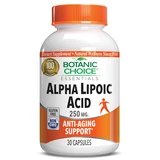
Label: 1 capsule: 250 mg alpha-lipoic acid.
Best for value: the lowest one-time price of the 4 partner products on this page ($15, checked Oct 12, 2026).
Runner-up: Alpha Lipoic Acid at Supersmart (paid link, opens in new tab)
Every graded outcome on this page
8 rows · line = participants- Diabetic nerve symptom scoresAstrong (Grade A)Nerve symptomsn 1,242
- Body weight and BMIBmoderate (Grade B)Weightn 947
- Burning, stabbing pain and numbness of the feetBmoderate (Grade B)Nerve symptomsn 181
- Sperm motility and morphology in male infertilityClimited (Grade C)Male fertilityn 250
- Nerve symptoms and impairment after 6 months or longer∅No effectNerve symptomsn 816
- Cholesterol, triglycerides and glucose markers in overweight adults∅No effectMetabolic markersn 704
- Nerve function composite over 4 years∅No effectNerve functionn 460
- Liver enzymes and metabolic markers in fatty liver disease∅No effectFatty livern 414
- 5 more graded outcomes, in the evidence chapter
Key facts
5 factsWhat it is
Alpha-lipoic acid is a sulfur-containing fatty acid the body makes for energy enzymes; supplements use 300–1,800 mg/day.
How it works
ProposedLipoic acid is a cofactor for mitochondrial enzymes such as pyruvate dehydrogenase. As a supplement it is proposed to reduce oxidative stress and improve nerve blood flow.1
Forms, side by side
2 forms named in our sources. The rest show what our data holds, and say plainly where it holds nothing yet.
Alpha-lipoic acid forms compared
2 forms| Form | Absorption in people | GI tolerance | Studied for |
|---|---|---|---|
| Racemic alpha-lipoic acid (R/S) | Most trials cited here used standard alpha-lipoic acid; no head-to-head human outcome data versus R-lipoic acid in these sources. | Nausea, vomiting and vertigo rose with dose from 600 to 1,800 mg/day.2 | Most nerve-symptom and weight trials |
| R-lipoic acid (R-ALA, sodium R-lipoate) | The natural form; no outcome trials comparing it with the racemic form are cited here. | No separate tolerance data in the sources cited here. | Marketed as the natural form |
What the human research says
Human trials only, one row per outcome. The form line shows what each trial actually tested. Grades follow our evidence-grading policy.
Trial map
8 graded outcomes, largest study first8 graded outcomes: 4 improved, 4 no effect. The largest, a 2023 meta-analysis of 1,242 people on diabetic nerve symptom scores, found an improvement.
1Diabetic nerve symptom scores
ImprovedGrade AMeta-analysis, 1,242 people, 2023
Adults with diabetic sensorimotor polyneuropathy in 10 RCTs
Dose, result and source| Outcome | Found | People | Study | Who was studied |
|---|---|---|---|---|
| Diabetic nerve symptom scores | Improved | 1,242 | Grade AMeta-analysis, 2023 | Adults with diabetic sensorimotor polyneuropathy in 10 RCTs |
| Body weight and BMI | Improved | 947 | Grade BMeta-analysis, 2017 | Adults in 10 double-blind placebo-controlled RCTs (obesity, diabetes, fatty liver and other groups) |
| Nerve symptoms and impairment after 6 months or longer | No effect | 816 | No-effect gradeSystematic review, 2024 | Adults with type 1 or type 2 diabetes and peripheral neuropathy in 3 placebo-controlled RCTs lasting at least 6 months |
| Cholesterol, triglycerides and glucose markers in overweight adults | No effect | 704 | No-effect gradeMeta-analysis, 2025 | Adults with BMI ≥25 in 11 RCTs |
| Nerve function composite over 4 years | No effect | 460 | No-effect gradeRCT, 2011 | Adults with mild to moderate diabetic polyneuropathy |
| Liver enzymes and metabolic markers in fatty liver disease | No effect | 414 | No-effect gradeMeta-analysis, 2026 | Adults with non-alcoholic fatty liver disease in 7 RCTs |
| Sperm motility and morphology in male infertility | Improved | 250 | Grade CMeta-analysis, 2025 | Infertile men aged 28–40 (mean) in 5 placebo-controlled RCTs |
| Burning, stabbing pain and numbness of the feet | Improved | 181 | Grade BRCT, 2006 | Adults with diabetes and distal symmetric polyneuropathy |
Every graded row
8 rows- All8
- Nerve symptoms3
- Nerve function1
- Metabolic markers1
- Weight1
- Fatty liver1
- Male fertility1
- All8
- AGrade AGrade A1
- BGrade BGrade B2
- CGrade CGrade C1
- ∅No effectNo effect4
- All
- Oral alpha-lipoic acid
- Alpha-lipoic acid
Showing 8 of 8 outcomes. Human trials only.
AGrade ADiabetic nerve symptom scoresNerve symptomsImprovedMeta-analysis10 studies
n 1,2422023
Total symptom score and global satisfaction improved versus placebo with a dose-related trend; vibration threshold, nerve conduction and NIS-LL did not improve.
- Design
- Meta-analysis, 10 studies, n = 1,242, 2023
- Population
- Adults with diabetic sensorimotor polyneuropathy in 10 RCTs
- Form
- Oral alpha-lipoic acid
- Dose
- 600–1,800 mg/day
- Duration
- Varied across trials
- Source
- Reference 1 · PubMed 37630823 (opens PubMed)
BGrade BBody weight and BMIWeightImprovedMeta-analysis10 studies
n 9472017
1.27 kg more weight loss than placebo (95% CI 0.25 to 2.29) and BMI 0.43 kg/m² lower; dose did not predict the size of the effect.
- Design
- Meta-analysis, 10 studies, n = 947, 2017
- Population
- Adults in 10 double-blind placebo-controlled RCTs (obesity, diabetes, fatty liver and other groups)
- Form
- Oral alpha-lipoic acid
- Dose
- 300–1,800 mg/day
- Duration
- 8–52 weeks
- Source
- Reference 4 · PubMed 28295905 (opens PubMed)
BGrade BBurning, stabbing pain and numbness of the feetNerve symptomsImprovedRCT
n 1812006
Symptom scores fell more with all three doses than placebo; 600 mg gave the best balance because nausea, vomiting and vertigo rose with dose.
- Design
- RCT, n = 181, 2006
- Population
- Adults with diabetes and distal symmetric polyneuropathy
- Form
- Alpha-lipoic acid
- Dose
- 600, 1,200 or 1,800 mg once daily
- Duration
- 5 weeks
- Source
- Reference 2 · PubMed 17065669 (opens PubMed)
CGrade CSperm motility and morphology in male infertilityMale fertilityImprovedMeta-analysis5 studies
n 2502025
Total and progressive motility rose and abnormal morphology fell versus placebo; sperm concentration, volume and pregnancy rate did not differ significantly. No adverse events were reported.
- Design
- Meta-analysis, 5 studies, n = 250, 2025
- Population
- Infertile men aged 28–40 (mean) in 5 placebo-controlled RCTs
- Form
- Alpha-lipoic acid
- Dose
- Varied across trials (not stated in the abstract)
- Duration
- About 3 months (mean follow-up)
- Source
- Reference 10 · PubMed 40327515 (opens PubMed)
∅No effectNerve symptoms and impairment after 6 months or longerNerve symptomsNo effectSystematic review3 studies
n 8162024
Cochrane review: probably little or no effect on symptom scores at 6 months (moderate certainty) and may have little or no effect on impairment (NIS-LL); withdrawals for adverse events did not differ from placebo. All 3 trials were at high risk of attrition bias.
- Design
- Systematic review, 3 studies, n = 816, 2024
- Population
- Adults with type 1 or type 2 diabetes and peripheral neuropathy in 3 placebo-controlled RCTs lasting at least 6 months
- Form
- Alpha-lipoic acid
- Dose
- Varied across trials (not stated in the abstract)
- Duration
- 6–48 months
- Source
- Reference 8 · PubMed 38205823 (opens PubMed)
∅No effectCholesterol, triglycerides and glucose markers in overweight adultsMetabolic markersNo effectMeta-analysis11 studies
n 7042025
No significant change in triglycerides, cholesterol, HOMA-IR or fasting glucose.
- Design
- Meta-analysis, 11 studies, n = 704, 2025
- Population
- Adults with BMI ≥25 in 11 RCTs
- Form
- Alpha-lipoic acid
- Dose
- Varied across trials
- Duration
- Varied across trials
- Source
- Reference 5 · PubMed 40180416 (opens PubMed)
∅No effectNerve function composite over 4 yearsNerve functionNo effectRCT
n 4602011
The primary composite of nerve tests did not differ from placebo; some secondary impairment scores favoured lipoic acid.
- Design
- RCT, n = 460, 2011
- Population
- Adults with mild to moderate diabetic polyneuropathy
- Form
- Alpha-lipoic acid
- Dose
- 600 mg/day
- Duration
- 4 years
- Source
- Reference 3 · PubMed 21775755 (opens PubMed)
∅No effectLiver enzymes and metabolic markers in fatty liver diseaseFatty liverNo effectMeta-analysis7 studies
n 4142026
Liver enzymes, lipids, glucose markers, adipocytokines and body measures did not differ from placebo, including in subgroups by dose and duration.
- Design
- Meta-analysis, 7 studies, n = 414, 2026
- Population
- Adults with non-alcoholic fatty liver disease in 7 RCTs
- Form
- Alpha-lipoic acid
- Dose
- Varied across trials
- Duration
- Varied across trials
- Source
- Reference 9 · PubMed 41917882 (opens PubMed)
Studied doses
Doses used in research, shown against the official limits. They describe the studies, not a recommendation for you.
Studied doses in research, not advice. These are amounts used in research, not personal advice. Your clinician or pharmacist can say what fits you.
Doses studied in human trials
When trials measured an effect
2 outcomes| Outcome | Measured at | Basis |
|---|---|---|
| Diabetic nerve symptoms (burning, stabbing pain, numbness) | Week 5 (end of treatment) | In SYDNEY 2, symptom scores fell about 48–52% with 600–1,800 mg/day versus 32% with placebo after 5 weeks.2 |
| Nerve symptoms over the long term | 6 months and later | The Cochrane review of trials lasting 6–48 months found probably little or no effect on symptom scores at 6 months.8 |
Interactions and safety
Published interactions only: each row cites a source. No row means none was found in our sources, not that a combination is safe.
What Alpha-lipoic acid meets
2 cited rowsMedicines 2
Supplements and foods 0
No supplement rows in our sources.
- Measured in a human study
- Reference summary
Choose a medicine or supplement above to read its cited rows here.
Also cited:
Pregabalin
PK studyMeasured in a human study
Pregabalin: No clinically meaningful pharmacokinetic interaction: in a single-dose crossover study in 24 healthy adults, pregabalin 80 mg with lipoic acid 400 mg gave blood levels of both within bioequivalence limits.
Source 12, Front Pharmacol (2025)
Diabetes medicines
ReviewReference summary
Diabetes medicines, for example insulin, sulfonylureas: Trials enrolled people with diabetes on their usual treatment; the 2017 weight analysis and nerve trials did not report hypoglycaemia, but glucose effects could add to these medicines.
Source 4, Obes Rev (2017)
Interactions
2 agents| Agent | What the source says | Evidence |
|---|---|---|
| Medicines2 | ||
| Diabetes medicinese.g. insulin, sulfonylureas | Trials enrolled people with diabetes on their usual treatment; the 2017 weight analysis and nerve trials did not report hypoglycaemia, but glucose effects could add to these medicines.4 | Review |
| Pregabalin | No clinically meaningful pharmacokinetic interaction: in a single-dose crossover study in 24 healthy adults, pregabalin 80 mg with lipoic acid 400 mg gave blood levels of both within bioequivalence limits.12 | PK study |
Check with what you take
Kept on this device onlyAdd what you take. We list every interaction our evidence profiles cite between Alpha-lipoic acid and your picks, and between your picks.
- Loading names…
Add a supplement or medicine you take to check it against Alpha-lipoic acid.
Starting from one medicine? The interaction checker rates how serious each pair is, on a curated list of 19 entries for 11 medicines. This cabinet has no severity rating: it lists every interaction row our supplement pages cite.
Who should be careful
4 groups- Unexplained low blood sugar
- Alpha-lipoic acid is a reported trigger of insulin autoimmune syndrome (Hirata disease), a rare cause of recurrent hypoglycaemia driven by insulin autoantibodies, mainly in people carrying certain HLA-DRB1*04 alleles. Recurrent shakiness, sweating or confusion between meals while taking it warrants prompt medical review.7
- Sensitive stomach
- Nausea and vomiting increased at 1,200–1,800 mg/day.2
- Pregnancy and breastfeeding
- No pregnancy outcome trials are cited here. A 2020 safety meta-analysis of 71 placebo-controlled studies (4,749 people) found no rise in adverse events with lipoic acid, including in the studies in pregnancy, but that is not proof of safety for the baby. We found no LactMed (breastfeeding) entry for lipoic acid, so breastfeeding data are lacking.111
- Liver disease
- LiverTox (2023 revision) scores lipoic acid E, an unlikely cause of clinically apparent liver injury: trials at usual doses showed no serum enzyme rises. Single large overdoses have caused lactic acidosis, seizures and multiorgan failure. In fatty liver disease, a 2026 meta-analysis of 7 trials found no improvement in liver enzymes.149
Where to buy Alpha-lipoic acid
Products from brands we partner with that contain Alpha-lipoic acid. Check each label for the amount per serving and other ingredients.
Alpha-lipoic acid products from partner brands
4 products Paid links · we earn a commission4 products, in list order
- Quick pickBotanic ChoiceBotanic Choice Alpha Lipoic Acid, 250 mg, 30 capsules (paid link, opens in new tab)
1 capsule: 250 mg alpha-lipoic acid; label directions 1 capsule twice daily
$15.00one-timeChecked Oct 12, 2026 - SupersmartAlpha Lipoic Acid (paid link, opens in new tab)5% off with the Supersmart newsletterGet 5% off with the newsletter (paid link, opens in new tab)
Offer details
Sign up for the newsletter at the bottom of us.supersmart.com; Supersmart says the 5% discount is permanent.
- Supersmart’s footer offer reads “Subscribe to our newsletter and obtain a 5% permanent discount.”
- Supersmart says Subscribe & Save discounts can’t be combined with the 5% newsletter discount.
- 20% applies when 3 or more products ship on auto-delivery to the same address.
- Only products that show the Subscribe & Save offer qualify, and a Supersmart account is required.
- The newsletter discount and Subscribe & Save are separate offers; we don’t claim they combine.
- Offer terms from Supersmart’s site, checked Oct 16, 2026. Offers can change; the brand's checkout is final.
2 capsules: 500 mg alpha-lipoic acid (250 mg per capsule); 30 servings
$24.00one-time$20.40subscribeChecked Oct 11, 2026 1 veg capsule: 600 mg alpha-lipoic acid with 30 mg grape seed extract and 5 mg BioPerine
$19.08one-timeChecked Nov 22, 2026- Nootropics DepotNootropics Depot NA-R-ALA Stabilized R-Lipoic Acid Capsules (60 capsules) (paid link, opens in new tab)
Caution: May add to the effect of diabetes medicines: check with a pharmacist first.
1 capsule: 125 mg sodium R-lipoic acid; 60 capsules
$24.99one-timeChecked Nov 21, 2026


Articles and related pages
Our articles about Alpha-lipoic acid, then related pages and topics.
Articles about Alpha-lipoic acid
1 articlePlain-English answers to common questions, built on the evidence above.

Related to Alpha-lipoic acid
Grouped by why they relate: the same goals first, then the goals themselves.
- Supplement
Benfotiamine
- Metabolic. Benfotiamine is a synthetic, better-absorbed derivative of vitamin B1 (thiamine).
Read the page - Supplement
Berberine
- Metabolic. Berberine is a yellow plant alkaloid from goldenseal, barberry and Coptis; dihydroberberine is a reduced form marketed for better…
Read the page - Supplement
CoQ10
- Healthy aging. Coenzyme Q10 is a fat-soluble compound the body makes for cellular energy production; supplements sell it oxidized (ubiquinone) or reduced…
Read the page - Supplement
Glutathione
- Healthy aging. Glutathione is a three-amino-acid antioxidant the body makes itself; oral capsules and liposomal liquids are sold to raise its levels.
Read the page - Supplement
NAC
- Healthy aging. NAC is an acetylated form of the amino acid cysteine; it supplies cysteine for glutathione and was approved as a drug in 1963.
Read the page - Supplement
Acetyl-L-carnitine
- Acetyl-L-carnitine is an acetylated form of carnitine studied for mood, memory and nerve pain.
Read the page - Method
How we grade evidence
- The evidence-grading policy, source rules and review process behind every supplement page.
Read the page

More on Supplements and vitamins
Grouped by why they relate: the same goals first, then the goals themselves.
- Supplement
Fisetin
- Healthy aging, metabolic. Fisetin is a flavonol found in strawberries, apples and onions, sold as a supplement for healthy aging and as a proposed senolytic.
Read the page - Supplement
Hydroxytyrosol
- Metabolic, healthy aging. Hydroxytyrosol is a phenolic compound from olives and olive oil, sold as olive-fruit or olive-extract supplements.
Read the page - Supplement
Molecular Hydrogen
- Metabolic, healthy aging. Molecular hydrogen supplements deliver hydrogen gas (H2) dissolved in drinking water, sold ready-made or made with tablets or electrolysis…
Read the page - Supplement
Rutin
- Metabolic, healthy aging. Rutin is a flavonoid glycoside (quercetin bound to the sugar rutinose) found in buckwheat, citrus and tea, sold as a supplement.
Read the page - Supplement
Sulforaphane (broccoli sprout extract)
- Metabolic, healthy aging. Sulforaphane is an isothiocyanate formed from glucoraphanin in broccoli sprouts and seeds; supplements supply the glucoraphanin precursor.
Read the page - Topic
- Hub
- Tool
- Topic
Ask about this supplement
Answers come from this page and our other evidence pages, with links.
Frequently asked questions
Short answers to common questions; the numbers link to the sources below.
Common questions
8 answersDoes alpha-lipoic acid help diabetic nerve pain?
Short trials say yes for symptoms: pooled trials found better symptom scores (grade A), and in SYDNEY 2 scores fell about half after 5 weeks versus about a third on placebo. Longer trials are weaker: a Cochrane review found probably little or no effect at 6 months, and a 4-year trial missed its main goal.1283
Does it help with weight loss?
Pooled trials found about 1.3 kg more weight loss than placebo over 8–52 weeks (grade B), a small effect.4
Is R-lipoic acid better?
R-lipoic acid is the natural form, but the trials cited here mostly used standard lipoic acid and none compared outcomes head to head.
What are the side effects of alpha-lipoic acid?
Is alpha-lipoic acid safe long term?
Does alpha-lipoic acid interact with medications or other supplements?
Is alpha-lipoic acid safe during pregnancy or breastfeeding?
There are no pregnancy outcome trials cited here. A 2020 safety meta-analysis found no rise in adverse events in the subset of studies in pregnancy, and there is no LactMed entry for breastfeeding.11
What dose was best in trials?
In a 5-week trial, 600 mg once daily worked about as well as 1,200–1,800 mg with fewer stomach side effects.2
Sources
14 sources: trial abstracts, NIH fact sheets and reference databases. Numbers in the text link here.
Sources cited on this page
14 sources- 1Effects of Oral Alpha-Lipoic Acid Treatment on Diabetic Polyneuropathy: A Meta-Analysis and Systematic Review.Meta-analysis Nutrients, 2023 · PMID 37630823
- 2Oral treatment with alpha-lipoic acid improves symptomatic diabetic polyneuropathy: the SYDNEY 2 trial.RCT Diabetes Care, 2006 · PMID 17065669
- 3Efficacy and safety of antioxidant treatment with α-lipoic acid over 4 years in diabetic polyneuropathy: the NATHAN 1 trial.RCT Diabetes Care, 2011 · PMID 21775755
- 4Alpha-lipoic acid (ALA) as a supplementation for weight loss: results from a meta-analysis of randomized controlled trials.Meta-analysis Obes Rev, 2017 · PMID 28295905
- 5Alpha-lipoic acid on intermediate disease markers in overweight or obese adults: a systematic review and meta-analysis.Meta-analysis BMJ Open, 2025 · PMID 40180416
- 6A systematic review and meta-analysis of α-lipoic acid in the treatment of diabetic peripheral neuropathy.Meta-analysis Eur J Endocrinol, 2012 · PMID 22837391
- 7Alpha-lipoic acid as a trigger of insulin autoimmune syndrome: Current evidence, a case-based approach, diagnostic pitfalls, and practical management.Review Metabol Open, 2026 · PMID 42662728
- 8Alpha-lipoic acid for diabetic peripheral neuropathy.Systematic review Cochrane Database Syst Rev, 2024 · PMID 38205823
- 9Effects of alpha-lipoic acid supplementation on patients with nonalcoholic fatty liver disease: a systematic review and meta-analysis of randomized clinical trials.Meta-analysis BMC Endocr Disord, 2026 · PMID 41917882
- 10Efficacy of Alpha Lipoic Acid Supplementation in Sperm Parameters: A Systematic Review and Meta-Analysis of Randomized Trials.Meta-analysis Int Braz J Urol, 2025 · PMID 40327515
- 11Safety Evaluation of α-Lipoic Acid Supplementation: A Systematic Review and Meta-Analysis of Randomized Placebo-Controlled Clinical Studies.Meta-analysis Antioxidants (Basel), 2020 · PMID 33086555
- 12Pharmacokinetics and safety of a fixed-dose combination of pregabalin and thioctic acid in healthy volunteers: a randomized, open-label, phase 1 crossover study.PK study Front Pharmacol, 2025 · PMID 41079751
- 13Effects of alpha-lipoic acid supplementation on cardiometabolic risk factors: A systematic review and dose-response meta-analysis.Meta-analysis Nutr Metab Cardiovasc Dis, 2026 · PMID 41077538
- 14Alpha Lipoic Acid. LiverTox: Clinical and Research Information on Drug-Induced Liver InjuryDatabase LiverTox (NCBI Bookshelf), 2023 · ncbi.nlm.nih.gov
What changed
Every dated change to this page: what changed, who made it and why.
Change log
4 entries| Date | Change | Who and why |
|---|---|---|
| all | Added evidence rows for the 2024 Cochrane review of long-term nerve outcomes (little or no effect at 6 months), weight (2017 meta-analysis), fatty liver (2026 meta-analysis, no effect) and male fertility (2025 meta-analysis); noted the 2026 cardiometabolic meta-analysis; added the LiverTox liver note (likelihood score E) and a metabolic goal-hub link, a cited pregnancy and breastfeeding note, a pregabalin pharmacokinetic study, time-to-effect rows, studied doses down to 300 mg/day, four FAQs and page questions. Interactions checked against LiverTox and PubMed; MedlinePlus no longer hosts a lipoic acid monograph and LactMed has no entry. | Writer: Kymata Health EditorialTrigger: A–Z audit against docs/supplements/AUDIT-STANDARD.md |
| who should avoid | Editorial evidence re-review: added insulin autoimmune syndrome (hypoglycaemia) warning from a 2026 review (PMID 42662728, checked via NCBI); this serious, documented adverse effect was missing. | Writer: Kymata Health EditorialTrigger: editorial evidence re-review |
| Evidence | Corrected the effect arrow (↑ improved, ↓ worsened for participants) on: Diabetic nerve symptom scores; Burning, stabbing pain and numbness of the feet. | Writer: Kymata Health EditorialTrigger: Adversarial review |
| all | First draft. Every PMID checked against NCBI E-utilities (title, journal and year taken from the PubMed record) and each evidence row written from its PubMed abstract. | Writer: Kymata Health EditorialTrigger: new page (encyclopedia expansion, A–L) |
Supplement & Nutrient Encyclopedia. Educational information only; it is not medical advice and does not replace a clinician. Dietary supplements are not intended to diagnose, treat, cure or prevent any disease. Statements about supplements have not been evaluated by the FDA.