Evidence explainer · Digestion & Nutrient Absorption
Where Nutrients Are Absorbed: Why Eating Enough Is Not the Whole Story
Follow the difference between intake, digestion and absorption, using vitamin B12 to show how several organs work together.
- Question
- Why can eating a nutrient and absorbing it be different things?
- Sources
- 3 cited
- Quick answers
- 3 questions
- Clinician review
- None; sources cited inline
In short
Key takeaways
- Digestion breaks food into components; absorption moves those components across the intestinal lining.1
- Food-bound vitamin B12 depends on a sequence involving the stomach, pancreatic enzymes, intrinsic factor and the distal ileum.2
- An organ illustration cannot diagnose malabsorption or show whether a supplement is needed. Clinical assessment depends on the underlying problem.3
Chapter
Intake, digestion and absorption are separate steps
Intake describes what you eat or drink. Digestion breaks food down. Absorption moves nutrients from the digestive tract into the body. A food label describes the first step; it does not measure how much a particular person absorbs.1
The small intestine is central to nutrient absorption, but the route depends on the nutrient. Digested sugars and amino acids enter the blood; many dietary fats enter lymphatic vessels before joining the bloodstream. These are coordinated routes, not a single opening through which all nutrients pass.1
Chapter
Vitamin B12 makes the sequence visible
B12 in food is bound to protein. Acid and enzymes help release it, and binding proteins carry it through successive digestive steps. In the duodenum, pancreatic enzymes free B12 from haptocorrin; B12 then binds to intrinsic factor, a protein made by cells in the stomach. That complex is absorbed in the distal ileum.2
B12 added to fortified foods and supplements is already in free form, so it does not require release from food protein. That difference does not remove every possible absorption problem. The relevant cause and treatment still matter. Our B12 guide for adults over 50 and metformin users examines those contexts.2
Chapter
What can the explorer show about absorption?
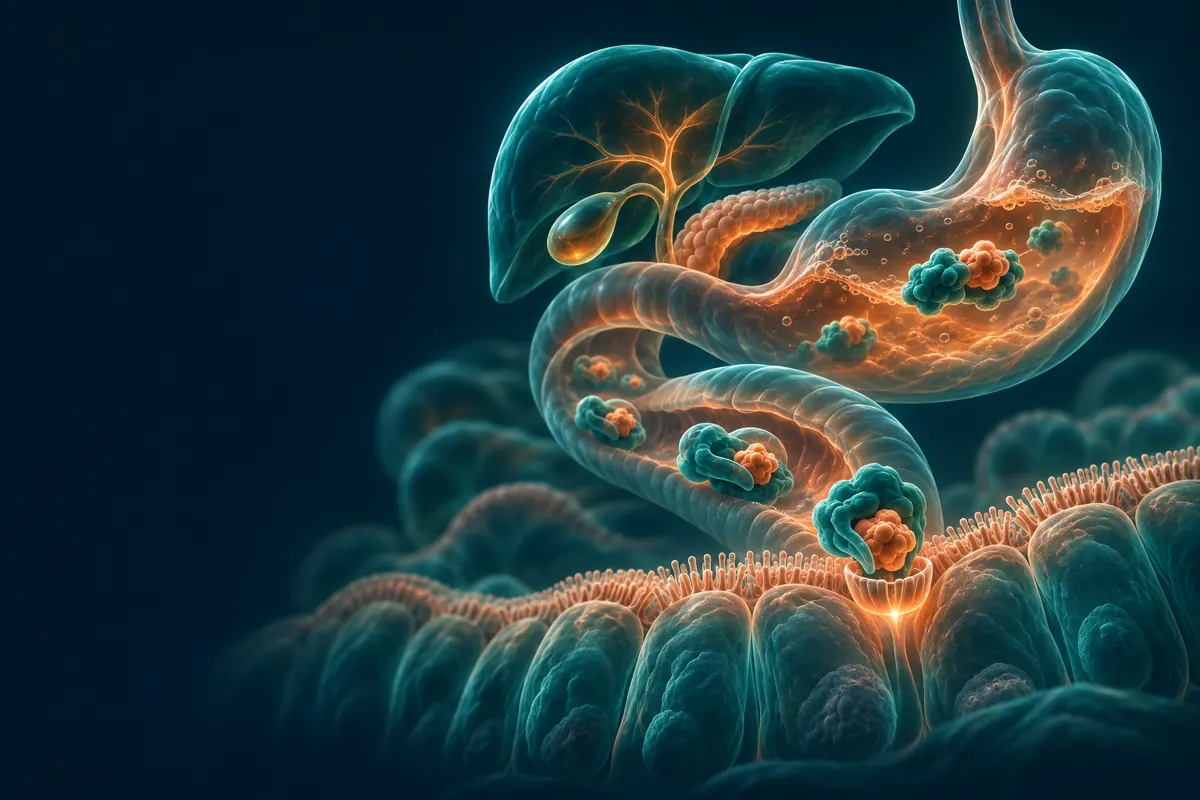
Start Follow a meal to see the stomach, pancreas and intestine in context. The current small-intestine reference mesh includes duodenum and jejunum; it does not include the ileum. The model therefore cannot literally show the distal-ileal B12 absorption site. The explanation names that missing segment rather than assigning its role to the wrong tissue.
The animation also does not measure intestinal surface area, digestive secretions, blood nutrient levels or an individual’s absorption. Use it to understand relationships. A normal-looking reference organ is not evidence that someone’s own function is normal.
Chapter
Choose the next question before choosing a product
Several processes can affect nutritional status, and the same symptom can have more than one explanation. NIDDK describes how pancreatic insufficiency can lead to nutritional complications that clinicians assess and treat alongside the underlying disease. That is different from inferring a problem from a diet description or an illustration.3
For the difference between enzyme therapy and retail blends, read fiber, probiotics and enzymes. For B12 formulation questions, read oral B12 versus injections. These guides explain evidence; they do not replace an assessment when symptoms or test results raise concern.
Questions
Quick answers
Where is vitamin B12 absorbed?
The B12–intrinsic-factor complex is absorbed in the distal ileum, the final part of the small intestine. Earlier digestive steps involve other organs and proteins.2
Does a balanced diet rule out an absorption problem?
Can the 3D model identify which nutrients I need?
No. It is reference anatomy and an educational explanation. It contains no personal measurements and cannot diagnose a deficiency or malabsorption.
Keep reading
More in Digestion & Nutrient Absorption
Researched and written by Kymata Health Editorial; sources cited inline. Drawn from the studies and documents cited below. Educational only, not medical advice.
Sources
References
Every study and document cited in this guide, numbered as in the text.
- 1Your Digestive System & How It Works (accessed 2026). NIDDK, 2026.
- 2Vitamin B12: Health Professional Fact Sheet (accessed 2026). NIH Office of Dietary Supplements, 2026.
- 3Treatment for Exocrine Pancreatic Insufficiency (accessed 2026). NIDDK, 2026.
Dietary supplements are not intended to diagnose, treat, cure or prevent any disease, and these statements have not been evaluated by the FDA. Prescription options need a licensed clinician. Talk to your clinician or pharmacist before starting anything new, especially if you take prescription medicines, are pregnant or breastfeeding.