Health hub · For everyone
Digestion: Follow the Food, Understand the Claims
Follow a meal through the body, distinguish digestive jobs, and understand the evidence and limits of fiber, probiotics and enzymes for gut health.
In short
What the trials show
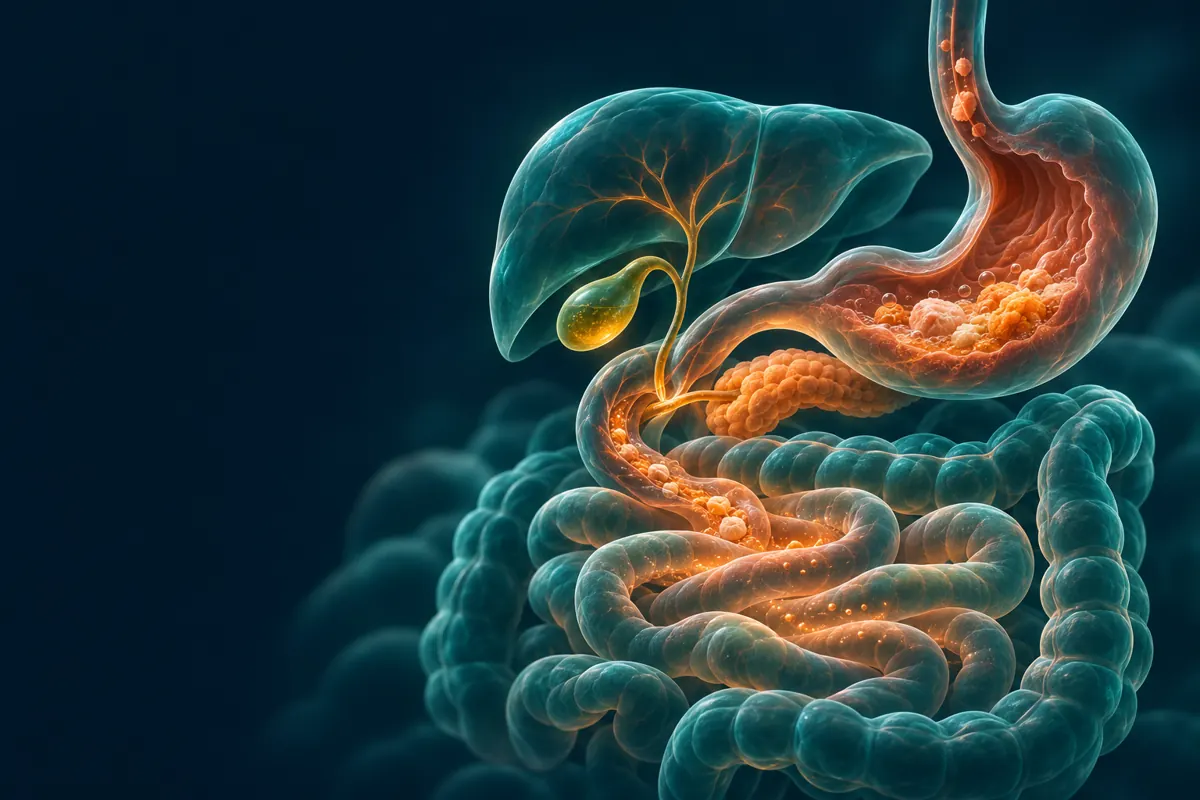
- Food moves through the digestive tract. The liver, gallbladder and pancreas contribute fluids; food does not pass through those organs.1
- Breaking food down and absorbing nutrients are different steps. Vitamin B12 illustrates why eating a nutrient does not guarantee normal absorption.2
- Prescription pancreatic enzymes address a diagnosed problem. Their role does not establish that a retail digestive blend benefits everyone.3
Guides in this hub
Read next
3 evidence explainers, each with its own sources.
 Updated Nov 9, 2026
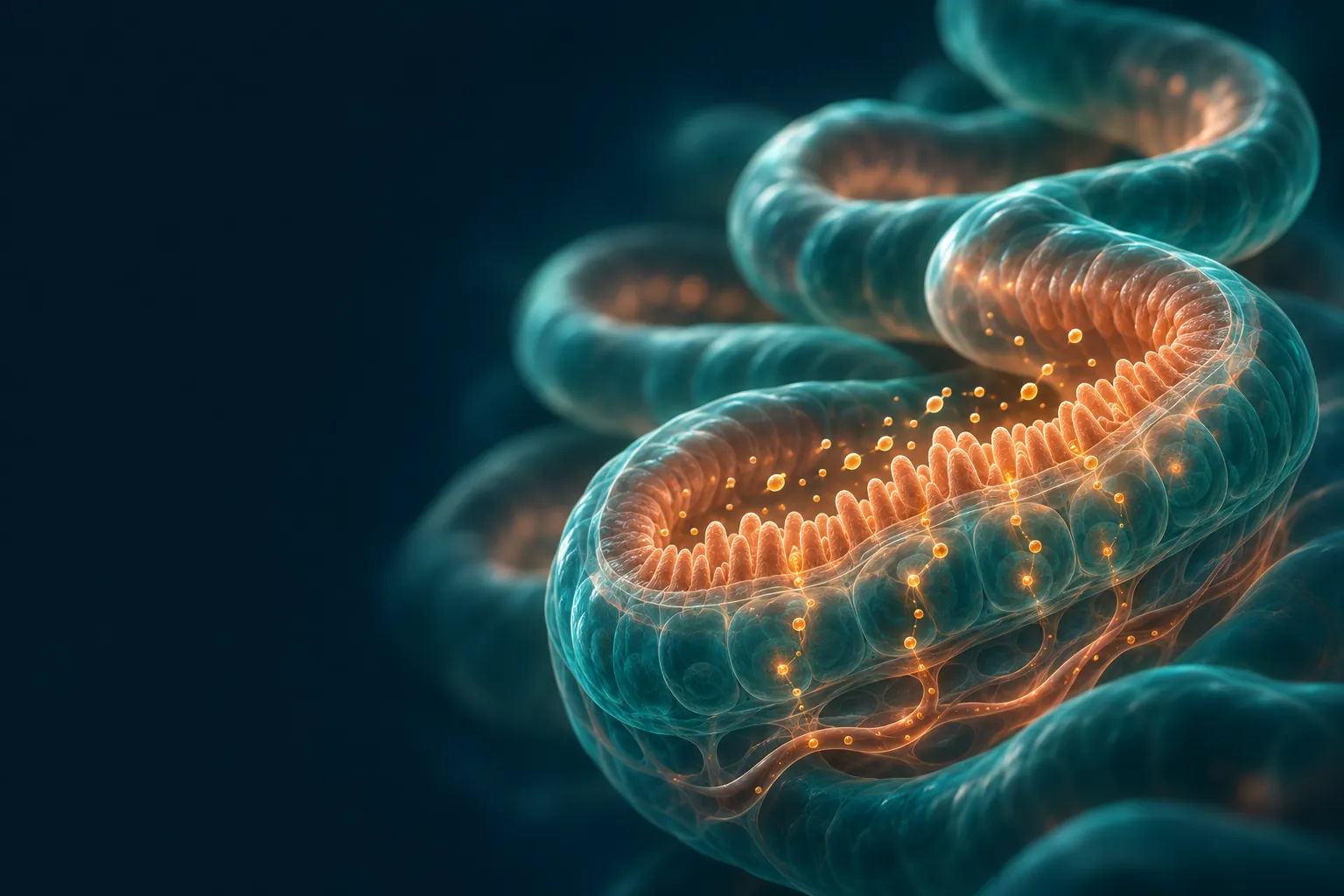
How Digestion Works: The Food Route and the Organs That Help
- Follow the contents of a meal from the stomach to the intestines, while keeping the liver, gallbladder and pancreas in their correct supporting roles.
- 3 sources
Read the guide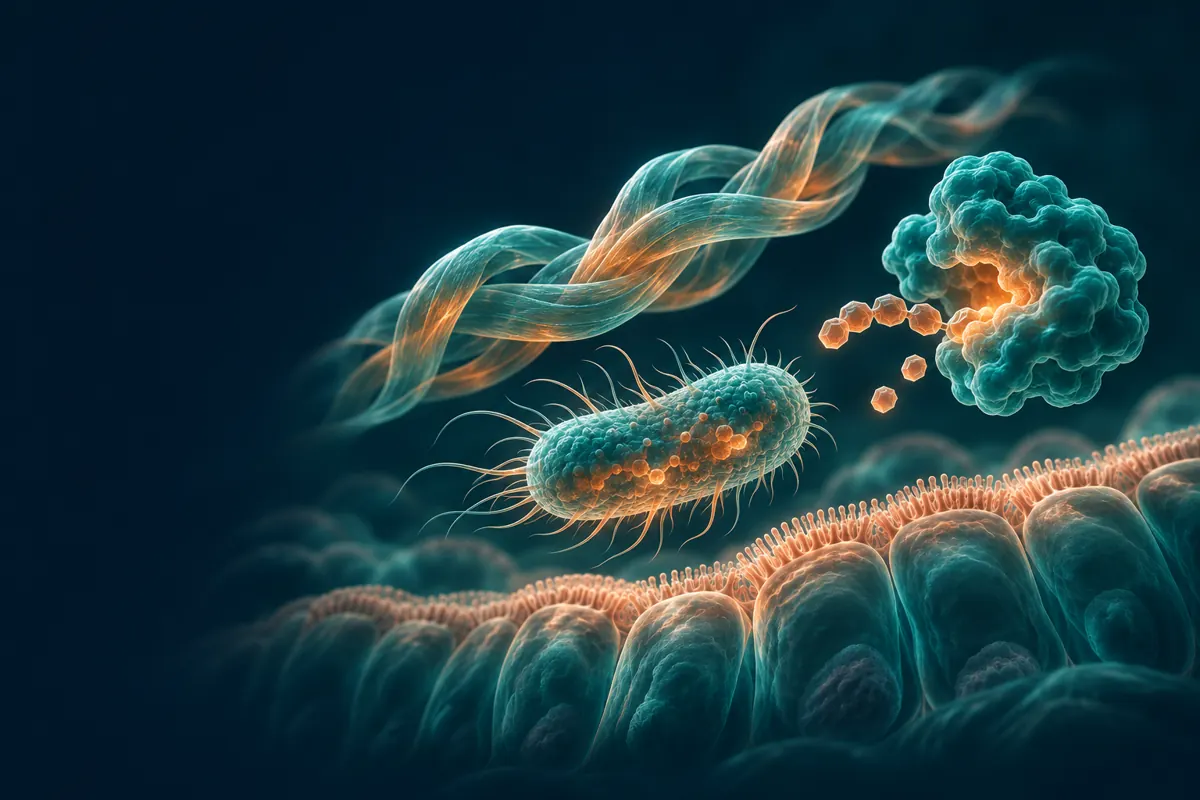 Updated Nov 9, 2026
Fiber, Probiotics and Digestive Enzymes: Three Different Questions
- A fiber, a living microorganism and a digestive enzyme are not interchangeable. Match each category to the outcome researchers actually tested.
- 3 sources
Read the guide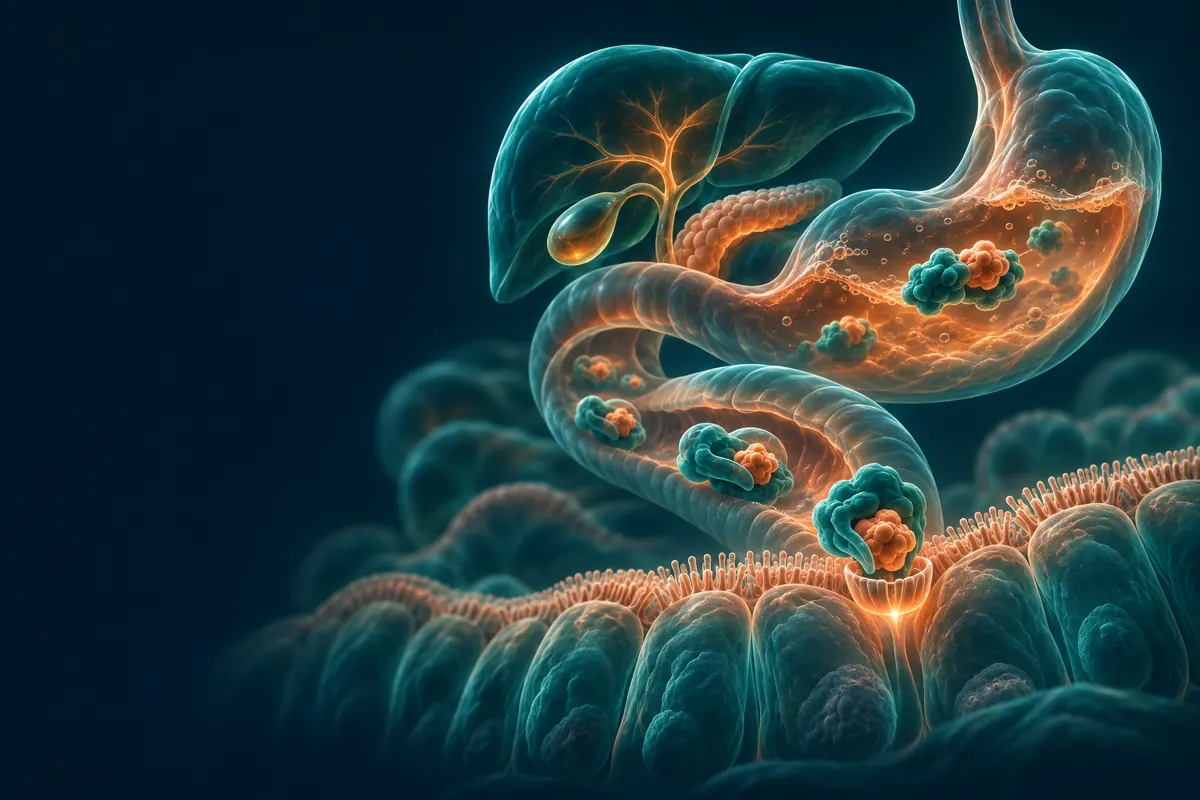 Updated Nov 9, 2026
Where Nutrients Are Absorbed: Why Eating Enough Is Not the Whole Story
- Follow the difference between intake, digestion and absorption, using vitamin B12 to show how several organs work together.
- 3 sources
Read the guide
Researched and written by Kymata Health Editorial; sources cited inline. Educational only, not medical advice.
Every health hubHow does food move through the digestive system?
How does food move through the digestive system?
The stomach is one stop in a longer process. Muscular movement mixes food and moves it along the gastrointestinal tract; the small intestine completes much of digestion and absorbs nutrients. The large intestine handles remaining material and absorbs water.1
Start with how digestion works, then try Start Follow a meal. The explorer uses reference anatomy to make the roles easier to follow. It cannot show how your own digestive system is functioning.
Ask a more useful gut-health question
Ask a more useful gut-health question
“Gut health” can mean stool frequency, nutrient absorption, symptoms or a specific diagnosed condition. Those are different outcomes. Our fiber, probiotics and enzymes guide separates the categories before comparing their evidence.
If your question is about what reaches the bloodstream, start with nutrient absorption. The B12 pathway spans the stomach and intestine; an organ name alone does not identify a deficiency or the right supplement.2
Connect the explanation to the evidence
Connect the explanation to the evidence
A normal digestive function is not a product claim. Your pancreas naturally supplies enzymes, but evidence for prescribed pancreatic enzyme replacement in a diagnosed condition does not transfer to every over-the-counter enzyme blend.3
Use the linked ingredient guides to ask what was tested, in whom and for which outcome. Persistent or concerning symptoms need clinical assessment, not an organ selection or a supplement stack.
Questions
Common questions: Digestion & Nutrient Absorption
One quick answer from each guide; its sources are in the guide.
Does food go through the liver?
No. Food stays within the digestive tract. The liver makes bile and processes absorbed nutrients, but it is not a chamber that food passes through.
From the guide: How Digestion Works: The Food Route and the Organs That Help
Does a higher probiotic CFU count mean it works better?
Not by itself. Relevant evidence depends on the organism or strain, the amount studied, the population and the outcome. A larger number does not replace that information.
From the guide: Fiber, Probiotics and Digestive Enzymes: Three Different Questions
Where is vitamin B12 absorbed?
The B12–intrinsic-factor complex is absorbed in the distal ileum, the final part of the small intestine. Earlier digestive steps involve other organs and proteins.
From the guide: Where Nutrients Are Absorbed: Why Eating Enough Is Not the Whole Story
Regulatory
Regulatory and legal notes
- This hub provides general education. It does not diagnose a digestive condition or replace prescribed care. NIDDK recommends discussing supplements with a clinician when treating pancreatic insufficiency.3
Sources
References
Every study and document cited on this page, numbered as in the text.
- 1Your Digestive System & How It Works (accessed 2026). NIDDK, 2026.
- 2Vitamin B12: Health Professional Fact Sheet (accessed 2026). NIH Office of Dietary Supplements, 2026.
- 3Treatment for Exocrine Pancreatic Insufficiency (accessed 2026). NIDDK, 2026.
Dietary supplements are not intended to diagnose, treat, cure or prevent any disease, and these statements have not been evaluated by the FDA. Prescription options need a licensed clinician. Talk to your clinician or pharmacist before starting anything new, especially if you take prescription medicines, are pregnant or breastfeeding.